
Banjos are about the most adjustable musical instruments I’ve ever seen. You can replace the head with a different one, or you can adjust the tension of the head. You can even change pots or change necks. You can try a different style of tailpiece or adjust the tailpiece that is on your banjo. You can change the tuners. You can adjust the nut. You can try a different bridge. You can use steel strings or you can go with nylon “Nylgut” strings or for the traditionalist purist folks you can use genuine gut strings. You can even alter the neck relief by adjusting truss rods. Many old time players “stuff” their open-back banjo, meaning they tuck a towel or a ball of paper towel or a chunk of foam between the head and the dowel stick to dampen the overtones to produce that plunky old time sound. All this is much different than most other stringed instruments. On a guitar you can change the set-up and adjust the action but there are not nearly so many adjustable parts a on a banjo.
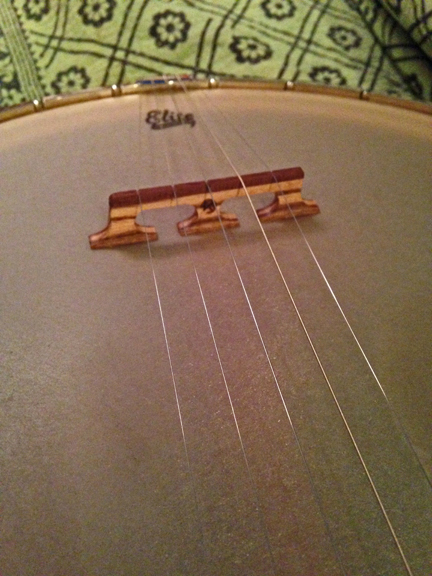
Zebra/katalox banjo bridge
The head adjustment is one I pay particular attention to. High head tension produces a brighter sound and lower tension produces a plunkier sound. I adjust by trial and error, messing with it until it sounds just right to my ears. I’ve found the head tension will relax some over time. I usually become aware of this when it happens. I notice my banjo isn’t sounding quite right and I take a few minutes to make the adjustment.
My brother the trout, Salvelinas Fontinalis was going to try bridges on his banjos made by a fellow named David Cunningham and he suggested I try them too, so placed my order. Yesterday they arrived in the mail. I put the a new bridge made from zebra with a katalox top on my Bart Reiter banjo last night and it’s remarkable what a difference a bridge can make. The new bridge created what I can only call a cleaner, clearer sound. When I play a chord I can hear the integrity of each note more clearly, particularly on the lower-pitched strings.
This weekend I’m going to re-string my Nechville Atlas banjo with Nylgut strings with one of David Cunningham’s bridges on that banjo as well. I have two of his bridges (different heights) slotted for the nylon strings. I haven’t tried nylon strings on the Atlas before so it will be most interesting to see what that will do to the character of the sound.
 27th Street