comments 5

Motorbikes as far as the eye can see

Vietnam is a long, narrow country running north-south. There are all kinds of regional characteristics including food styles and distinct dialects, industries and so on. No matter where you go in the country though, it seems Vietnamese people love their motorbikes.

There are two basic types. The scooters, like Vespas, are “twist & go” beasts. You just crank the throttle and off you go. These machines have generous compartments for putting stuff and they seem broader or chunkier than the sleeker geared motorbikes. The geared bikes, on the other hand have more get up and go and I think they are more popular.

Mostly people wear helmets, although on several occasions we saw an adult with a couple kids piled on a motorbike – the adult with the helmet on and the kids without. Many riders wear face-masks, which must offer some protection from diesel fumes and dust along the roads. Sometimes a guy would have his face-mask pulled down over his chin so he could enjoy a smoke while riding.

With great ingenuity, people manage to carry more cargo on a motorbike than we could fit into an SUV. Live chickens. Furniture for food stalls. Construction materials. Eggs straight from the market. Anything goes.

Rain is no barrier. People, cargo and bike are covered up with huge rain ponchos.

Traffic laws are a guideline at best. In Saigon, or Ho Chi Minh City, as it is officially called, it is not unusual for people to ride their motorbikes on the sidewalks. Horns are honked constantly, but these are not honks of anger. In fact drivers seemed remarkably calm. They honk their horn to tell other drivers where they are, where they are going and where it is impossible to go.

Drivers in Vietnam have a different sense of space than we have and drive much closer together than we would ever consider safe. What we would deem a close call, they would call changing lanes.

After a couple days we started to get our “legs” crossing roads in Vietnam. You can’t wait until there is no traffic because there is always traffic. Sometimes you just have to cross. The important thing is to be predictable. Choose a direction. Choose a pace. Keep going. Whatever you do, don’t try to go back. The motorbikes simply go around you. I became quite accustomed to crossing roads in Vietnam in ways which would undoubtedly get me killed if I tried it in Toronto.

We went on a food tour on the back of Vespas in Hoi An (it was fun zooming around in traffic, if a little scary), but I certainly didn’t feel like I had the driving confidence to rent a scooter and join the fray. If I lived there, I suppose my comfort level would increase. I can imagine driving in Hanoi, or Hue or Hoi An, but not in Ho Chi Minh City. The relentlessness of the motorbikes is almost overwhelming in Saigon. There are 11 million people in the city and at one point I imagined they all must be on a motorbike at the same time.
 

comments 3

Bánh xèo

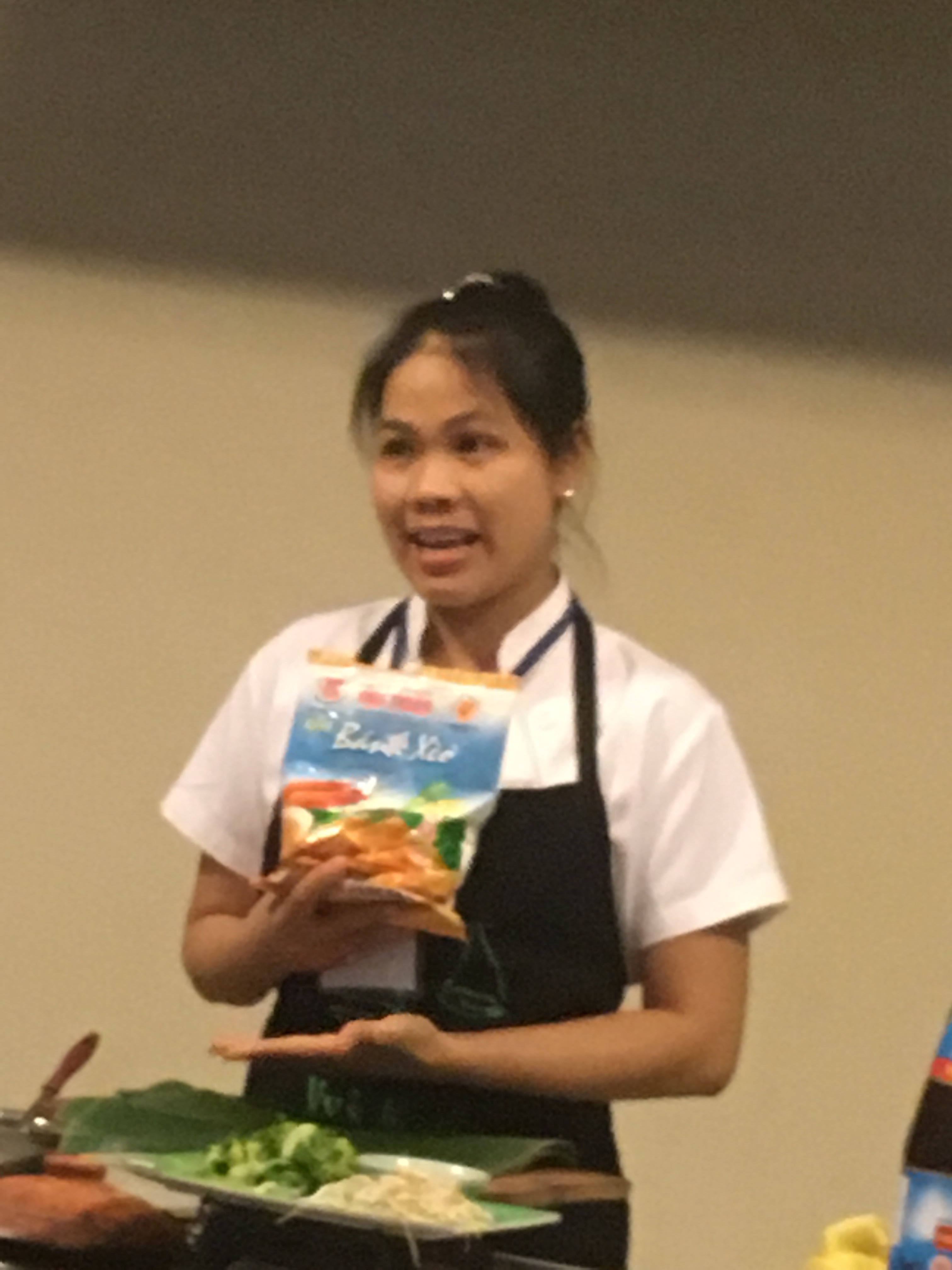
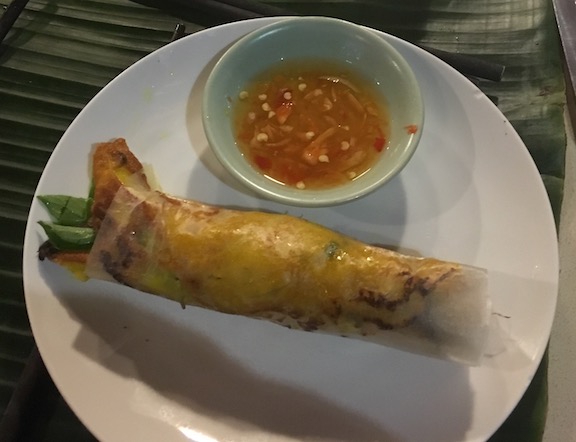
One of the Vietnamese foods we most enjoyed on our trip was bánh xèo, the wonderful savoury pancake rolled up super-tasty finger food, which we learned to make while we were there. Like so many Vietnamese foods, it is a sophisticated combination of cooked and fresh, hot and cold.
IMG_8354.jpg

Usually this dish starts with a couple shrimps and thin slices of pork placed in a bit of hot oil in a small pan – although we had no problem getting them with just shrimp for Tuffy P.  You use a thinnish rice batter with a bit of turmeric, which gives it a yellowish colour. The batter is poured into the hot oil on top of the pork and shrimps. It sizzles. Bánh xèo is literally “sizzling cake”, the xèo imitating the sound of the sizzle. Cook it until it gets good and crispy, then fold it in half. It can be served like this with herbs on top but we learned to make it as a rolled up finger food. That may be a Central Vietnamese deal, I’m not sure.

The folded pancake is placed on a piece of thin rice paper. There seems to be some variety in what goes on them at this point – often a thin slice of green banana and a thin slice of starfruit or perhaps a slice of cucumber. Add some bean sprouts and some herbs. Then roll up the whole deal tightly. Some people do this by beginning the roll around a chopstick, then adding a second chopstick and using the sticks to help you get a nice tight roll, before sliding them out.

Now there is one additional element and that is a dipping sauce, usually a mixture of Vietnamese fish sauce, sugar, lemon or rice vinegar, garlic and chilies. This sauce seems to vary in spiciness depending on where you are.

There is a lot going on in one of these rolls. The combination of flavours and textures is outstanding. You’ve got the crispy crepe, the fresh herbs bursting with flavour, the shrimp and pork adding a hit of protein, the whole business jump-started by the dip. Once I get over this cold, I’ve got to try making these things at home.

comments 4

Jet-lag, a nasty cold and some thoughts on the longest mosaic wall in the world

The cold started on our last day in Vietnam. It was as if our bodies held it off until we enjoyed every bit of our trip. When it hit, it hit hard. Add a dose of jet-lag from a flight halfway around the world and my body is discombobulated. I’ve had several naps today and now when I should be going to bed I have a little energy, or at least enough to write a bit about our vacation adventures. Meanwhile, I’m treating the whole business with a shot of very very good scotch, which will – even if it doesn’t help the cold or the jet-lag – make me feel better about that situation.

One of the things we wanted to see in Hanoi was the longest ceramic mosaic wall in the world. It runs about 4 km along a wall which serves as a dyke along the Red River. Never mind that there is a neighbourhood between the dyke and the river. Apparently enough water is diverted by China before the river even gets to Vietnam, they haven’t seen flooding in a very long time, and are even farming areas which once were submerged.

Work on the Ceramic Road began in 2007 and was completed in 2010 and subsequently renovated. The ceramic comes from a nearby village, Bát Tràng. The idea came from a journalist named Nguyễn Thu Thủy who won a prize for coming up with the plan to transform the dyke. The project involved 35 professional artists from Vietnam and from 10 countries including Denmark, France, Holland, Spain, Italy, Britain, America, Argentina, New Zealand and Australia. Add to that many local artisans and some 500 Vietnamese and international children and Vietnamese art students. It is incredible they pulled off such an ambitious project.

When we got to Hanoi, we decided to try to walk along the wall, or at least a good chunk of it. It runs along a very busy road and we weren’t sure how exactly to access it. The people at the hotel didn’t know what we were talking about when we tried to describe the project. I attribute this to a language barrier, as I’m certain they’ve all driven by it on their motorbikes many, many times. We finally found a concierge who understood what we wanted to see and wrote down instructions for a taxi driver who dropped us off along the wall. We didn’t see all of it but we walked a long way. There was one part where infrastructure made it impossible and we had to deke into a neighbourhood on the river side of the dyke and walk through a tunnel before accessing the wall again.

It was a noisy walk and the smell of fumes from all the traffic wasn’t pleasant but it was worth it as the wall is nothing short of spectacular. There is a huge amount of variety in approach and content along the way and it was all delightful. Different parts of the wall had various sponsors who made it all happen. What a fantastic collaboration! As mosaic artists, we were totally cranked up discovering the wall bit by bit. Here are a few photos to give you what I can only call a glimpse of what we experienced.

It takes an effort to walk along the wall. Most people in Hanoi would see this work as a backdrop of their day-to-day lives as they zoom along the roadway. The Ceramic Wall is a treasure not to be missed. If you ever vistit Hanoi (do it if you can!!), have a taxi drop you along the way and walk for a while, then hail another taxi to take you to the old city for a banh mi and a cold beer. You’ll be glad you did.

comment 0

It ain’t what you say, it’s the way how you say it.

We landed at YYZ shortly after 8:00 this evening and we’re at home chilling now. After so long on an airplane it’s hard to figure out when to sleep and when to be awake. As well we both managed to catch cold on our last day in Saigon. I posted quite a few pictures during our trip. In the coming days I’ll post more and offer some perspectives on our experience traveling north to south in Vietnam.

Here is Kien Nguyen from On the Go Tours explaining the importance of tone or intonation in the Vietnamese language.

Kien has a wealth of knowledge about his country and taught us so much. He’s also a really nice guy and a pleasure to be around.

comments 2

Market

We we walked to the Ben Thanh Market this morning. Imagine the biggest flea market you have ever seen. Double it, compress it together some, add on food stalls and a produce market, populate it with assertive, tough negotiating sales people and there you have it. 


Ask for a price on something. Look horrified and start to walk away. What price you want sir? You say a number about a third of the one she started with. Game on. Sir, my best price. She holds up a calculator with a number close to her first one displayed. You turn to your partner. She doesn’t want to do business with us, let’s go. Sir what number you want? You budge a little. She budges a little. You say it’s my wife who likes shopping but I have the money today and I’m out of patience. You give her your best number – your first best number that is. She gives you her first best number. You sigh and say sorry we’re going to go. She grabs your arm. First customer, she says, first customer. Ah, she is supersticious. She wants this sale. Back and forth, back and forth. Best number. Best number. You reach a deal and hand over some dongs. She tries to hold back some change. I give you a good deal now you give me tip. You ask too much – we have a deal. You give me my change. She appreciates you are holding the line, secure in the knowledge she is still taking good profit.

comment 1

Floating market

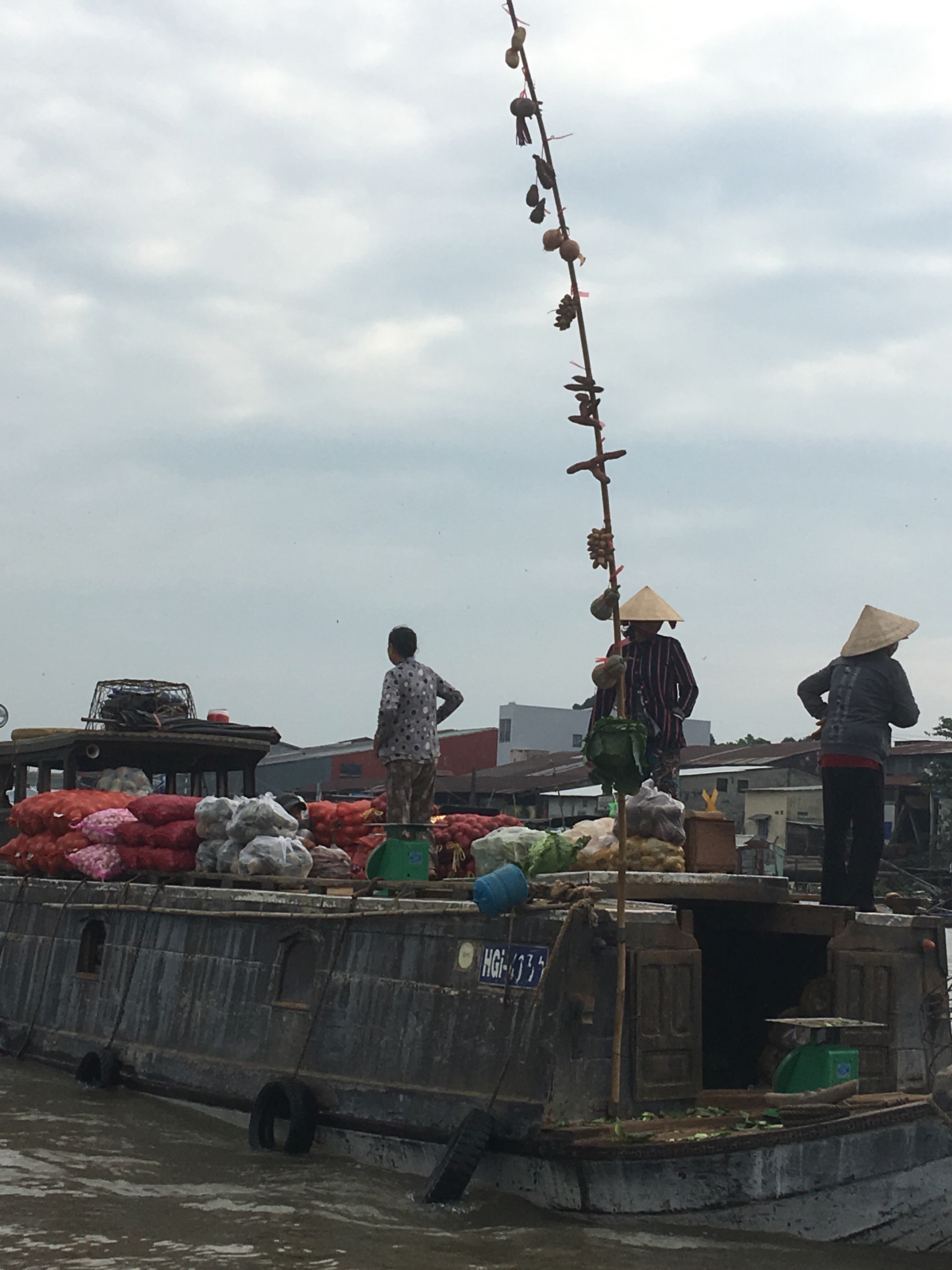
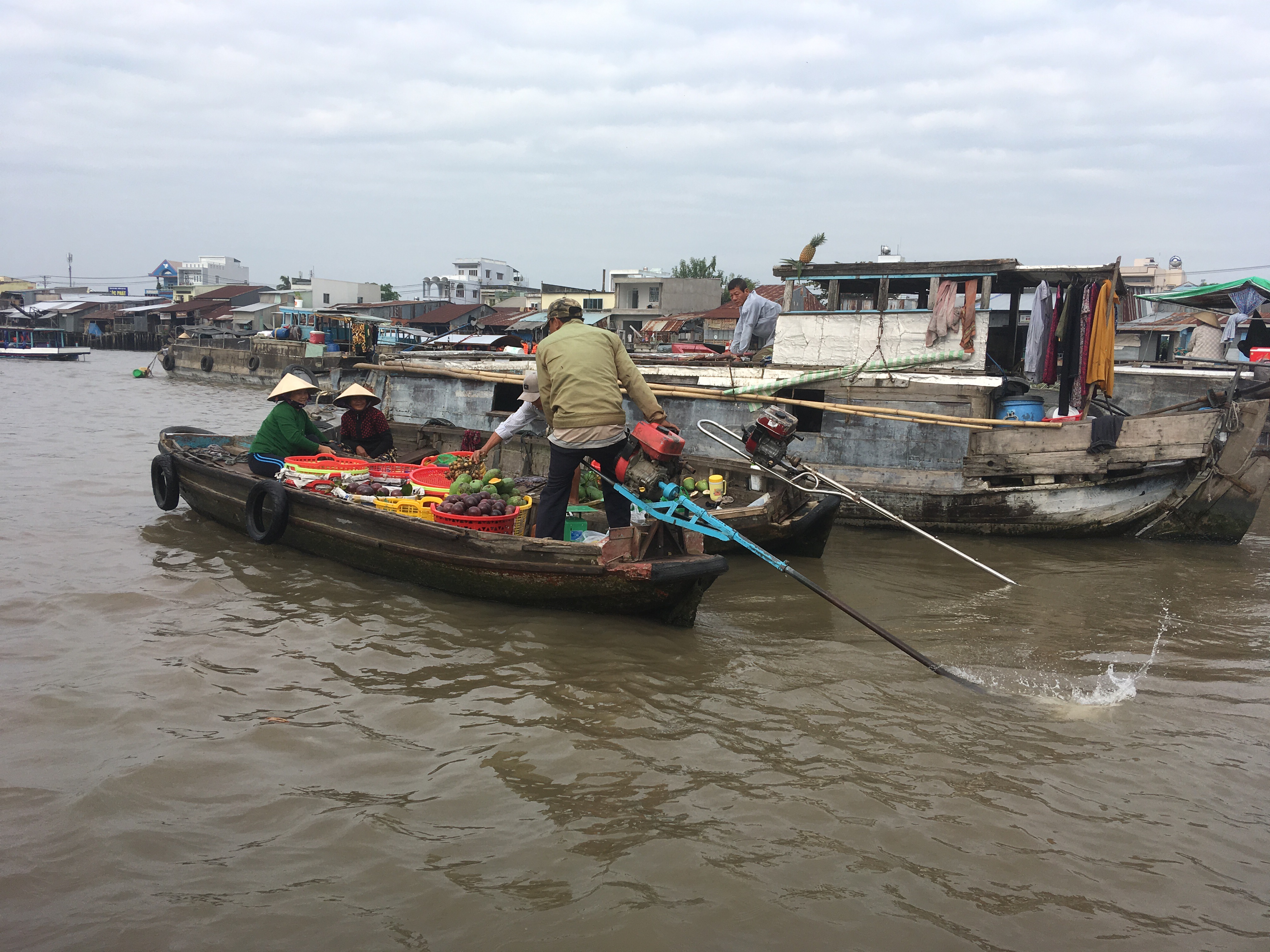
We left our Can Tho hotel by boat this morning to visit the nearby floating market. Growerss bring their produce to the market by boat and sell to shop-owners and restaurants every morning. Each boat puts a sample of whatever they have to sell up on a tall stick so buyers can find what thet want. 

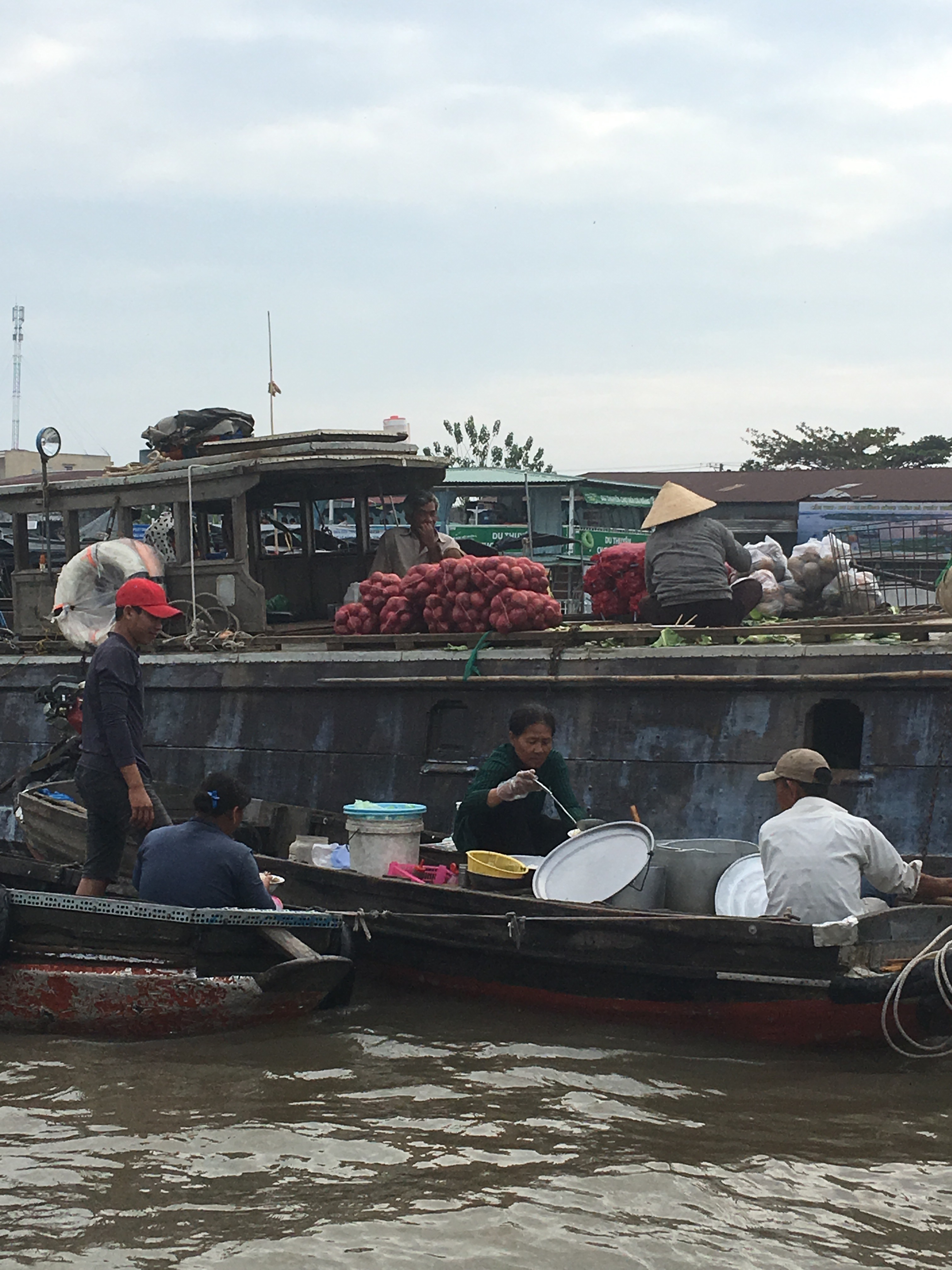
There is even a coffee lady and a floating pho joint on the water.


It was wonderful to get my iced coffee fix from a woman in a boat who pulled up to ours to take our orders. Iced coffee was 10,000 dong or about 50 cents. 

Our excellent guide Kien explained what was going on in the market and our boat and our boat pilot manouvered us arounnd all the buyers and sellers. Fantastic morning!

comment 0

Cooking School in Hoi An- part 2, the class

Cooking class started with a tour of the various prep stations at the restaurant below…and yes we got to sample.


They had a “weird and wonderful” area featuring dishes which, while common among locals, are outside the experience of most westerners. I sampled the jellyfish salad (tasty with a curiously crunchy texture) and the pig’s ear salad, but passed on the silkworm dish and a couple others I just didn’t feel the love for.

Upstairs we settled in for our cooking seasion, beginning with a “mother in law’s soup”. It is the first dish a bride cooks for her husband’s family. This soup has packages of shrimp wrapped in cabbage, cooked in the soup. It is not hard to make and it is super-delicious.

The next dish we made was banh xeo – sizzling crispy pancakes with shrimp and pork wrapped in rice paper. This is finger food. You dip it in the ubiquitous Vietnamese dipping sauce – fish sauce, lemon juice, sugar, garlic and chilies.


We then marinated some chicken (or shrimp or tofu) to be grilled to go with green mango salad. So good! 


We learned so much today and as a bonus we ate everything we cooked. The class was very professional, thorough aand a lot of fun. If you ever go to Hoi An and you like to cook, I highly recommend this class.

comment 0

Cooking school in Hoi An – part 1, The Market

The power went out this morning, forst at the hotel and again as we we getting fixed up with Vietnamese iced coffees at a local joint. After coffee we walked along the river to Madame Vy’s where we had signed up for a 5 hour  cooking class, The “holiday masterclass”.  What a great way to spend the day.

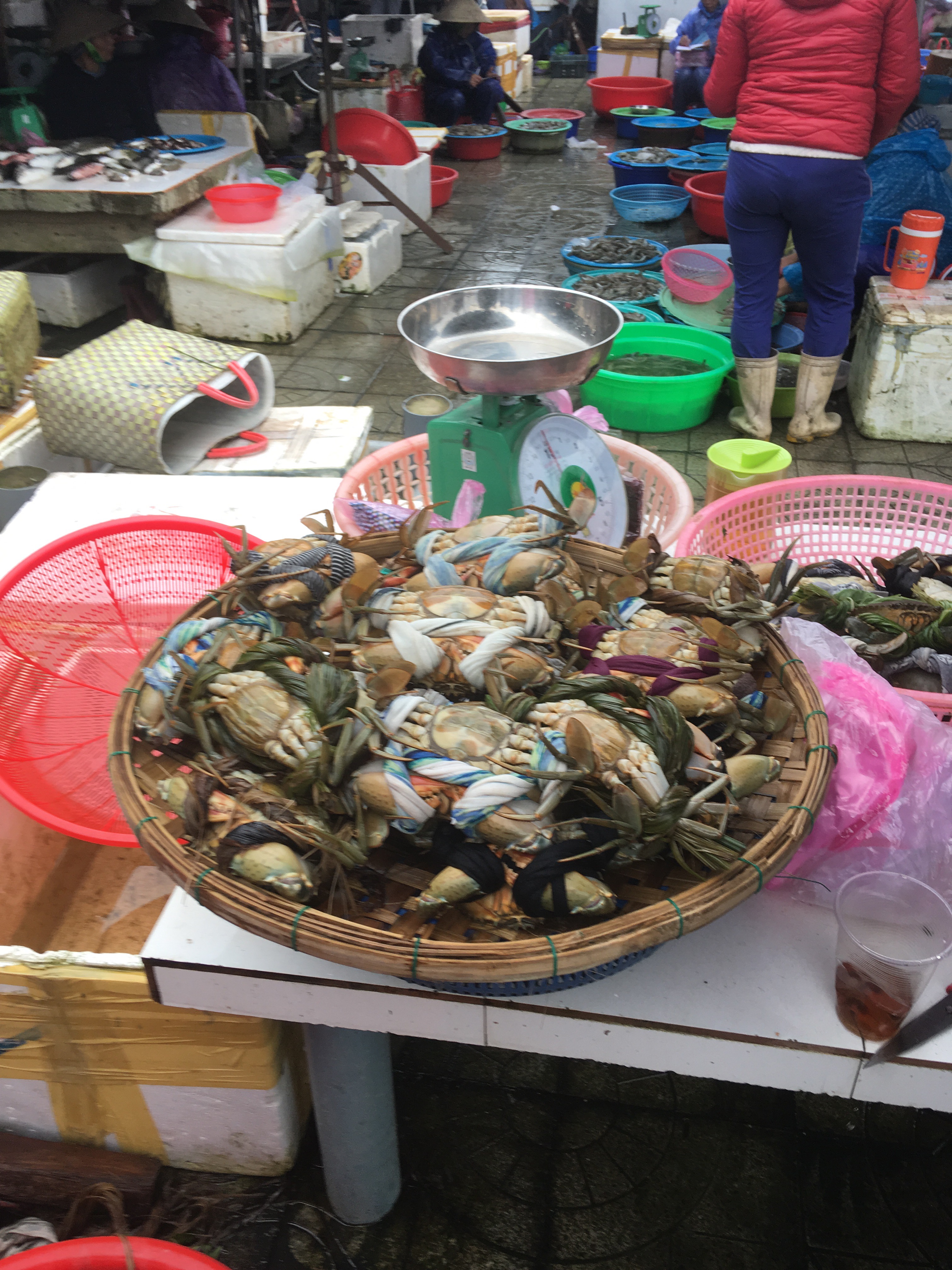
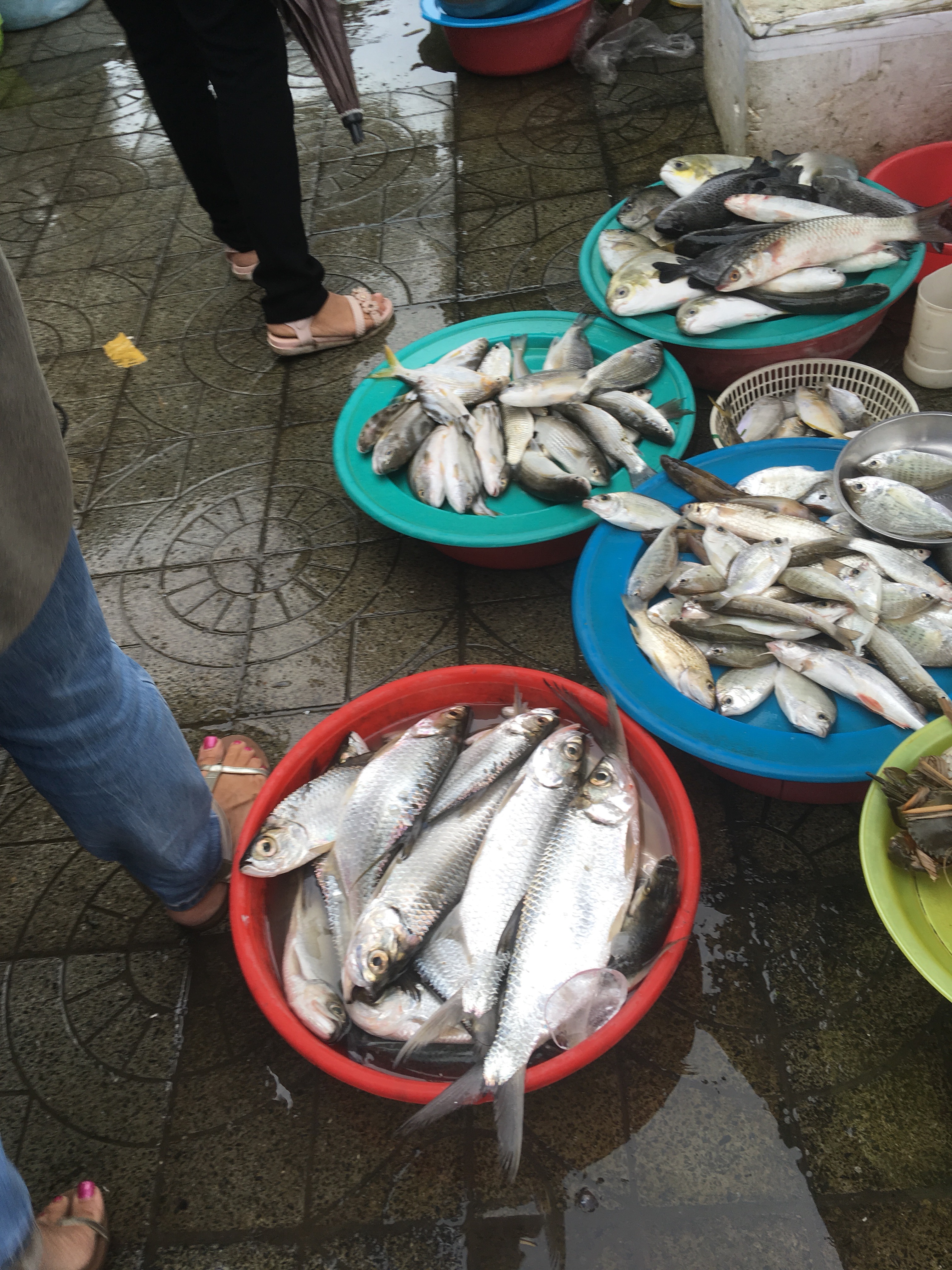
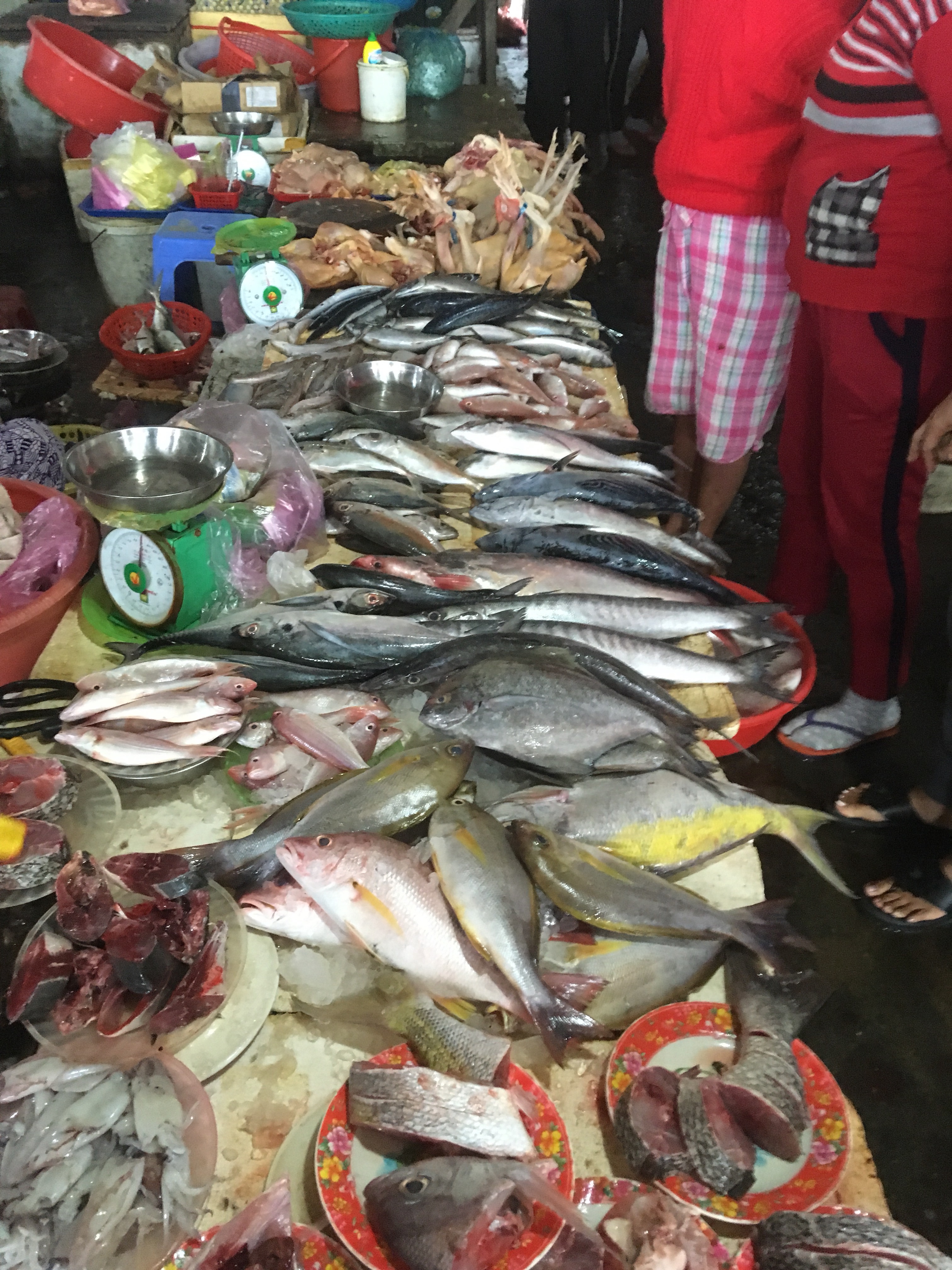
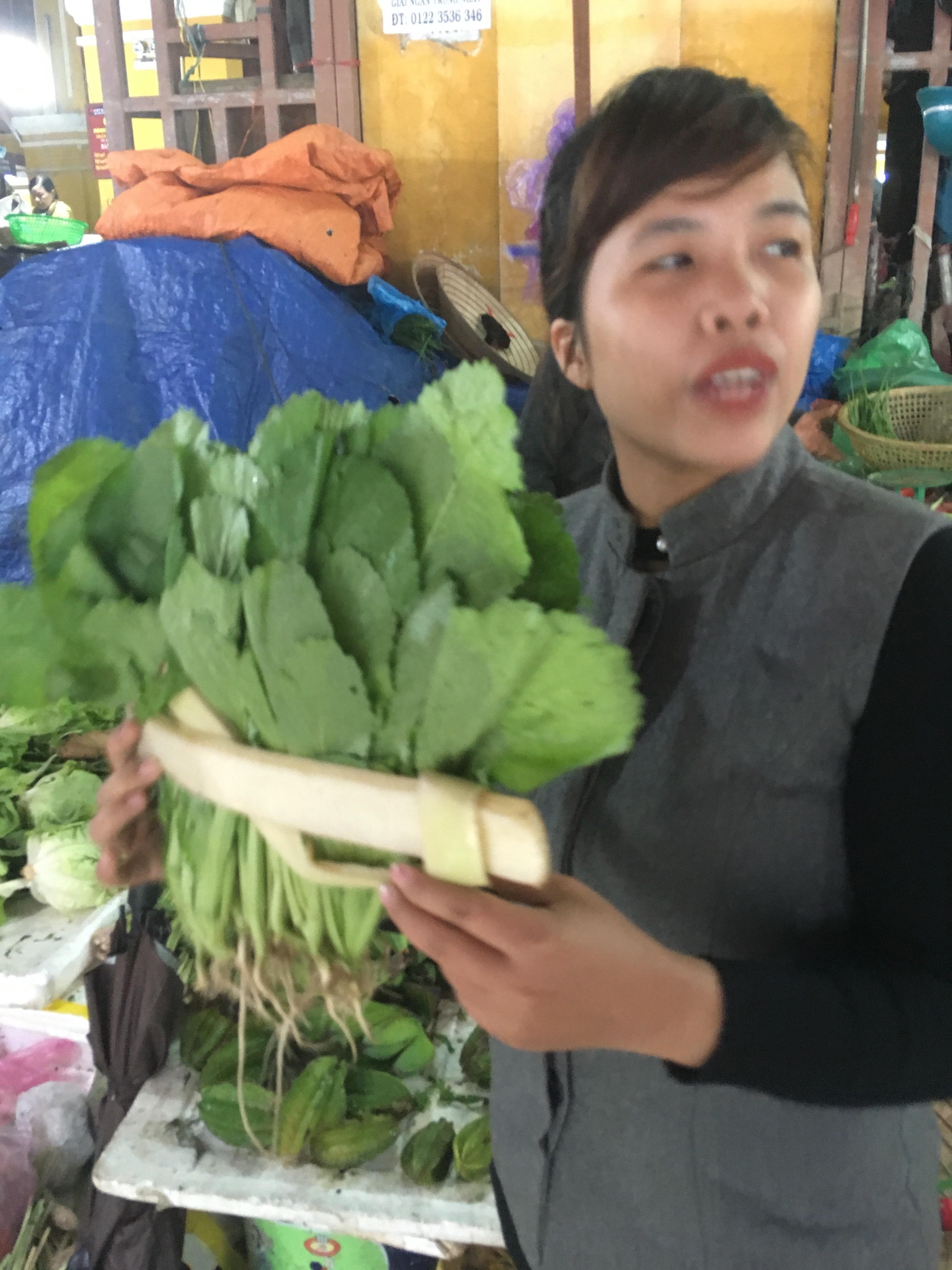
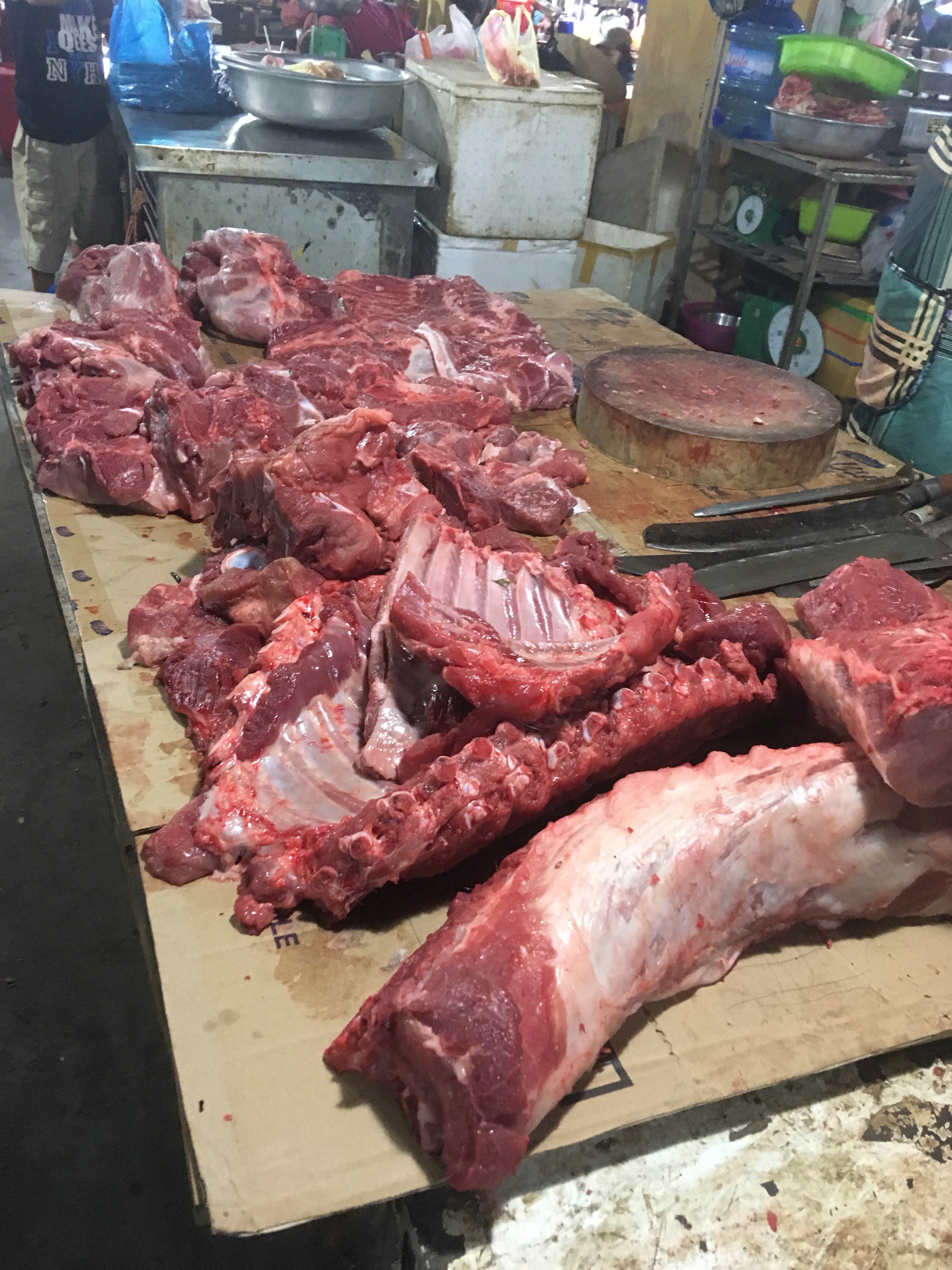
We started with a trip to the Hoi An market where we toured rhrough the market and learned about all the fish, meats, produce and herbs available there.


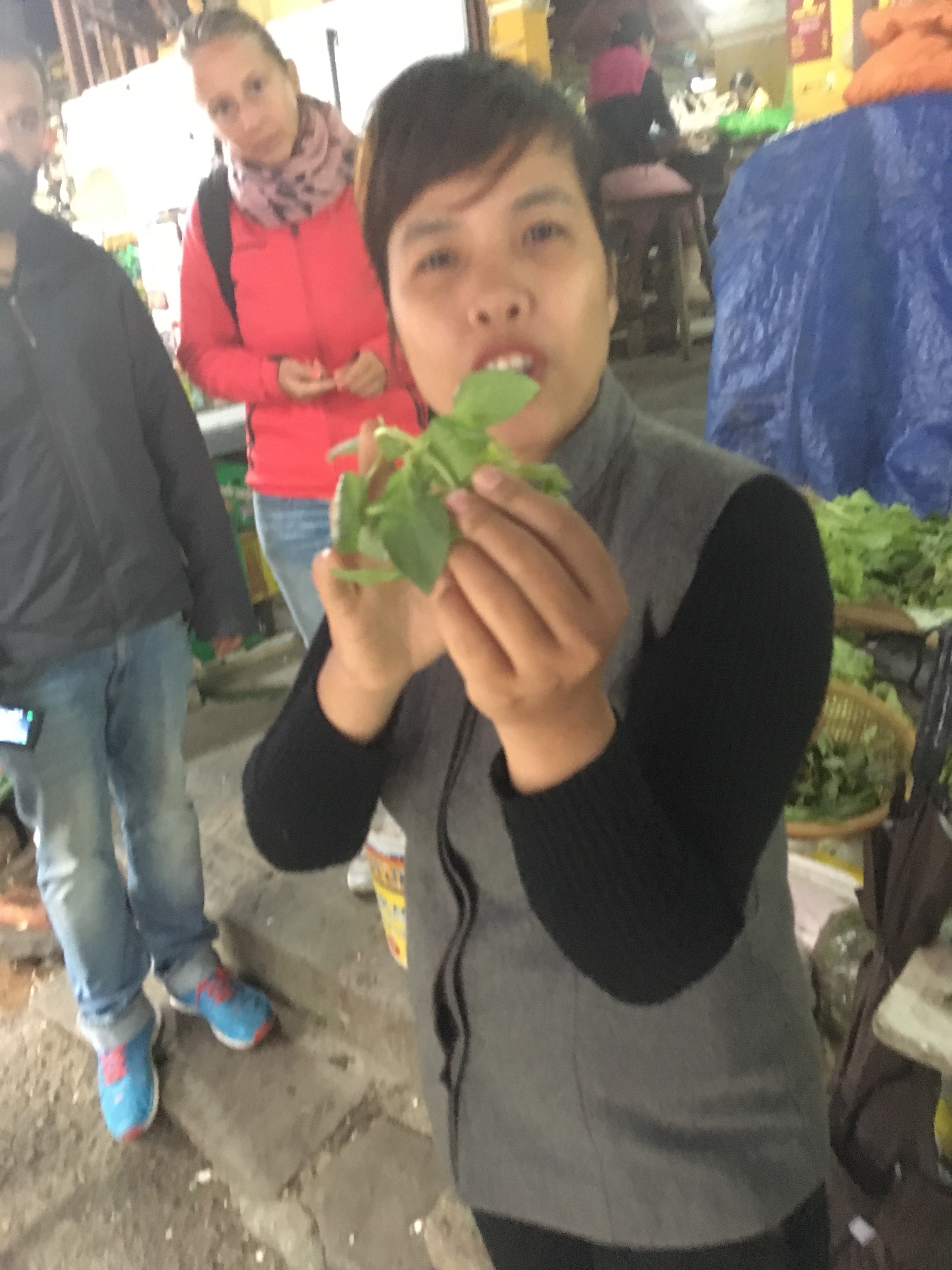
Our guide identified all the herbs and greens and explained how they were used.