Presqu’ile is a great place to enjoy the spring bird migration. Early in the morning is the best time, and the top spots are the tip of the peninsula and the calf pasture area. The warblers were high in the trees in the clear, warm weather, and challenging to photograph, but I did get some photos I’m happy with. I tried for quite a while to photograph some Bluestar Warblers, but I couldn’t get a good shot. Either they were deep in the branches or moving around too fast. Still, that’s part of the fun.
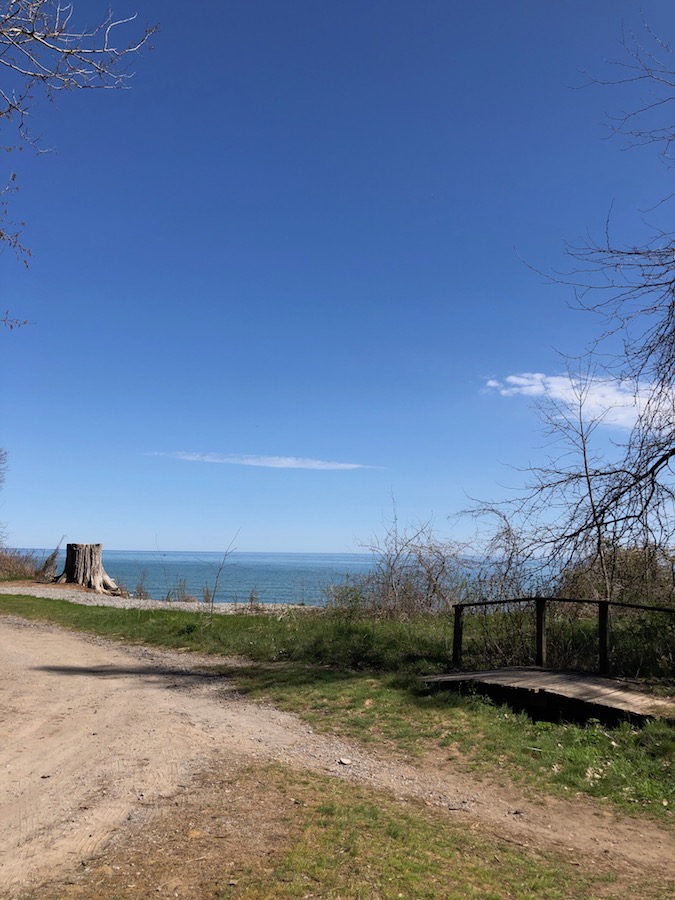
When I was a young man going camping, we never reserved a campsite. We’d just show up, claim a site, put some money in an envelope and drop it into a lockbox. These days, it’s necessary to reserve online. The good part of that is that Ontario Parks has photos of every site, with descriptions, that you can look at when choosing where to stay. I wanted a lakeside site if possible and also one with suitable trees for hanging my camping hammock. Site 229 was perfect.
view from my campsiteHairy woodpecker
There was even a hairy woodpecker banging away at trees around my site throughout my stay.
The campgrounds at Presqu’ile Park are excellent. They have both electrical and non-electrical sites. I stayed in a non-electrical campground right on Lake Ontario. There were only a few campers in the my immediate campground. Just down the road, the campground with electrical outlets looked to be mostly full, with lots of RVs. I enjoyed having fewer people around and the campground I stayed in was particularly nice.
Camping at Presqu’ile this week, I’d say the most common birds I saw were Baltimore Orioles. Here are some snaps I took, mostly near the lighthouse and the Calf Pasture.
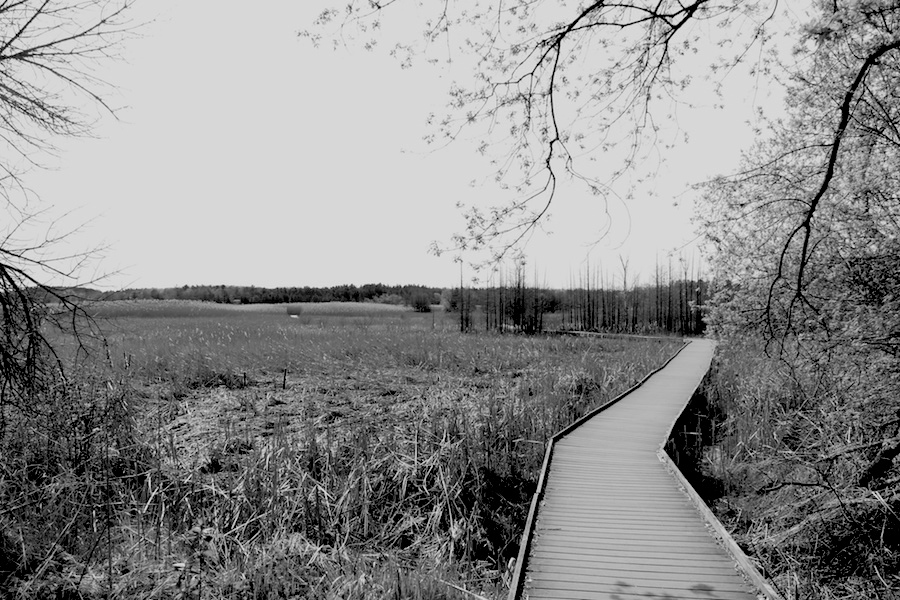
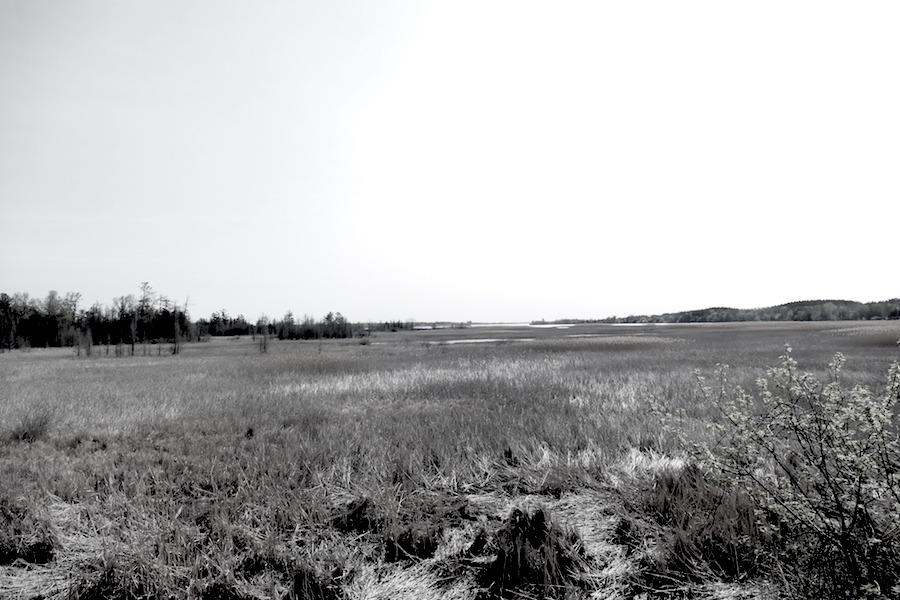
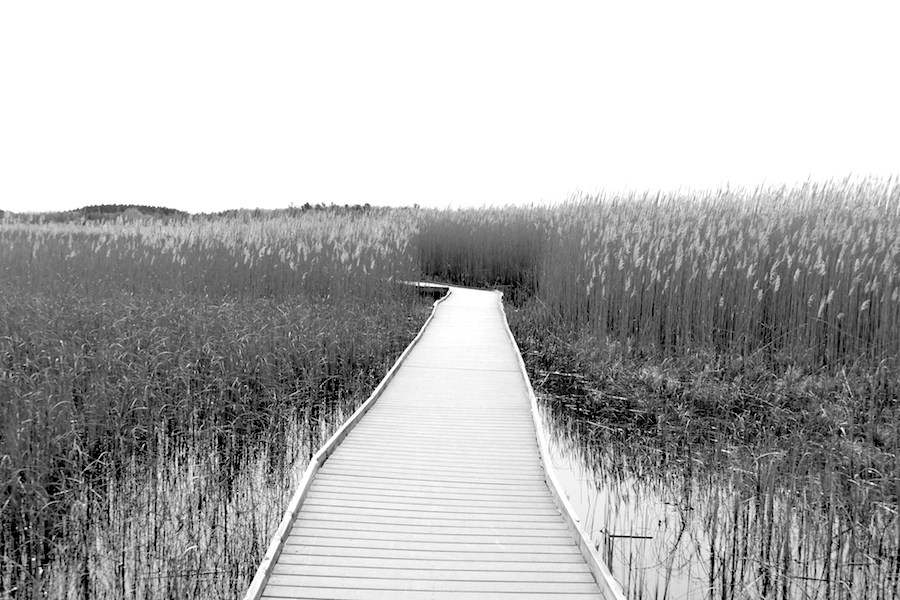
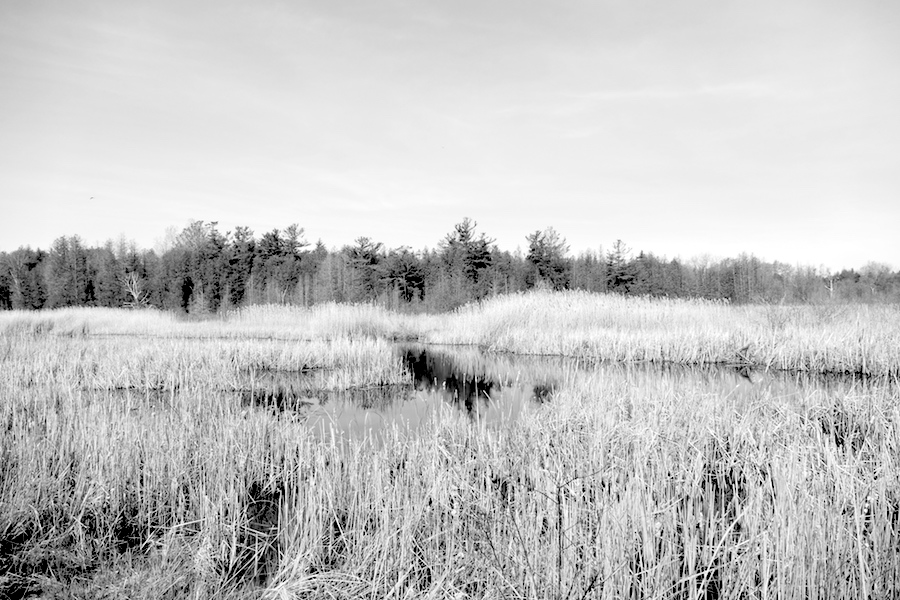
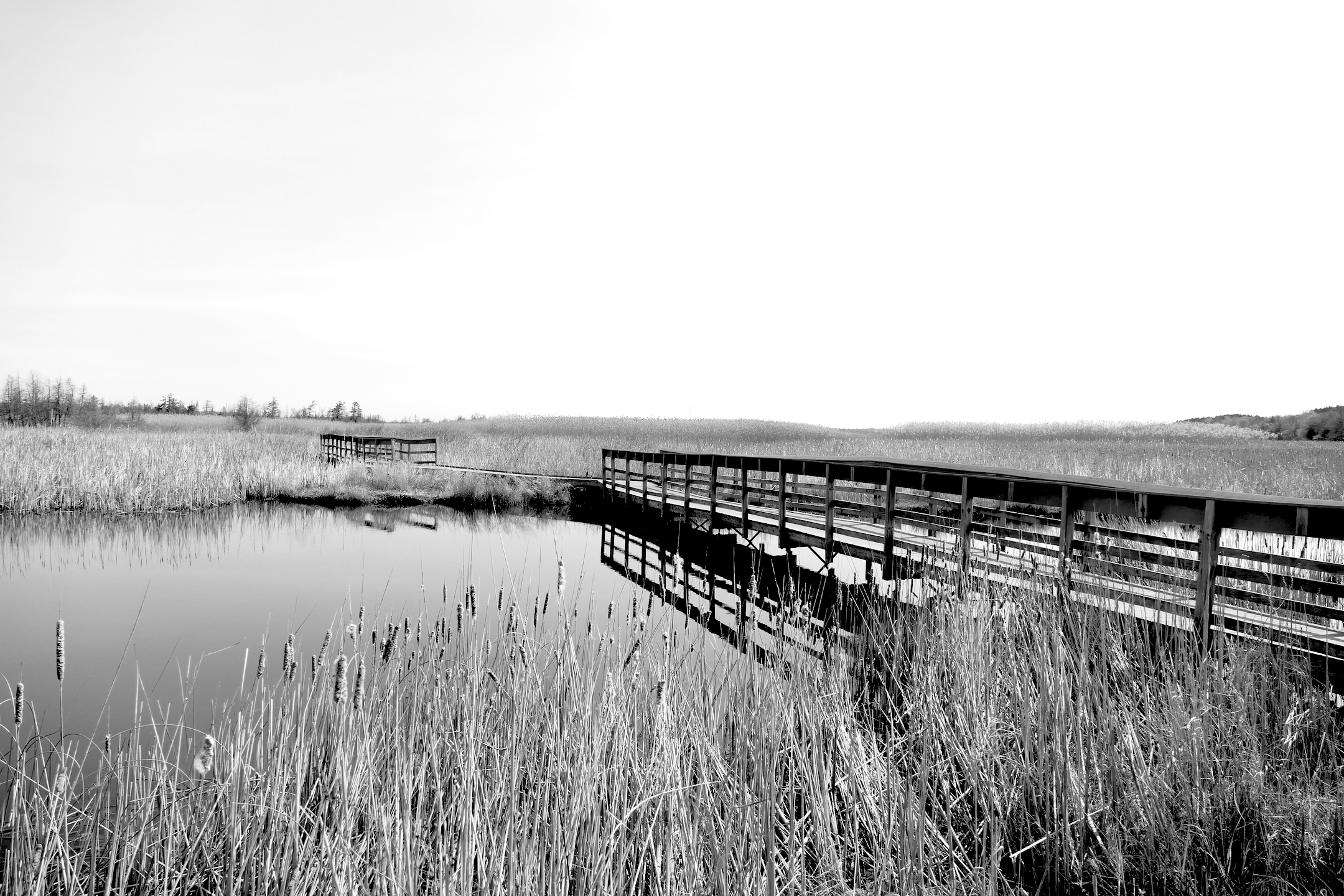
The last time I was at Presqu’ile Park it was a flood year and the Marsh Boardwalk, a kilometre long boardwalk and trail loop that winds its way through the extensive marsh and then back through a sandbar woods. It is a fantastically beautiful walk. I took a number of pictures, imagining a little suite of black and whites.
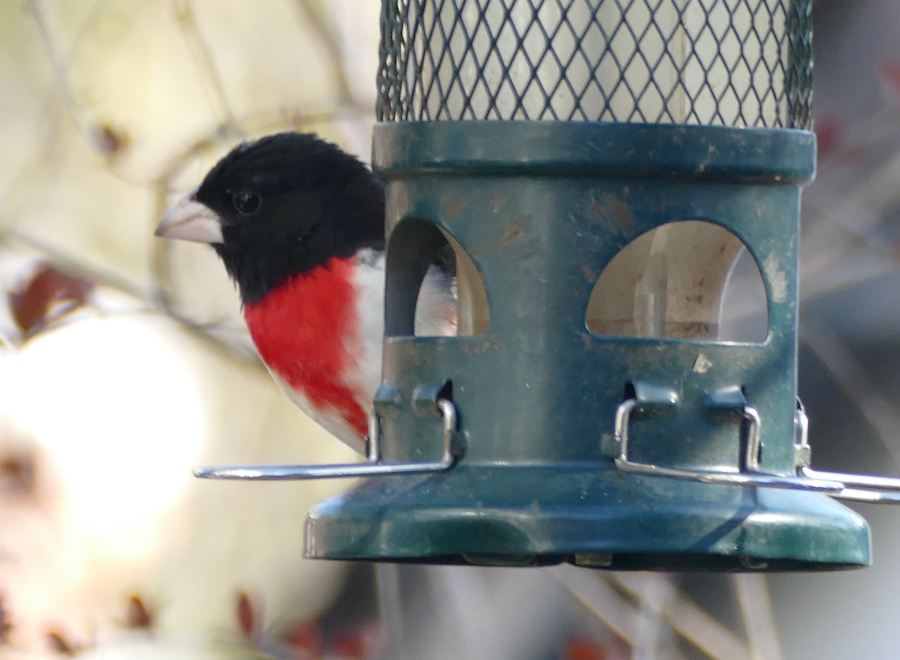
This morning, while drinking my morning coffee, I glimpsed an unusual bird in our big old apple tree out back. What I initially saw was a back view of a black bird with some white bits. It was around the same size or perhaps just a little smaller than the red-winged blackbirds also on the tree.
The bird flew away, and returned a moment later. This time I could clearly see the bright red breast and broad beak of the male Rose-breasted Grosbeak. I’ve seen these birds many times in our area but this was a first for our feeder.
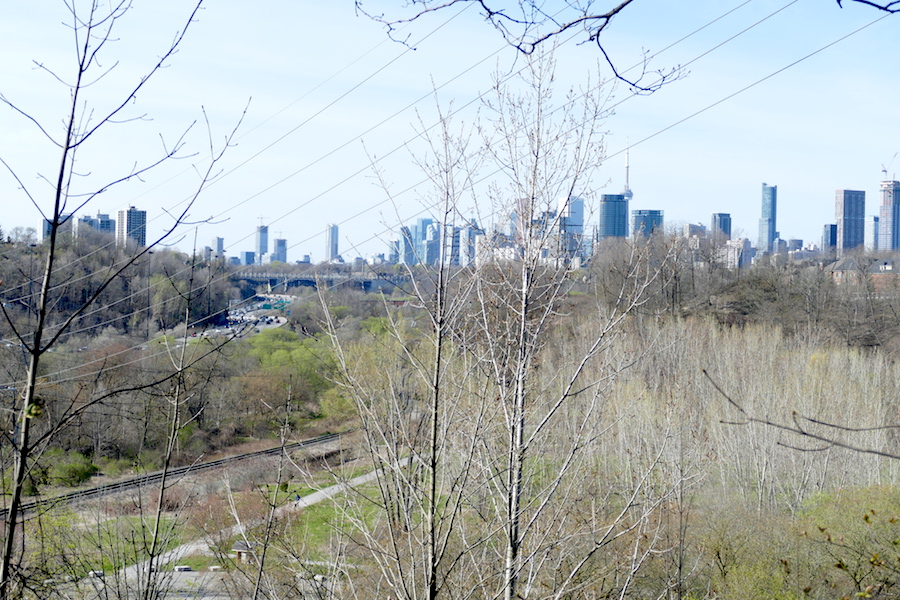
Early this morning, I drove down a steep street called Beechwood in the Don Valley, past the place where they train police dogs, and parked at the bottom. I was meeting up with naturalist Miles Hearn and his crew of Saturday morning nature walkers.
For readers not from here, Toronto is a city which was built between two rivers, the Humber on the west side and the Don on the East, along the shores of Lake Ontario. If you are ever visiting Toronto during the nice weather months, I suggest renting a bike for day. You might start quite a way up on the Don, such as at Beechwood where we walked today. You could bicycle all the way down along the river to the Waterfront Trail and along Lake Ontario all the way to Port Credit and beyond. It is a fantastic way to see a different side of Toronto. You might like it so much you will want to take a bike out of the Toronto Islands and enjoy riding around there, or perhaps start along the Humber by Lambton Woods and cycle all the way down. For a big bustling city, we have plenty of natural areas and places to walk or cycle.
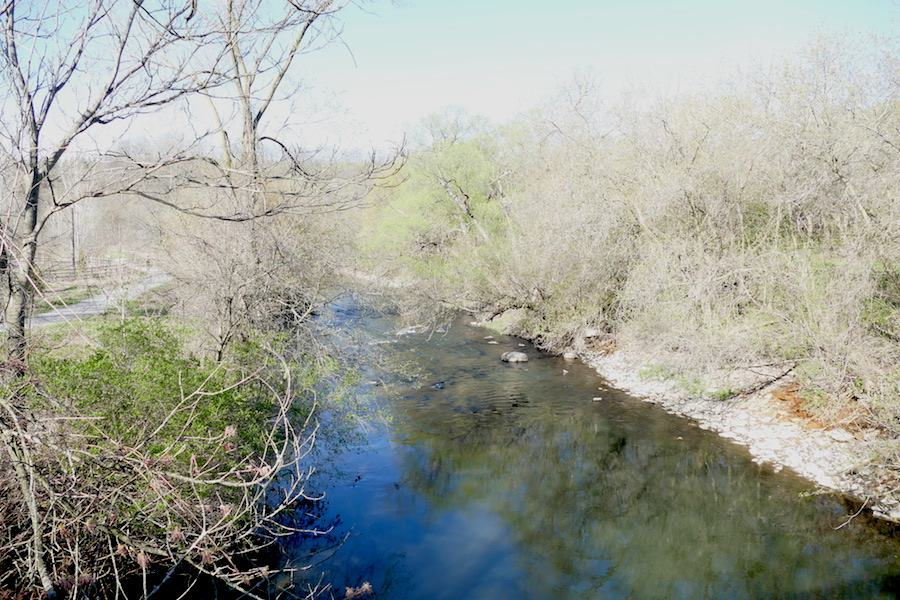
Main branch of the Don River
This section of the Don Valley was home to paper mills for 130 years until they finally closed shop in the 80s. The City demolished the old Domtar buildings and did a significant clean-up in an effort to renaturalize the area. Across the river is a woods known as Crothers Woods after the family that owned a company selling heavy equipment, headquartered at the top of the hill. My late father-in-law, George Gregory, worked at Crothers for many years. He had quite a success story with the company, starting at the bottom and working his way up to a VP role with the company. Crothers is now Toromont and now there is a Loblaws grocery story near where the Crothers building was.
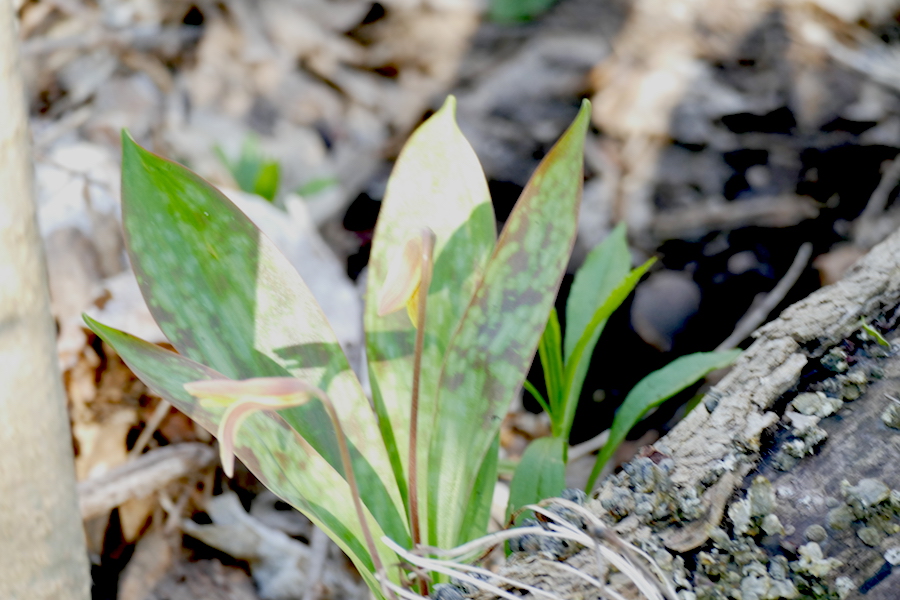
Trout LilyRail bridge over the Don River
Since the paper mill days, this area has been transformed into parkland with many forest trails, and an area called Cottonwood flats, which contains a fenced off area to protect nesting birds. The Toronto Field Naturalists do plant and bird surveys in this area.
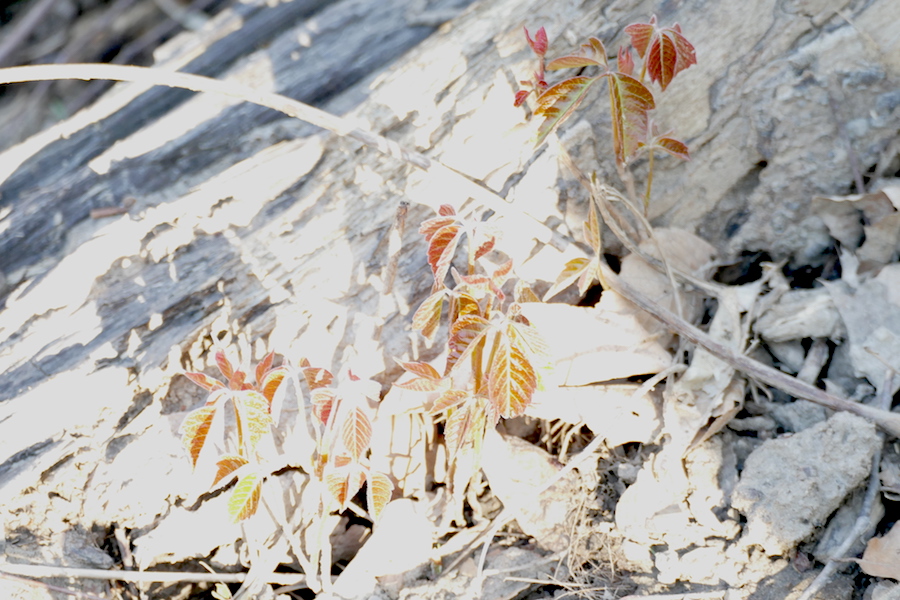
Poison Ivy
There is plenty of poison ivy (as well as loads of stinging nettle) through here so I would not recommend leaving the trail if you are in sandels and shorts. Poison ivy is a curious plant. Sometimes it is green, sometimes red, sometimes shiny, sometimes with leaves with jagged edges. Sometimes it grows low to the ground and at other times it can be a vigorous bush. Be wary if you see a plant that has sets of 3 leaves hanging down. “If you see 3 you’d better flee”. I think the proverb goes something like that, and “if the berries are white, better take flight”.
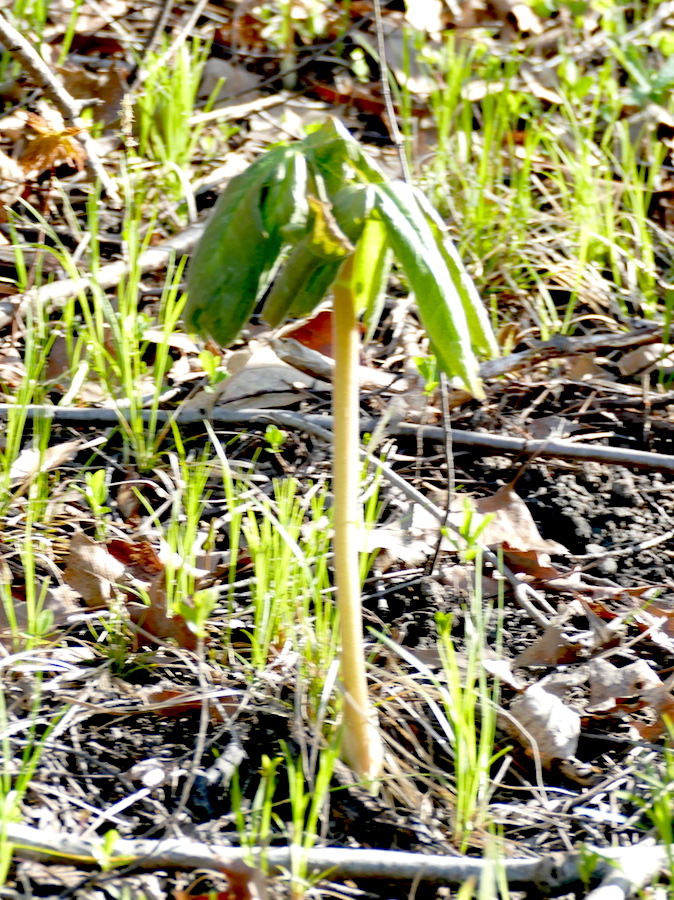
May Apple
May Apple grow knee-height. When there are 2 branches at the top, the plant produces a bud, or “apple”, which of course is not an apple at all. I’ve been told that black morels often fruit under May Apple. I’ve looked numerous times, though, and I can’t say I’ve found any there.
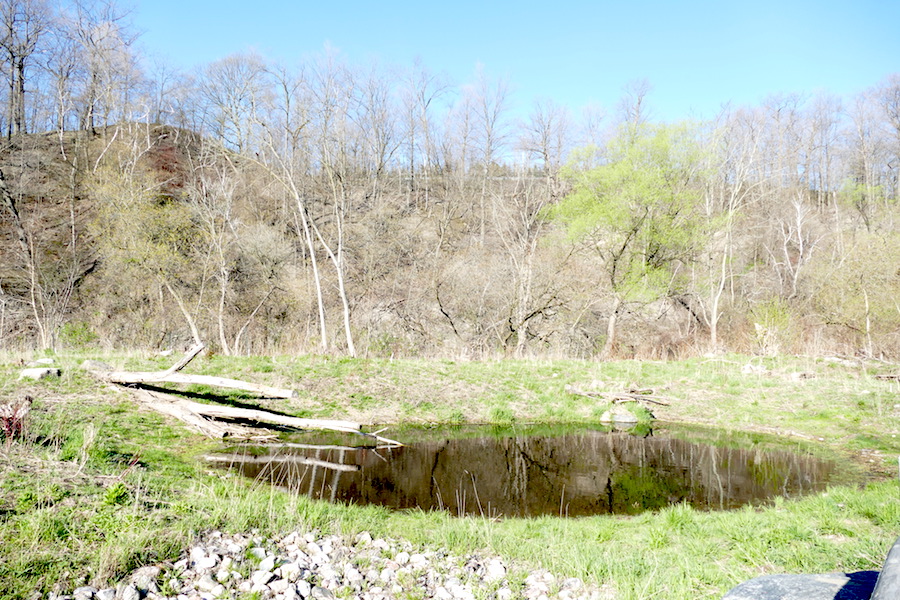
SarsaperillaPond near the Don River
There are a few ponds near the river. Logs strewn along the shore of the ponds are good habitat for a common flycatcher called an Eastern Phoebe.
Eastern PhoebeEastern Pheobe
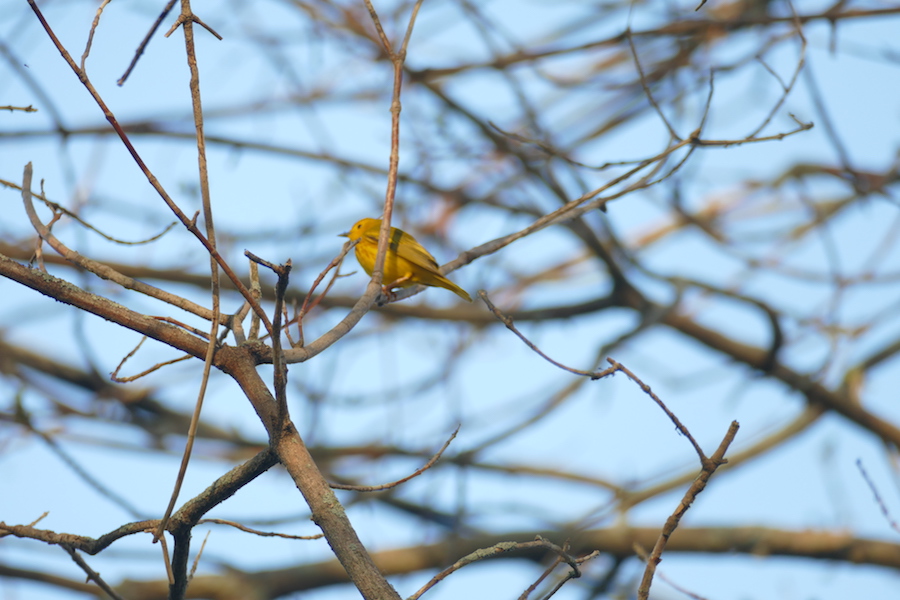
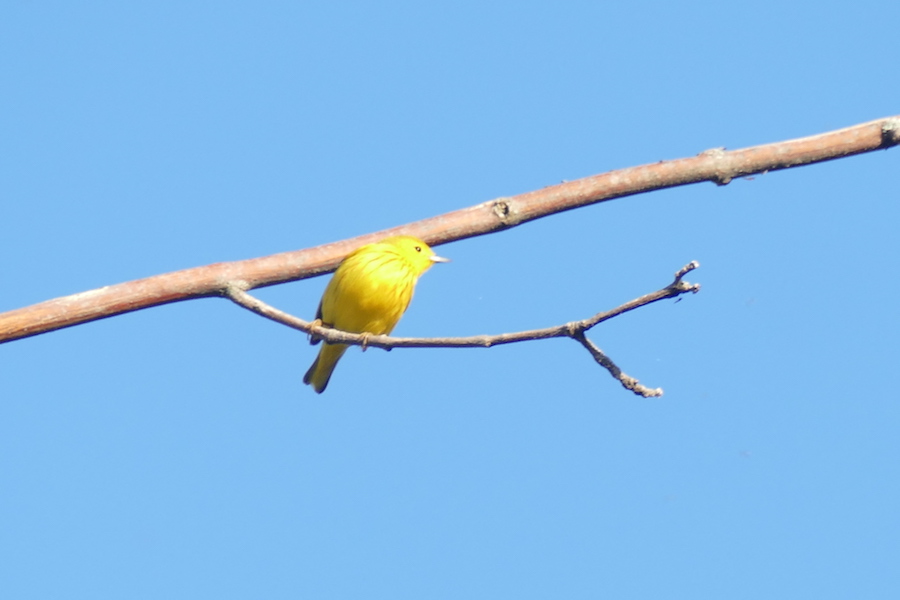
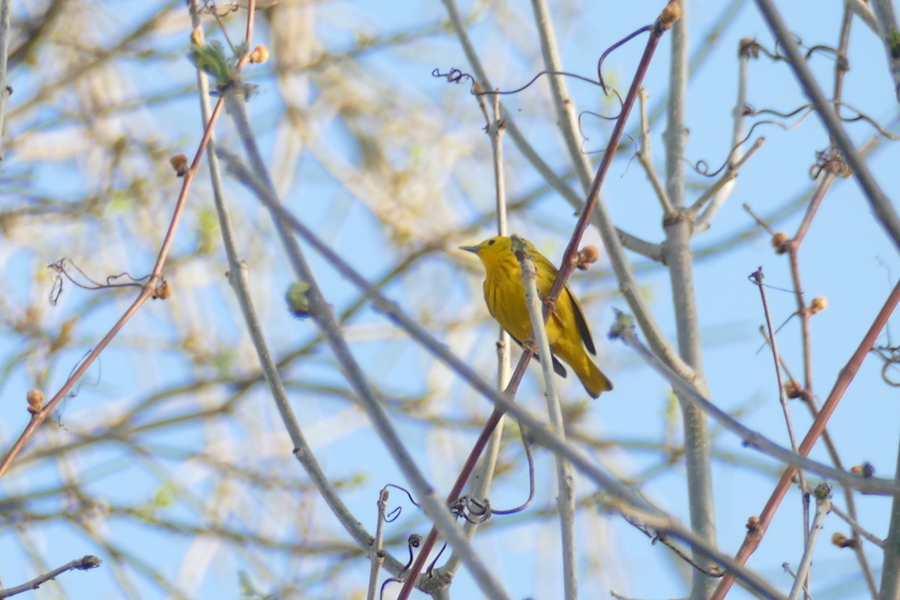
There were many yellow warblers around this morning. We could hear their calls on either side of the trail. Sweet-sweet….cherry cherry sweet. Each time, though, I would just catch a glimpse of one of them and didn’t get a chance at a good photo. Some days are like that.
Baltimore Oriole
This area is a good place to see Baltimore Orioles and also Orchard Orioles.
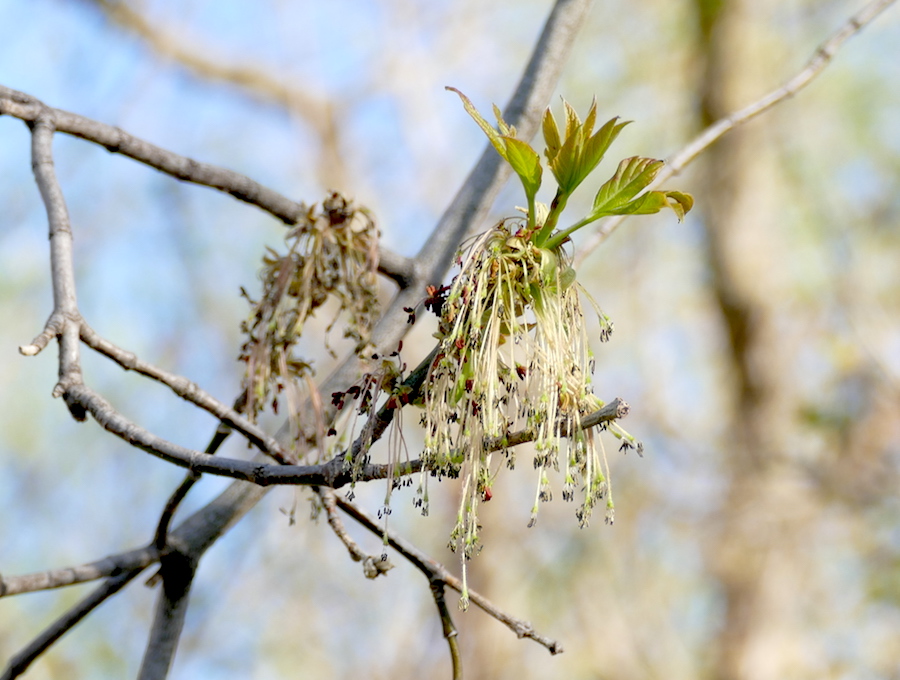
Manitoba Maple in flower
There are lots of Manitoba Maples along the river. They are quite pretty now in full flower. Manitoba Maples are also known as Box Elders. One of their most common characteristics is a tendency to grow in all directions. It’s quite common to see a large trunk growing almost parallel to the ground. In late summer, Manitoba Maples in our area are often a host for a good edible mushroom, the Hypsizygus ulmarius. This mushroom is known in some areas as the Elm Oyster, but I have never seen one growing on an elm tree. They like the soft maples best. These are very tasty mushrooms, by the way. They have a firmer texture than the super-tender Aspen Oysters (Pleurotus populinus), which we see way earlier in the season, at the beginning of June.
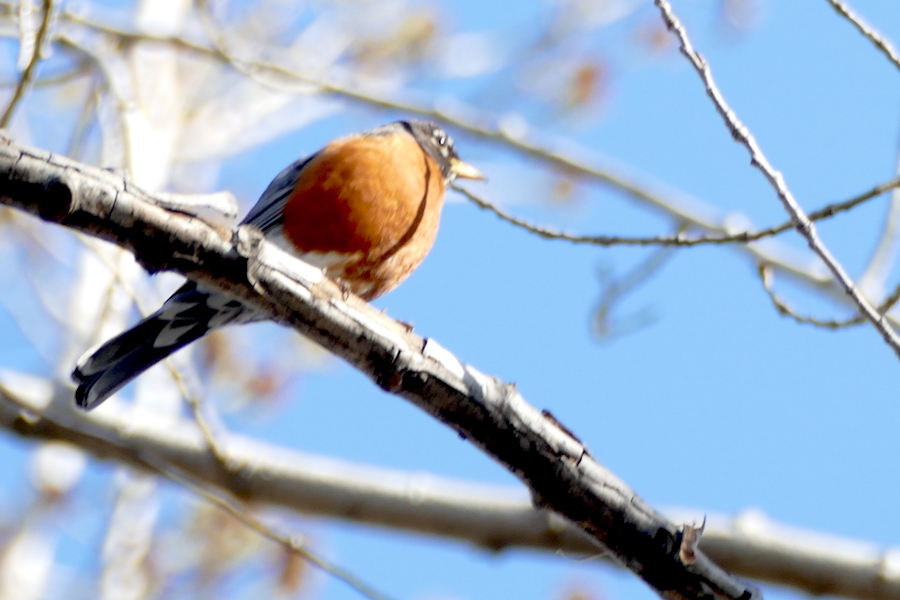
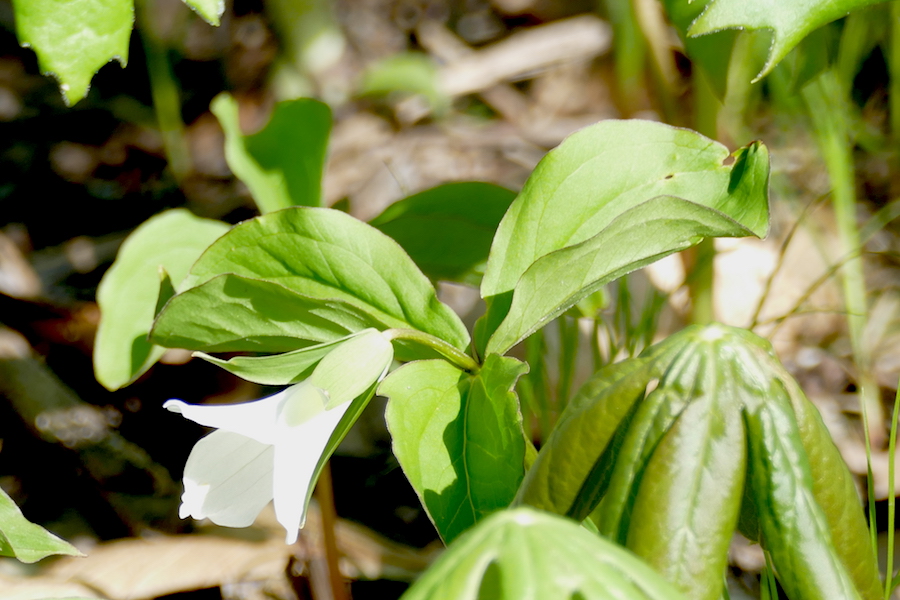
European Pussy WillowAmerican RobinTrillium
Both the Trout Lilies and the Trillium are in bloom now.
The Crothers Woods area of the Don Valley is a popular spot for nature hikers, bicyclists, including mountain bikers, dog walkers and runners. When I was a boy, my dad told me the Don was a very polluted river, and I can imagine with 130 years of paper mills, it was. I’m really happy to see it evolve into a place where people go to enjoy recreation in nature.
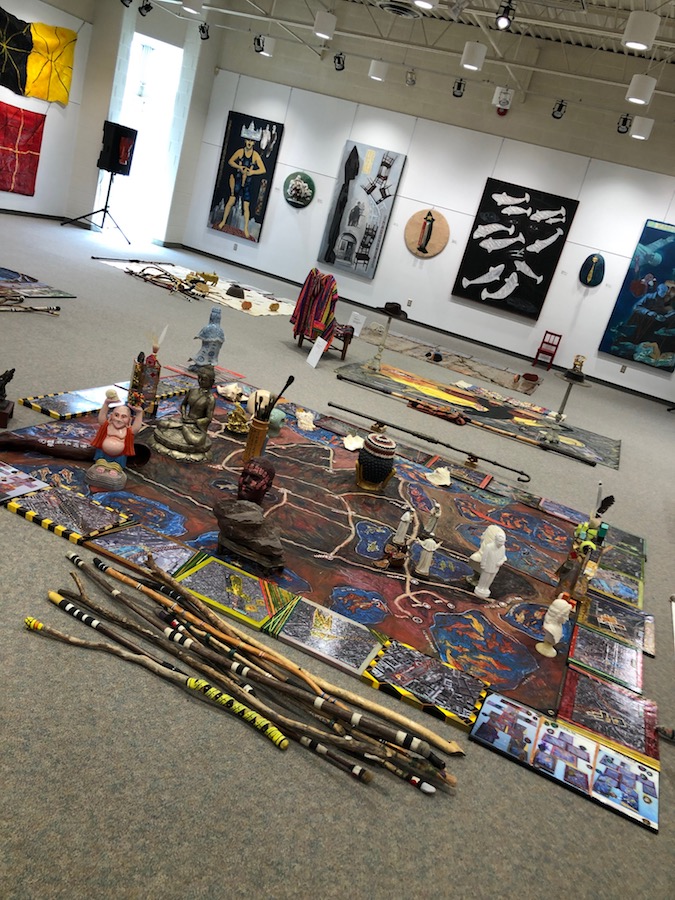
Today we went to see Walking in Circles: Treading Water – Bruce Parsons/Art Projects 1971 – 2022. The show runs through May 7 at the Neilson Park Creative Centre in Etobicoke (at the western edge of the amalgamated Toronto). If you’ve never been to this unusual artspace tucked away in a residential neighbourhood, I recommend you check it out. Bruce Parsons latest exhibition in this space is excellent, well worth the trip west for those of you who usually consume your art downtown.
Bruce’s exhibition features recent work on the ground surrounded by what amounts to a mini-retrospective of his painting – plus an outdoor labyrinthian work.
I admire Bruce’s work because he has a strong personal vision and a wonderful ability to make work which can be at the same time serious and whimsical, and work which pulls me right into his world. It is very inspirational to me as a painter. There is so much going on in this work.
Bruce has enjoyed a long career. On the walls, you will discover a wonderful variety of work going back decades. I would love to see some of the large new floorpieces in one of our big art institutions like the National for people to enjoy for decades to come.
We went to the Arts Centre to see Bruce Parsons work, and that’s what I’m writing about here, but if you go, don’t neglect the fab exhibition of work by John Parsons (yes he’s Bruce’s brother) in the Park View Gallery.
The Neilson Park Creative Centre is located at 56 Neilson Drive, Etobicoke.





















 27th Street