comments 2

Tambourines on a Stick

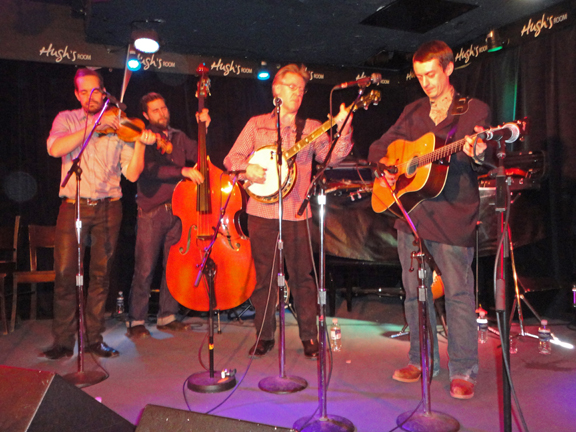
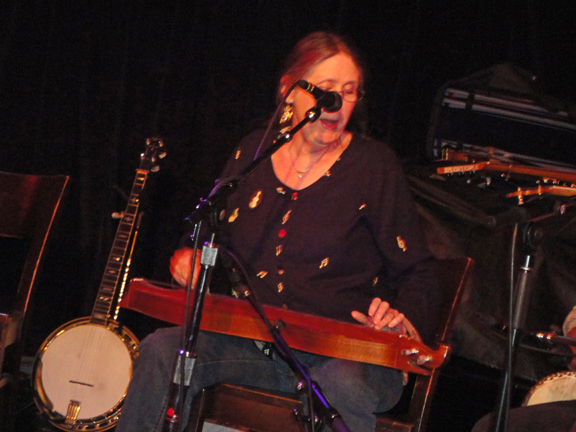
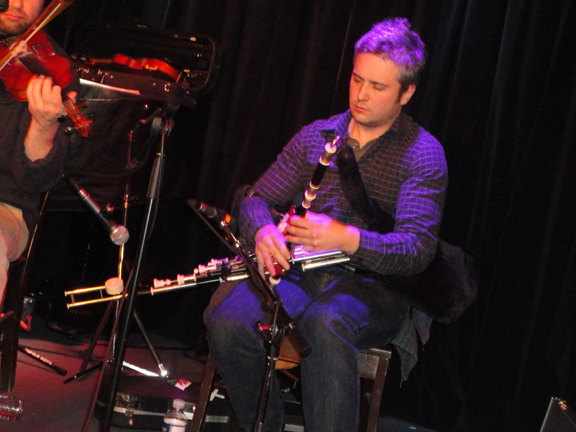
While most of the western world watched a football game, my friend A and I trundled down to Hugh’s Room for a boys night out – The Banjo Special show, featuring Arnie Naiman, Chris Quinn, Chris Coole and Brian Taheny. The show featured a variety of old time, bluegrass and Irish music, scads of banjo, and special guests playing fiddle, stand-up bass, more fiddle, guitar, bodhran, mountain dulcimer and Uilleann pipes.

DSC02102 DSC02104 DSC02105 DSC02096 DSC02101Fantastic show! All the players were top rate musicians, and even though the focus of the show was a single instrument, there was a lot of variety, from Brian Taheny’s tenor banjo to Arnie Naiman playing a gourd banjo to lots of old time clawhammer to bluegrass. There was a little singing, and a lot of instrumentals all played to a very attentive audience.

comments 2

Big Miss Liza Jane

There are apparently a number of Miss Liza Jane songs. I came across a tab for this one among the tabs in Tony Spadaro’s Tabonanza  and I’ve been working on it on the oil can along with some other songs tabbed out in that group of tunes.

This is in Double D tuning. Players on an regular size banjo would tune to Double C tuning and capo up, but on the can, with its short scale neck, I normally tune a tone above standard tuning, so in this case I’m tuning directly to Double D – aDADE.

As I improve my skills with this instrument, I’d like to develop a lighter touch and more relaxed and confident feel. At this stage, after just a month, I’m happy to be able to more or less get through a tune.

comment 0

New mosaic

We’re planning a new mosaic. We want to try some new things so this time we’re talking about a plant/floral motif, again on a shaped ground. We haven’t done any drawing for it yet – still in the discussion stage. We improvise a lot as we make these things but setting the initial drawing and determining the shape of the ground is very important as it sets the structure of the whole piece. Once we get started, I’ll document the progress over at the mosaic blog.

Today I bought a piece of wood for the ground and as well I bought us a new pair of deluxe tile nippers. These are “compound nippers”, and the package promises we can cut tile with less pressure. That would be very helpful as we cut and break a lot of tile and crockery for a mosaic.

comment 0

Oil Cans

I’ve found a couple more oil cans I like on ebay, so I guess I’m going to have to make a couple more banjos. It’s going to cost me more to ship these things to me than to pay for the cans themselves, but c’est la vie, eh.
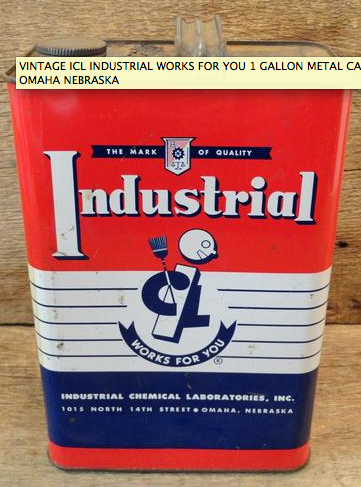
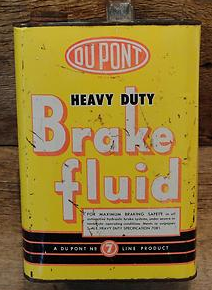
Screen Shot 2013-02-02 at 11.19.05 PMScreen Shot 2013-02-02 at 11.18.45 PMThey’re both 1 gallon cans. The Dupont Brake Fluid can has a couple little rust holes in the bottom but I think I can work with that. It has a nice yellow colour with black stripes and it says heavy duty on it, which I think is important for a banjo, don’t you?

The Industrial can is a beauty. It even has a little janitor-logo-guy and the tag line WORKS FOR YOU. And as a bonus it says “The Mark of Quality”.

My plan for these is to make my own necks rather than using old banjo necks as I did with the first one. These are going to be fretless necks with wood violin pegs. I’ve got a pretty good idea how to go about this – there are a few decisions I have to make along the way, including the shape of the head and the angle of the head. As well, I haven’t decided if I’m going to make one piece necks or laminate on a separate fingerboard. It’s going to take me a while to get to it, as I need a few tools and I have to set up a reasonable workspace. All in good time. Rome wasn’t built in a day.

These two banjos will mark a second stage for me in learning this craft. I’ll still be using a ready-made pot but I’ll have to deal with the challenges of fashioning a neck. Meanwhile, I continue to practice playing all I can, even at the expense of practicing accordion. I’m fairly confident in my skills on the button accordion, although when I’m not playing regularly, tunes I’ve learned tend to drift away from my memory. I know they’ll come back quickly though, when I refocus there. For now, because there is so much new for me involved, I need to really focus on building some banjo chops. There are a number of songs I’m playing now, but with each of them I need to bring them up a notch or two and commit them to my memory.  As I do this, I’m thinking of documenting those tunes in little videos, similar to the one I did for Shady Grove.

comments 3

Foxfire 3

Screen Shot 2013-01-31 at 11.26.18 PM

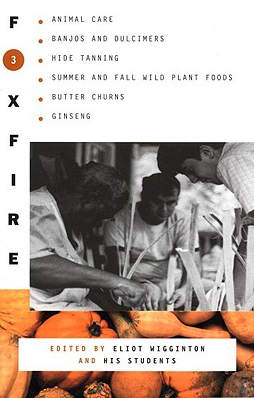
The Foxfire series of books was compiled from what was originally a magazine called Foxfire . A fellow named Eliot Wigginton started it with his 9th and 10th grade English classes in 1966 in the Appalachian Mountains of north Georgia at the consolidated Rabun County High School.

The books feature the folk wisdom of elders in the Appalachians. Foxfire 3 covers a number of topics such as tanning hides, wild edible plants, animal care, butter churns but for me most importantly, a chapter about building banjos and dulcimers. Banjo makers Ernest Franklin, M.C. Worley, Tedra Harmon, Stanley Hicks, Leonard Glenn, Dave Pickett, and Dave Sturgill, are profiled along with mountain dulcimer builder Robert Mize.  The articles include photographs of the instruments along with diagrams and even measurements. What a treasure!

I learned about Foxfire when I started researching mountain banjo designs. In a number of places, I came across references to Foxfire 3 and it turns out it is still easily available. Later I’ll learn about some of the other Appalachian traditional skills but since the book arrived in the mail the other day, I’ve been reading all about the mountain banjo.

comment 0

Little Liza Jane

I’ve been continuing to immerse myself in old time music, listening to about as many clawhammer banjo and fiddle tunes as I can. Here’s a Daily Dose of Little Liza Jane…

Let’s start with The Black & Tan String Band

and then move on to Sam Chatmon

and here’s a unique version featuring wine box banjo, psaltry and rpeek

That’s the first I’ve heard of a psaltry. You learn something everyday if you put your mind to it. It looks like a bowed zither or autoharp.

comments 7

Me playing the oil can

I’ve had some requests to post a video here of me playing the oil can banjo. This is a bit of a problem for me. The first problem is that I’m a duffer. I’ve only been hammering away at this machine for a month. The second problem is that as soon as I turn a camera on, it all falls to pieces. However, I’ve never been one to let little problems like that get in the way.

I’ve found that recording myself is a good learning tool because when I play back the video I can more objectively here how it really sounds rather than how I wish it sounds. In any case, there is one short clip that at least gives you a good idea what the oil can banjo sounds like. For those who didn’t tune in when I made the oil can banjo over Christmas, let me explain. I saw some oil can banjos on YouTube made by rpeek. Mr. Peek generously posted some videos showing how he goes about making oil can banjos. I thought, heck I can make one of those. And I did. So now I have to learn to play the thing.

As I get better, I’ll post some more videos of the tunes I’ve been playing.

comments 2

Visit to Story Gourd Workshop

This afternoon, I drove up to Cookstown Ontario, about a 45 minute drive north of 27th Street to meet Dena Lee and visit her shop, the Story Gourd Workshop. I’ve wanted to do this for some time since I found out she was making gourd banjos just down the road.

Dena is a remarkable individual who not only builds banjos and ukes, but is also a physician. She makes custom banjos and also offers workshops in making gourd ukuleles and kalimbas. I’m looking forward to participating in a future uke workshop! Check out her site and also her page on facebook (I just saw a picture of me on there, playing one of Dena’s banjos!).

Let me say that Dena’s banjos are gorgeous! They’re beautifully crafted, and they fill the room. The tone is just beautiful, rich and deep, and the volume is remarkable. Most of her instruments are fretless but she’s just made a fretted one as well. I really liked the feel of the fretless neck. It wasn’t nearly as difficult as I expected to find the notes and it is delightfully fluid.

Dena took the time to talk to me about her building process and show me her tools. I was particularly interested in seeing how she makes her necks because I’d like to make another oil can banjo, but this time with a fretless neck of my own making. Eventually I’d like to try making a gourd banjo and the other style of mountain banjo as well. All in good time.

I really enjoyed my visit to Story Gourd today. I learned a lot, and had a chance to meet Dena who is not only a great banjo builder but a super-nice person too.

Here’s Dena playing my oil can banjo. Banjofiles out there will notice right away that Dena is a lefty and my banjo is a righty so she was working it out “upside down”. It worked for Jimi on guitar, so why not for banjo.

DSC02049