If you ever get the idea in your noggin that you’d like to chuck everything and live a hobo life, now you can get a taste for what that’s like without ever having to go near a train yard.
Hobo Shoestring regularly posts videos of his adventures riding the rails. He freezes his butt off on a lip grainer so you don’t have to.
Do you play Go? Or maybe you know it as Baduk or Wei Chi? This is an exciting time in the Go world. The Samsung Cup recently took place and now the LG Cup is in progress. If you’d like to see an exciting, high-level game with some analysis in English, the Baduk Doctor YouTube channel posted an excellent video about the semi-final match between Ke Jie and Shin Jinseo. The Doctor’s channel boasts many videos of his own games as well. He is a high-level amateur who often plays online with pros.
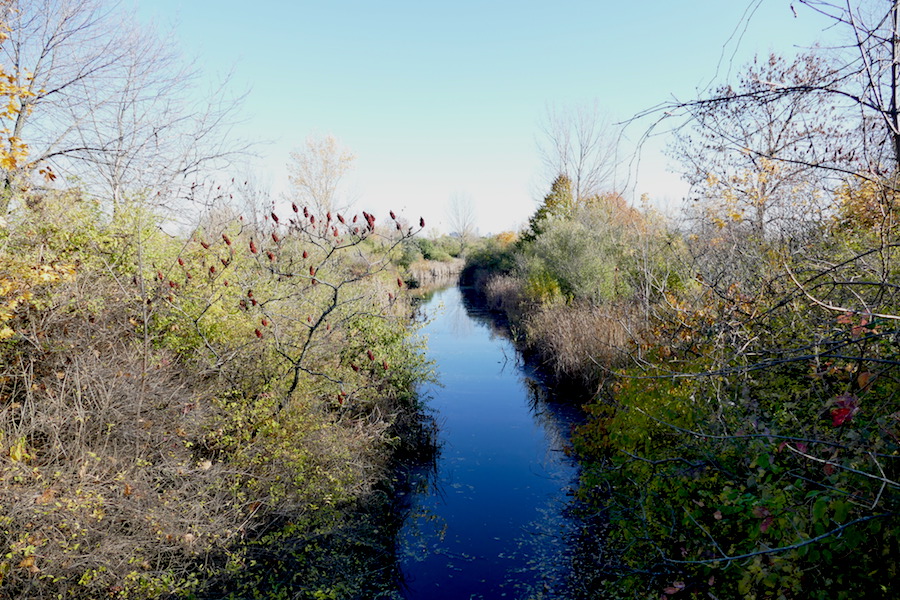
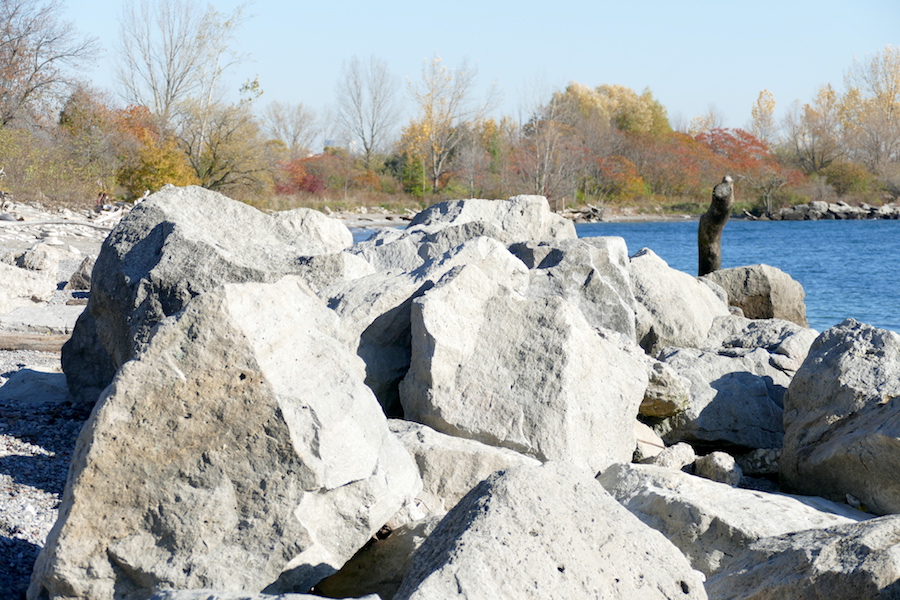
As I type I’m looking out the front window of the house. A dark cloud sits overhead and light rain has begun. It was very different this morning. In fact it was such a lovely sunny morning, I thought it would be perfect for a good walk. I drove down Lake Shore to Humber Bay East to walk by the lake.
I decided to attempt to make Vietnamese egg meatloaf (Chả trứng hấp) at home. In Vietnam, particularly in the south, it is often served with Cơm tấm, or broken rice. Usually Cơm tấm has a few items with the rice, such as this meatloaf, some veggies, and perhaps grilled ribs or a pork chop. The closest thing I can compare this yummy egg meatloaf to would be a frittata, in that it has various ingredients bound together with egg to form a thick patty of deliciousness. The taste is much different, though.
black fungus and bean thread noodles
There are two items that need to soak for a short while before assembling in this dish and they are black fungus and bean thread noodles. Black fungus or Cloud Ear fungus is related to wood ear fungus and it’s a type of jelly fungus used extensively in Vietnamese cuisine as well as Chinese cuisine. You can buy it dried and sliced up in Asian markets under the name Black Fungus. Bean Thread Noodles are also called cellophane noodles. They are made from mung beans and they are available in most grocery stores. Soak some black fungus and some cellophane noodles in water for a few minutes (separate bowls) until they soften up. Then remove both from the water, rince the fungus under a cold stream of water, then squeeze out excess water and roughly chop up both.
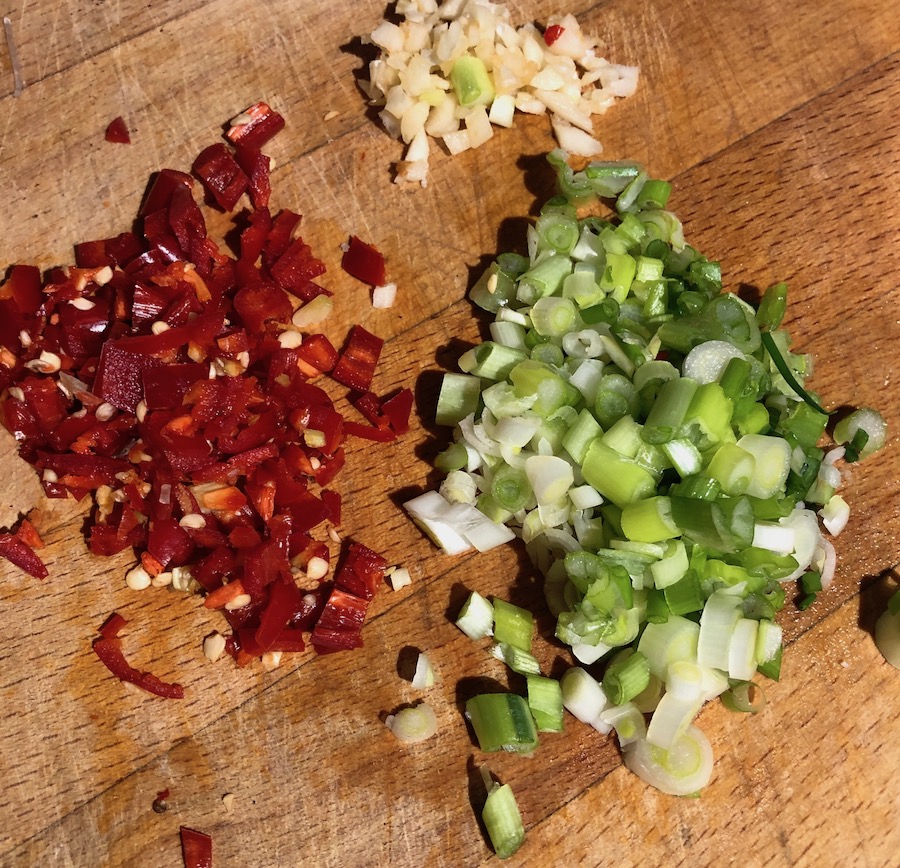
Add the black fungus and cellophane noodles to a bowl along with a similar quantity of ground pork. The tasty combination of ground pork and black fungus can be found in many Vietnamese dishes. Chop up and add some garlic. I also used Cayenne chilies chopped up (optional – you can add heat with a condiment later if you like). Chopped green onions add additional flavour and colour.
chilies, garlic and green onions
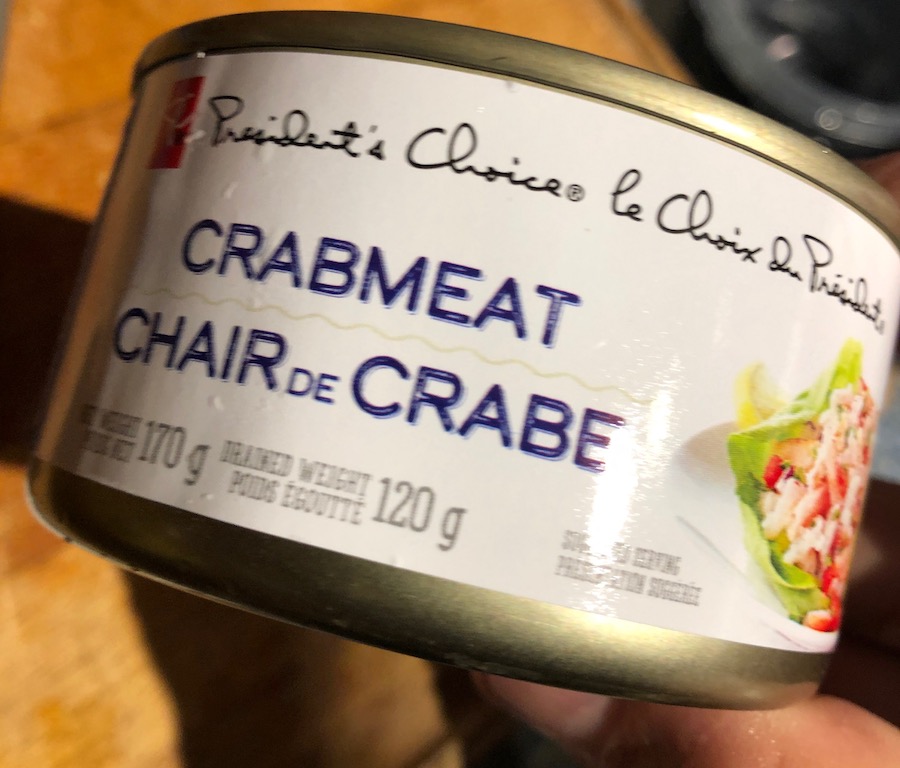
Usually this dish includes crab meat or shrimps. I had a can of crab meat and it worked just fine. When you open the tin, drain and squeeze out excess moisture, then add it to the bowl.
Add salt, pepper, and Vietnamese fish sauce. I used a ceramic soup spoon full of fish sauce. You can use less or more depending on your taste. Vietnamese fish sauce is made from fermented fish, usually anchovies. The best fish sauce I’ve had here in Toronto is Red Boat. In our local Asian market there are several brands of Vietnamese fish sauce available. The best brands have the fewest ingredients. Look for the number 40. That represents the strength of the concoction and 40 is the one most commonly used in Vietnamese cooking. The fermented fish in fish sauce has a high glutamate content and glutamate is what allows us to experience the flavour we call umami. Umami is a Japanese word which I believe translates to something like the essence of deliciousness. In short, fish sauce makes savoury foods taste yummy. It’s also at the core of Vietnamese cooking.
Some people add a little oyster sauce as well, but I didn’t and I didn’t miss it.
Next you will need around 6 eggs. Separate out the yolks from 2 of the eggs and reserve them. The whites and the other 4 whole eggs can be added right into the mixing bowl.
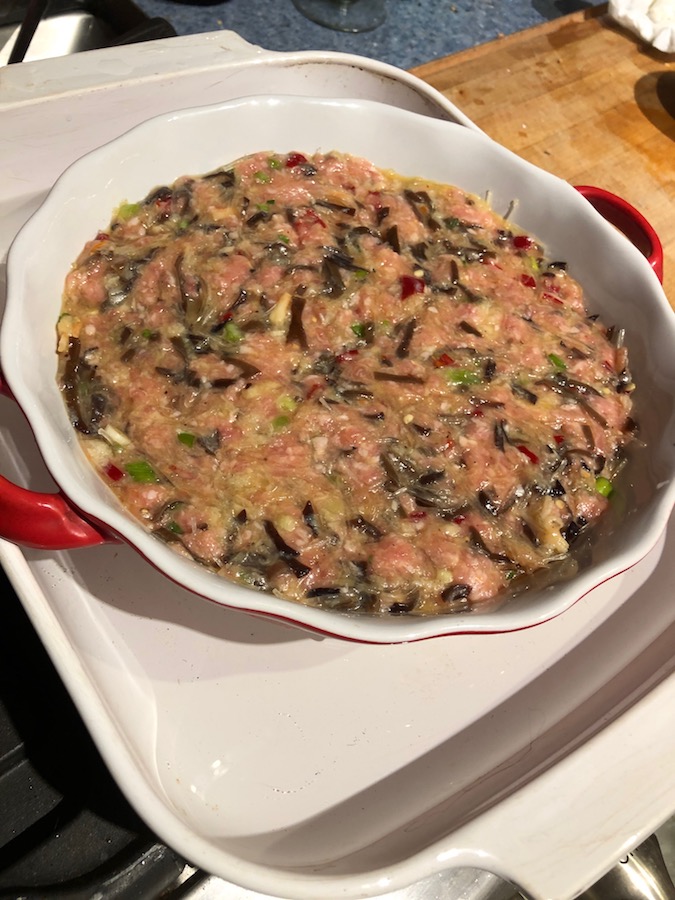
The next step is to mix everything together thoroughly. The final mixture will be quite wet. I used a ceramic round casserole dish. It’s a good idea to use a bit of oil or cooking spray on the bottom of your cooking vessel to prevent sticking.
Ready to cook
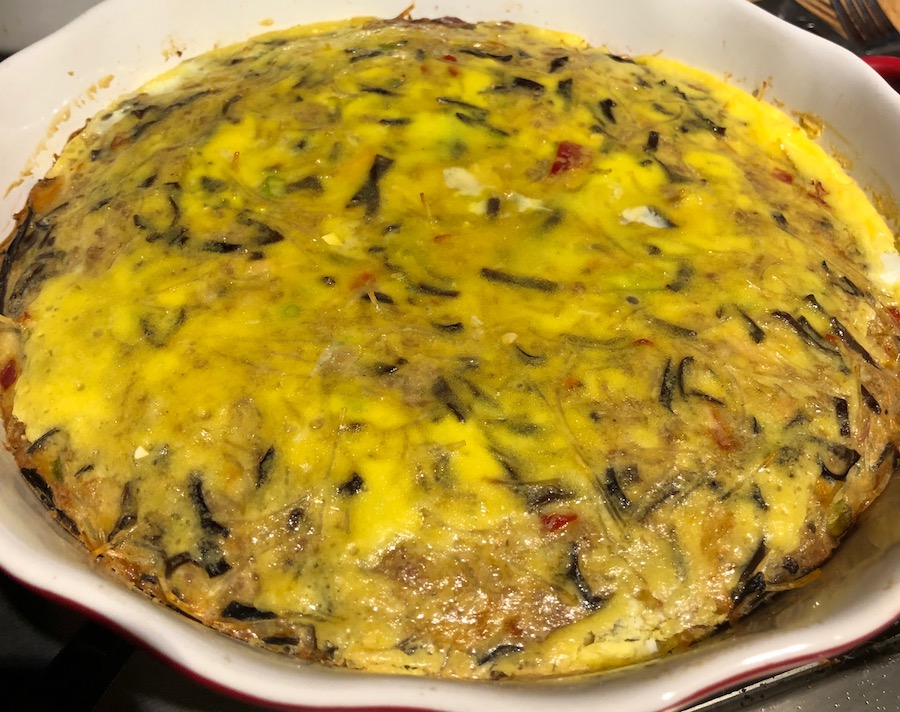
You can either steam the egg-meatloaf in a steamer or you can put your dish into a larger one with water on the bottom and steam-bake it at 400F. That’s what I did because I didn’t have a cooking dish that would fit my bamboo steamer correctly. Cook for about half an hour to 40 minutes. It’s ready when you stick it with a fork and it comes out clean. Mix up the 2 egg yolks with a fork and spread on top of the egg-meatloaf, then pop it back into the oven for maybe 5 minutes. The egg yolks make a yellow coating on top.Let it sit for a few minutes before cutting.
Out of the oven
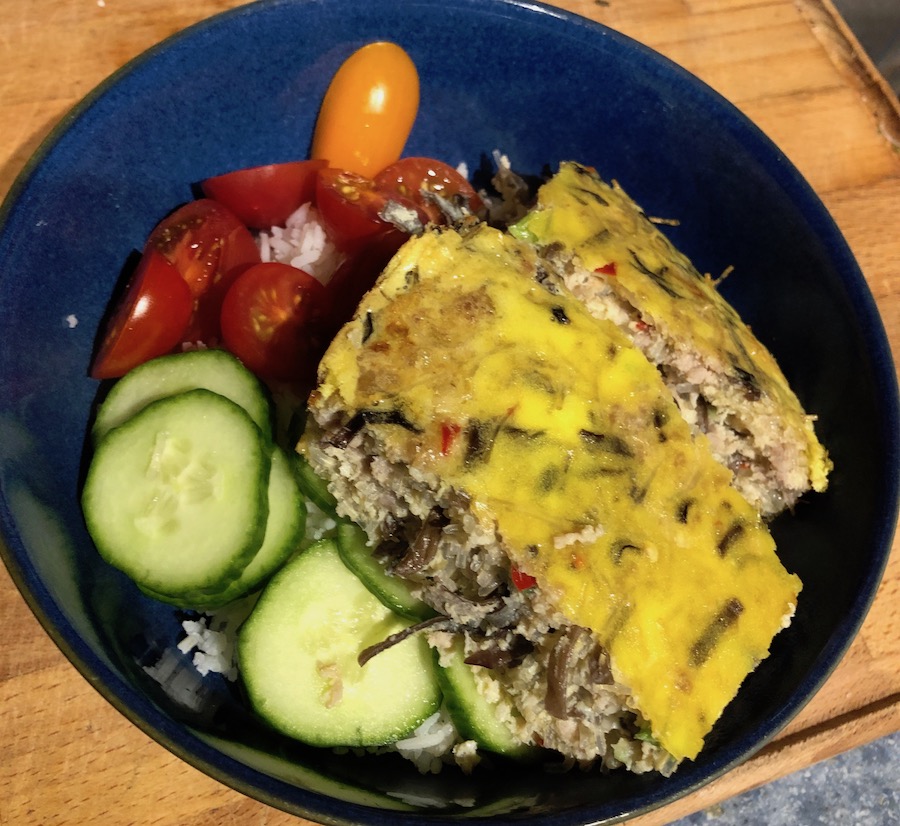
The result of my attempt at making this dish was super-tasty. I enjoyed it cucumbers and tomatoes on rice. You can add whatever condiments you like, such as hoisin or hot sauce or some basic Vietnamese dipping sauce.
Yesterday, I planted garlic for harvest next July. I planted garlic cloves in various spots in the garden. Two or three here. Three or four over there. Each autumn the temperature drops enough to remind me it’s time to get things around the yard ready for winter. That temperature nudge is the same one reminding me it is time to plant the garlic.
If you plant garlic too early, it will sprout, which should be avoided. If you wait too late, the ground will start to freeze. I’ve planted in October before, but I think most years I do it early in November. The garlic plants will show themselves early in spring. Later, scapes will appear. These should be cut off so the plant will put its energy into the bulb instead of into blooms. Last spring I made pesto from the scapes and it was delicious.
By the second or third week of July, our garlic is usually ready for harvest. I watch the leaves. When the bottom 2 or 3 leaves turn brown, the garlic is ready. After harvest, I hang the garlic in a dry place to cure. This year it was from an “easy-up” we had set up on the deck. After a couple weeks, the garlic is ready for the kitchen. We have this year’s crop braided, hanging above the sink where it is handy whenever we need it.
The new episode of The Agency Podcast is now available. Listen here or find it at all the good podcast places.
This week: Candy is back in Chicago from her travels. In Toronto, Eugene is cleaning out birdhouses and planting garlic. We talk about the titans of the game of Go playing in the Samsung Cup. On the tube: American Rust and Colin in Black & White. And… is Dexter really back? Eugene went to see the new Wes Anderson film, The French Dispatch of the Liberty Kansas Evening Sun.













 27th Street