
Wolf
comment 0
I’ll be Back Someday
Wolf
Wolf
Part of learning any instrument or any genre of music is immersing yourself in the music you want to play. I’ve been putting a lot of time and effort into learning fiddle and it’s safe to say that much of the time I have a fiddle tune on my brain. These days most of those are either Canadian tunes or tunes in the Canadian old time repertoire – which is pretty wide.
Lately, I’ve been playing one of the most popular fiddle tunes in Canada, the St. Anne’s Reel. I learned the basic tune (in D) and and thanks to help from my fab fiddle teacher, I’m working on a variation too. This one is so much fun to play because it rollicks along beautifully. I love that it’s one of the tunes that most Canadian fiddlers have in their repertoire.
According to the Traditional Tune Archive, St. Anne’s was first recorded by Montreal fiddler Willie Ringuette in 1927 and 3 years later by another Montreal fiddler Joseph Allard. The tune is known by several different names. The name St. Anne’s may refer to one of the bays called St. Anne in eastern Canada, or perhaps Baie Sainte Anne, on St. Anne’s Bay near Mirimishi NB, or possibly the municipality of Sainte-Anne-de-Bellevue , a suburb on the island of Montreal.
St. Anne’s is played by Irish fiddlers as well, and I believe there might be some people who will claim it as an Irish tune. It’s possible that there are similar Irish tunes, of course and it’s also possible that one of them became the Canadian tune we now call St. Anne’s. The tune has found it’s way into American Old Time and Bluegrass repertoires along the way, and there are some mighty fine versions across the various genres.
Here’s Ferfal Scahill and Aodán Ó Cadhain with a really fun version…
Paddy Moloney, founder of The Chieftains and champion of traditional music died yesterday. Mr. Moloney was 83. RIP.
The new episode of The Agency Podcast is now available. Listen right here or find it at all the good podcast places.
This week:
Candy in Knoxville
More Squid Game + an antidote: Baking Impossible
Fiddler Vivian Williams on the Get Up in the Cool Podcast
No Time to Die and the Bond films
Out of the Past – 1947 noir classic
Botez Live – super-fun power-streamers of the chess world
Tony Bennett at 95 with Lady GaGa at Radio City
Email us anytime.
Thank you for listening. If you love this podcast and would like to help pay some bills, please visit our Patreon page.
This tune is also known as the Dziadek Polka or translated, the Grandfather Polka. It’s a popular tune both among polka bands and in the fiddling community. Here are 3 great versions.
Here’s another fabulous version featuring Canadian fiddler Mark Sullivan with the amazing Jeremy Rusu on accordion.
Now let’s hear a version with a clarinet (as well as trumpet, sax and a bellows-shaker)! It’s Dennis Polisky & Maestro’s Men – these guys really cook…
Standing in a river below a falls, trying to catch a few fish – it doesn’t get much better than that.


Listen to the new episode right here or find it at all the good podcast places.
This week:
Candy’s continued adventures in Clarksville
The Many Saints of Newark – another origin story.
American Rust – what happened to the American Dream?
The Squid Game – this super-violent series grabs you and won’t let go
Please join us. Email the show anytime. We love hearing from you.
I went for a walk this morning in a forest not too far from the City, hoping to find some lobster mushrooms for dinner.
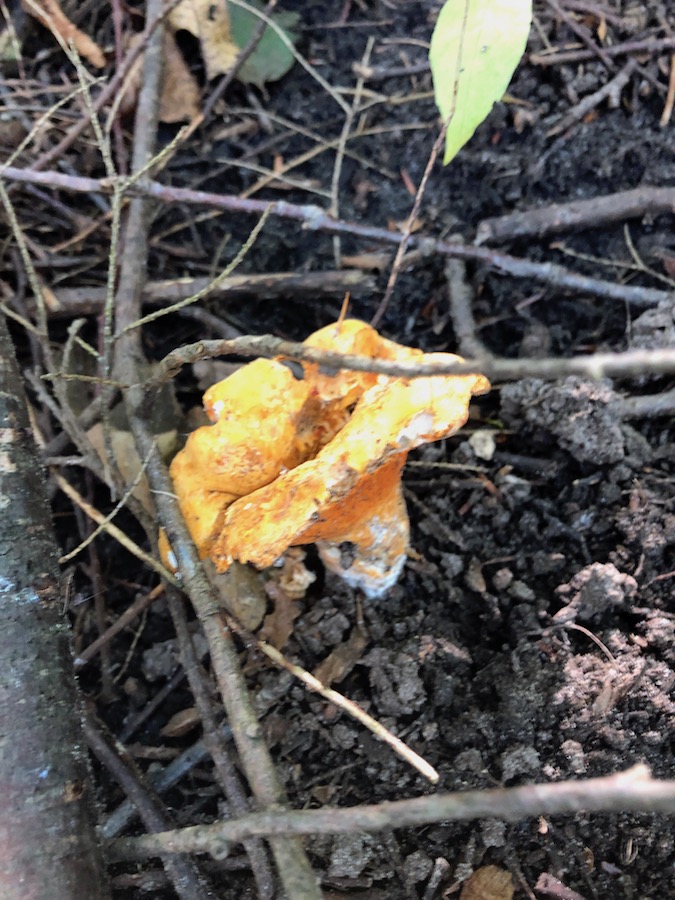
However, most of the lobsters around were well past their expiry date, either well-ravaged by the bug population or showing the tell-tale deep red colour that screams, you should have been here last week. What I didn’t expect was to see quite a few milk caps around, mushrooms I have never seen before in this forest.

These mushrooms look like the saffron milk cap, Lactarius deliciosis, minus one important trait. L. deliciosis stains a greenish colour when bruised but I could not coax the green out of these mushrooms by bruising, breaking them or cutting them. They might be L. thyinos, which do not stain when bruised. However, when I have found L. thyinos in the past they were a brighter orange colour with a deeper orange “milk”, visible when you break off a piece.

I saw some pear-shaped puffballs, which had already turned into spore factories, well past their expiry date as a tasty edible.
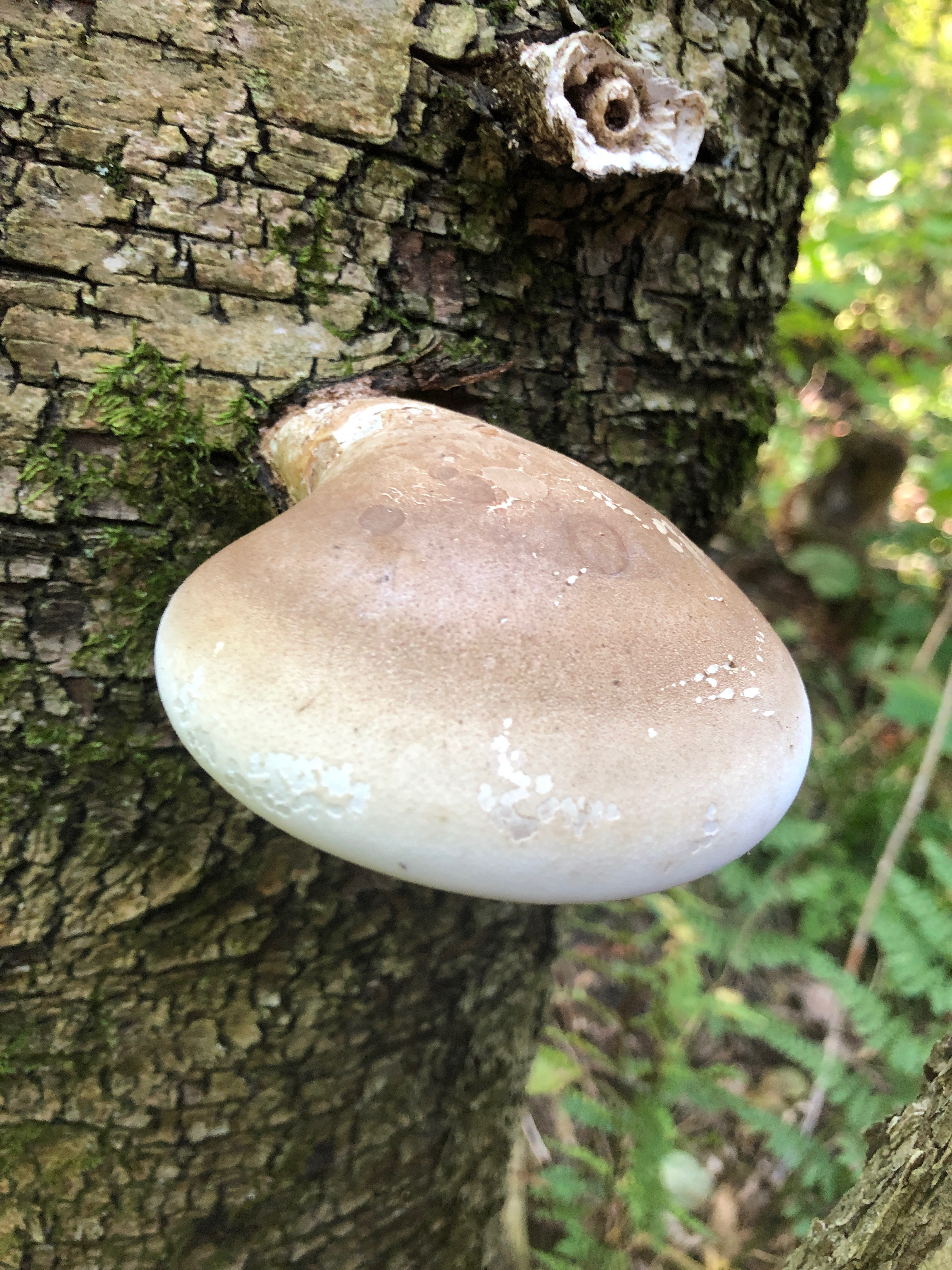
I also came across some birch polypores. These are not edible. I have heard that dried out, they make pretty good fire starter, though.

The most common mushroom in this forest today was the mis-named Entoloma abortivum. This mushroom is the result of a fateful interaction between Entoloma and Armillaria mushrooms. It was thought that the Armillaria attacked the Entoloma, causing it to fruit as weird white blobules, hence the name. Today it is thought it is the other way around. The Entoloma attacks the Armillaria, and so the name of the mushrooms should perhaps be Armillaria abortivum rather than Entoloma abortivum.

B3 great Dr. Lonnie Smith died September 28 at age 79. RIP.
 27th Street