

Rubiska 
Georgie
comment 0
The Partners
Rubiska Georgie
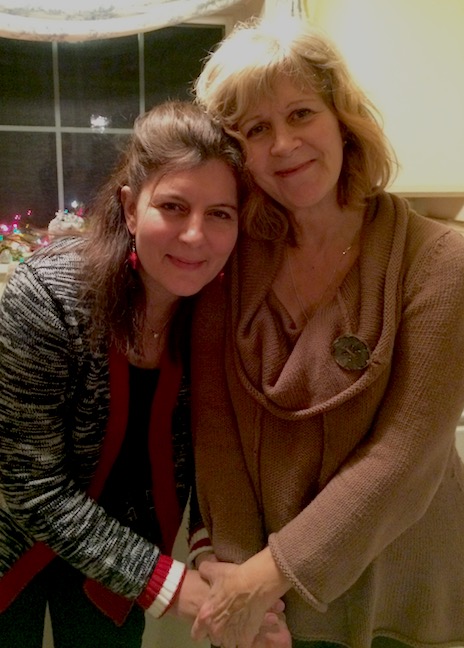
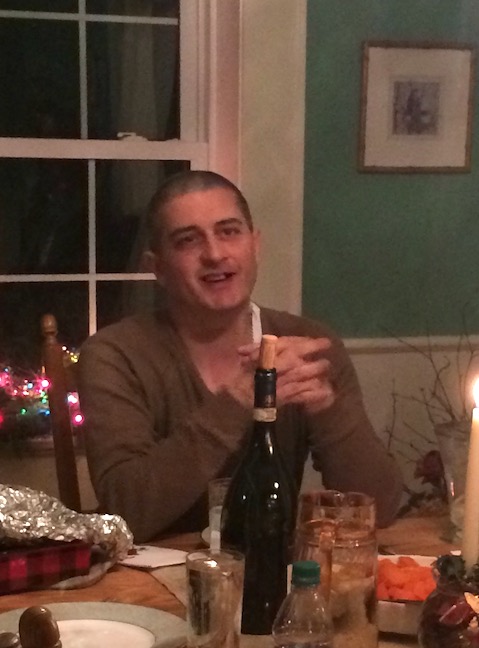
My sister lives in the country, up in Hockley Valley. Susan and her husband Peter invited us up to their place for a family Christmas Eve dinner last evening. We had a lovely dinner, and a chance to catch up with some family we don’t see so often.



Tuffy P and I volunteer for a 5-pin bowling league called The Tri-Hards. The bowlers, all adults, have various challenges and disabilities. The league has been going for many, many years, and some of the bowlers have been getting together to bowl for 20 years or more.
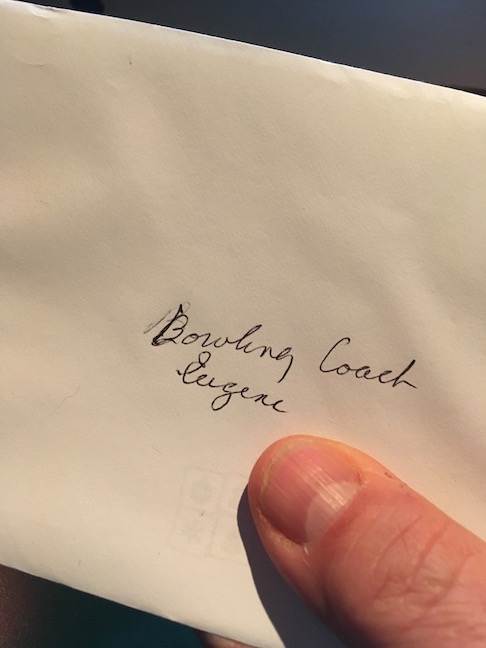
Initially the volunteer role was scorekeeper, but that changed this season. 5-pin bowling alleys here in Toronto are disappearing to make room for yet more condos. We used to meet at the Bowlerama on Dundas in Etobicoke but with the demise of that joint, we’ve moved to the one way up on Rexdale near Kipling. This place has automatic scorekeeping. This eliminates the need for scorekeeping but volunteers are still needed to make sure everybody bowls in order, and bowls the right number of balls, as well as to deal with any issues which might come up with the bowlers (some are higher functioning than others). Us volunteers are still usually referred to as “the scorekeepers” but yesterday I received a Christmas card from one of the guys on my team, addressed to “Bowling Coach Eugene”.
Yesterday was the Tri-hards Christmas Party. Instead of just meeting to bowl, yesterday, all the bowlers and volunteers enjoyed some bowling alley food for lunch (choice of burger and fries, hot dog and fries or grilled cheese and fries). One of the volunteers knitted a toque as a gift for each of the bowlers. What a fantastic thing to do!
Tuffy P got involved with the Tri-hards well before I did and after a while told me they needed more scorekeepers and asked me to volunteer as well. I have such a great time doing this. The bowlers are a great bunch of people and they have a ball on bowling days.
A big thanks to Bill R for shooting some video for us. Please excuse the ambient noise such as the espresso machine and so on….
Ted Myerscough: guitar + Eugene Knapik: clawhammer banjo
My parents brought us kids up to be Canadians. Mom was born in Poland but came over with her family as a young girl. Dad was born in Montreal. His dad moved to Canada from the States at some point along the way. He used to live in Chicago where he worked as a musician, “in the pit bands”, as my dad liked to say. He was a violin maker and repairman and he was in the glove business – an oddball combination I know. Grandpa was Polish too but I don’t know if he was born in America or in Poland. I guess I never thought to ask.
Dad didn’t speak Polish. Mom did, but her Polish had lots of holes in it which she would fill in with English words. She mostly only spoke Polish on the phone with her sisters when she didn’t want us kids to know what she was talking about. We would try to piece it together by the English words in the conversation. She would also swear up a storm in Polish from time to time.
On the high holidays, Mom would spend a couple days making Polish food – cabbage rolls and pierogi and meat on a stick, marinated, fried and roasted. It was these meals – feasts really – when our Polish heritage came out.
Dad would take me down to Queen St and we’d line up for the best kielbasa in town at Czehoski. And then we’d buy fruit, loads of fruit. Mom used to tell me that the first time she had an orange in her life was on the ship coming over from Europe. I think for her fresh fruit came to represent the opportunity that Canada provided for our family, because Dad would always load up with bags of the best fruit he could find, especially oranges.
Christmas cooking was always a big production. I remember sometimes Aunty Stella would come over and help Mom make pierogi. Stella was the fastest pierogi maker I had ever seen. They would make dozens of them, which they would freeze on trays, before transferring the frozen pierogi into bags with a dozen in each bag. Freezing before bagging meant the pierogi wouldn’t stick to one another.
From time to time, usually around Christmas, I make some Polish food. It’s like a time machine, and it transports me right back to my childhood. I remember watching Mom line her big roasting pan with the outside leaves from the cabbage before laying in her cabbage rolls to roast. Then she would put pieces of back ribs on top, allowing the pork fat to drip down through the cabbage rolls as they cooked. I went to grade school just down the street from our home. When Mom was making cabbage rolls, I could smell them from the schoolyard when we were outside playing at recess. Those outer leaves would caramelize and become like cabbage candy. I remember my sister and I fighting over this treat.
Mom had a stash of 4 or 5 Li’l Wally polka records. This included one record of racy polkas sung in Polish, which turned Mom’s face scarlet red and caused her to laugh and laugh. She didn’t bring these records out often. Usually the console stereo in the living room was dominated by Dad’s Dixieland or maybe The Mills Brothers or Jimmy Rushing, Mr 5X5. Sometimes though, when she was doing Christmas cooking or baking, she would pull out her records and have Dad put them on for her.
Here’s the late great polka king, Li’l Wally, performing Johnny’s Knocking on the Lawrence Welk Show. I love his beautiful Chemnitzer concertina!
Sometimes I regret that we were not immersed in more old country traditions, and I also wish I had the language. At the same time I grew up as a Canadian kid in a country of opportunity and privilege and I’m grateful for that. Here’s one more nod to my Polish roots. Listen to the fabulous Scrubby and The Dynatones, from Buffalo NY, playing Zosia – my favourite polka – and watch those crazy dancers.
A friend’s mom passed the other day and so this morning we zoomed up to Markham for the funeral service and burial. At the cemetery, although there was little wind, the cold was biting. By the time we returned home to Long Branch, though, it seemed the temperature had crept up a few degrees. It was clear and it was sunny.

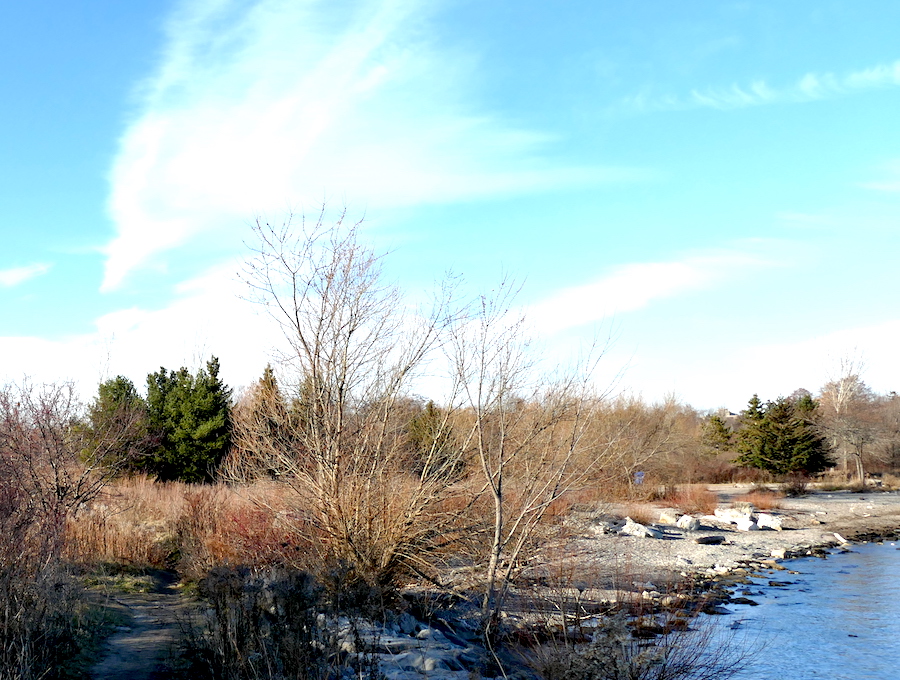
I could not resist a walk out to Sam Smith Park to enjoy this rare December weather.
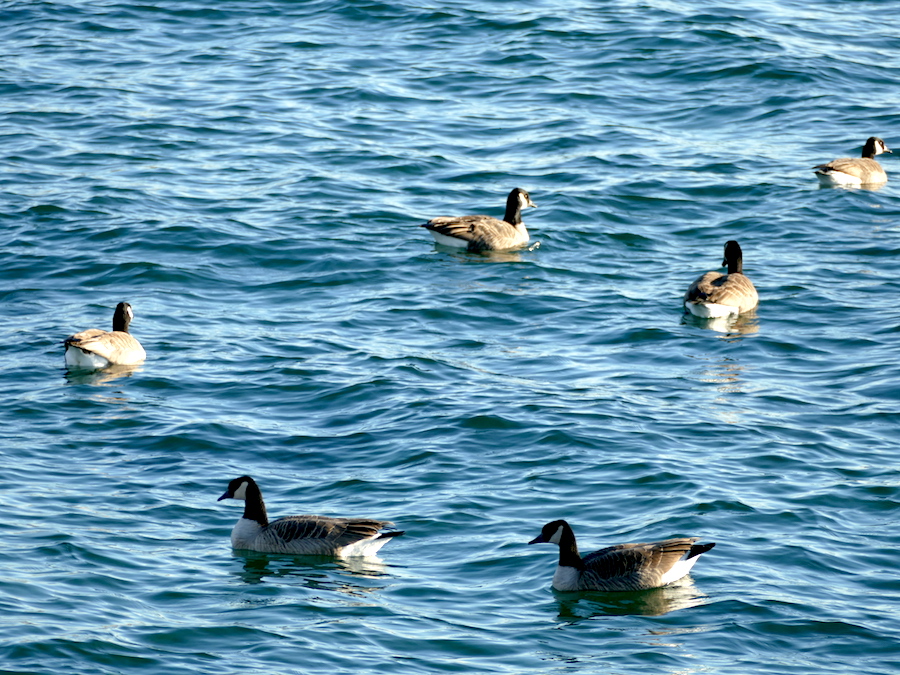
There was a fellow at the far east end of the park looking after swans, ducks and gulls, who were panhandling in the park. I hope whatever he was feeding the birds does not do them any harm. In Sam Smith Park, if you walk towards an area with ducks in the water, the mallards and the mute swans usually move closer, while the other ducks such as buffleheads and mergansers move away.

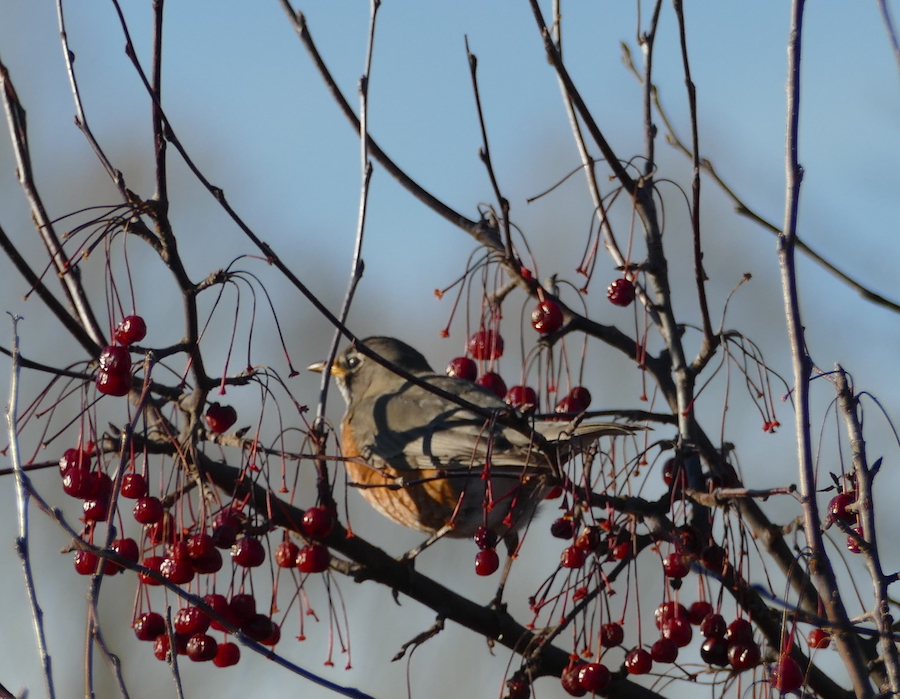
I did not see nearly as much bird-life as I saw the other day in the park. Somebody has a feeder set up near the parking lot, and there were some chickadees there, and a male cardinal, as well as a couple mourning doves walking around under the feeder. At the cherry tree, there were a few robins. I didn’t see any cedar waxwings (there were lots the other day). Also absent were mockingbirds and kinglets.
It felt great to walk around on a sunny day. It seems as if we’ve been mostly experiencing a lot of grey.

For those in need of a fiddle tune, right now. Here’s Patti Kusturok from her 365 days of fiddle tunes video series. This is number 356.
Early this morning, I took The Partners out for some doggy social time at Jack Darling Park. After they tired themselves out goofing around with new friends, I dropped them off at home, picked up my camera and walked over to Sam Smith Park to see what there was to see.

It was a somewhat hazy morning with no wind and mild temperature.
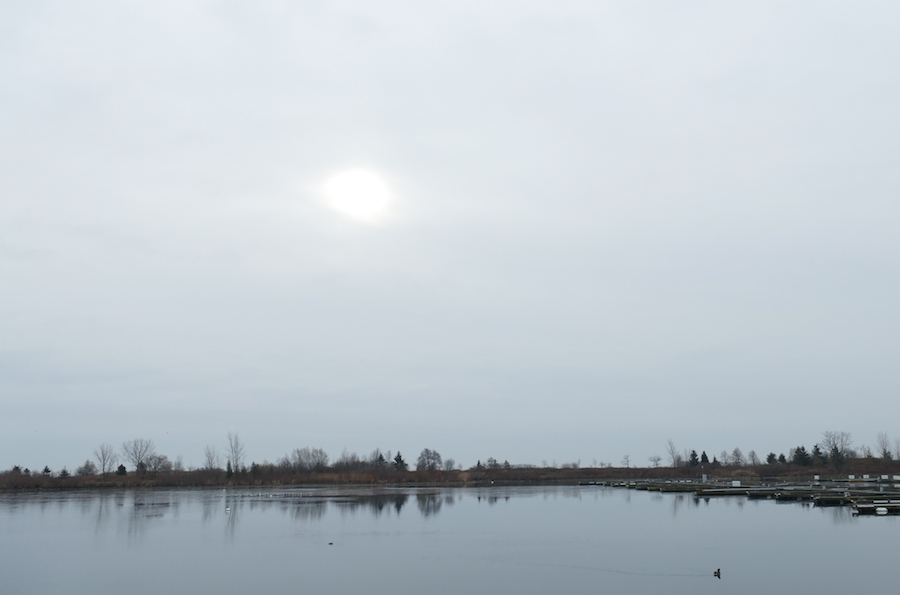
There were quite a few birders out, including one guy dressed up in camo gear, hauling around some heavy duty glass and a monopod. With the warm temperatures there were also lots of people out with their dogs, and as usual, many of them were running around off-leash, which drives the birders crazy. I understand wanting a nice place to let the dogs run free, but Sam Smith is not a leash free park. The leash free area by the filtration plant is very sad indeed, but when I want let The Partners run around off-leash I go to the Etobicoke Creek leash-free area, where they can swim, or alternatively the wonderful Jack Darling dog park.
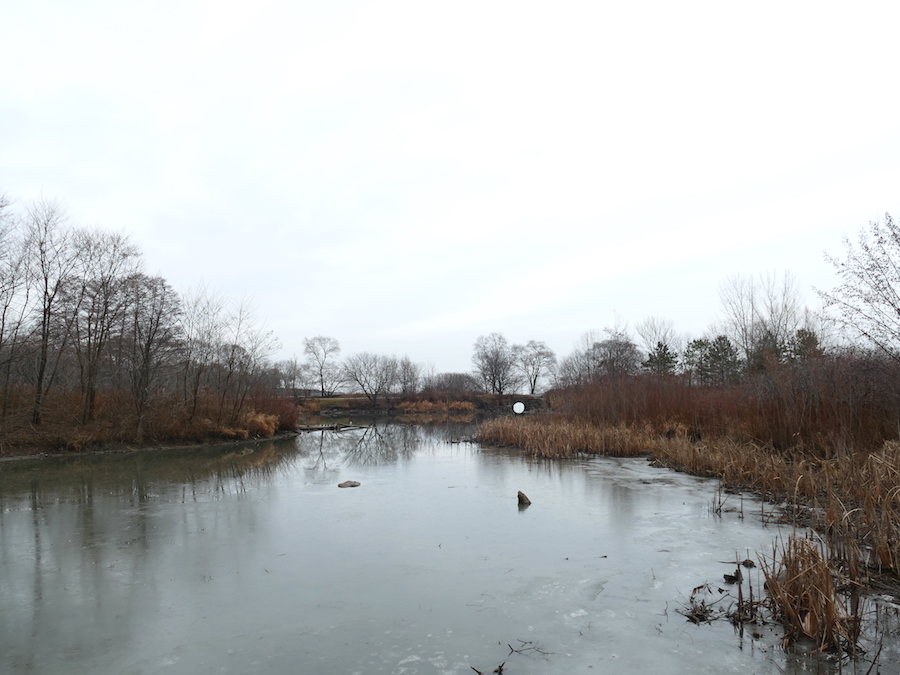
There were quite a few robins at Sam Smith today.

I saw a mockingbird and some kinglets again, but was unable to get a good photo of either today. The highlight for me was seeing lots of cedar waxwings around.
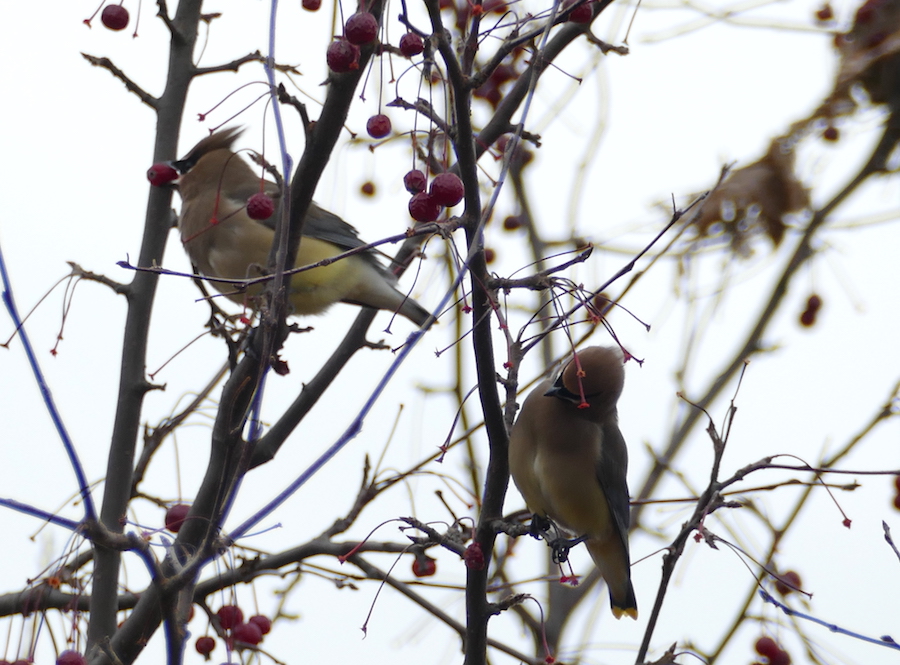
There is a cherry tree in the park which is still holding lots of fruit and the waxwings were having a good feed. However, I saw some of these birds in other areas of the park today as well.

One thing which disappointed me today was the amount of trash in the park.
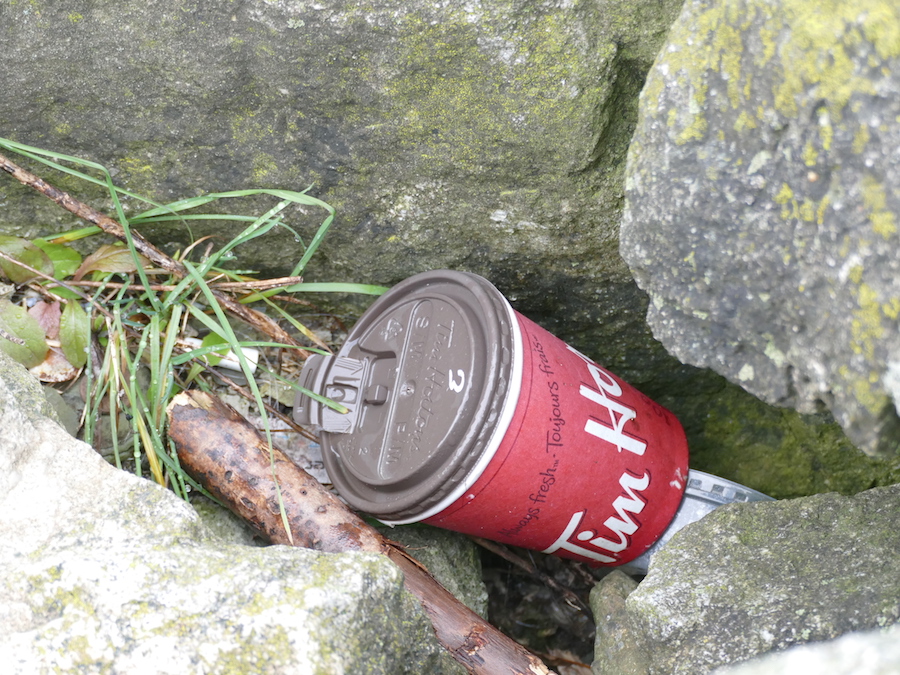
Aside from the bits and pieces of unidentifiable plastic to be found on some of the beaches, the predominant litter is Tim Horton’s cups and beer cans.

This really makes me angry. It is so disrespectful to the environment and other park users to leave this trash around.

There is still some Witch Hazel blooming in the park, providing a welcome hit of colour on this grey day.
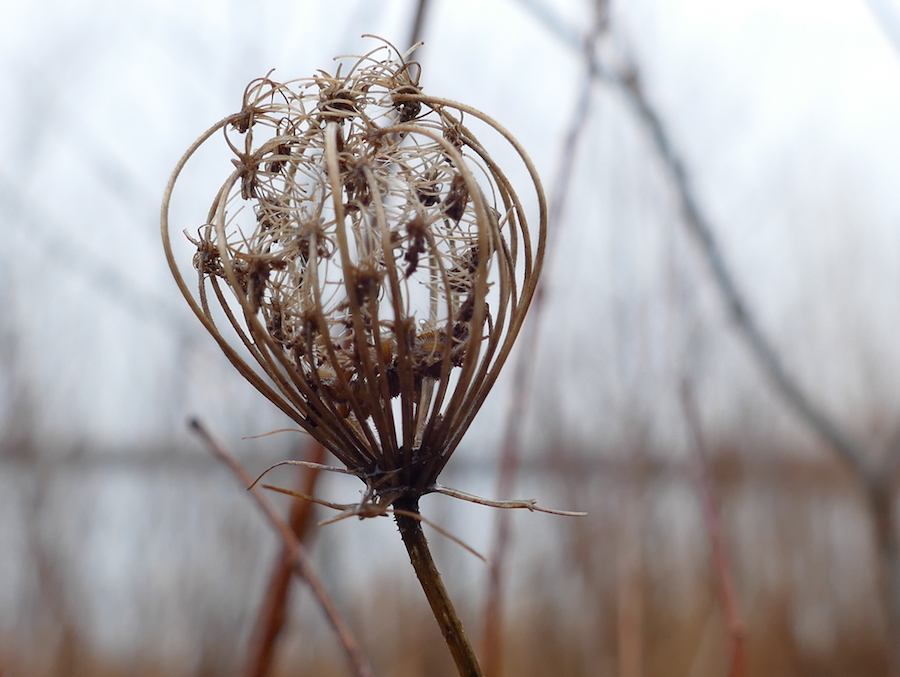


I enjoy walking in the park this time of year. Gone is the lush beauty of summer, but there is still plenty to see. It seems each day is different.
Unearthed (with the subtitle: Love, Acceptance, and Other Lessons from an Abandoned Garden) is a memoir by a writer who lives in Toronto, named Alexandra Risen. Tuffy P recently bought me a copy of this book at the Toronto Botanical Gardens. It interested me right away because the book is centred around a spectacular but abandoned ravine garden, apparently hidden away in downtown Toronto.
The author and her husband bought this highly unusual huge ravine property and over the next few years, against all odds, managed to completely renovate the house, put in a swimming pool, and clean up and restore a huge overgrown mess of a garden paradise, complete with a two story gazebo she describes as a pagoda. They must have spent a fortune achieving all this from the descriptions of all the work done and the construction and clean-up difficulties presented by the ravine setting. The point of the whole business though, is obviously to go beyond the story of a well-to-do single-income family, throwing scads of money and sweat at a massive renovation project.
Ms. Risen links the discovery and restoration of this garden to a personal transformation. The narrative swerves back and forth between the garden experience, her childhood, the death of her father, and the decline and death of her mother. This personal transformation culminates in a blessing ceremony in their exquisitely restored pagoda, complete with smoldering smudge stick. Risen even took the trouble to invite her “hero” Gordon Lightfoot to the blessing ceremony, but Gord failed to respond to the invitation.
There is something interesting about each of the streams of this story, Risen’s life with her parents and sister, her life with her friends, her husband and her son. Still, I had a very difficult time buying into the broad metaphor. It is as if during the process of restoring this crazy garden (complete with deer, raccoons, invasive plants, a forest of trees, multiple ponds, a steady stream of arborists and contractors, etc. etc), the author suddenly grew up and was finally able to come to terms with a childhood in which she knew nothing about her parents’ stories, their friends, and their apparently unhappy, smile-less life together.
The chapters have titles like Knotweed, Lily of the Valley, Serviceberries and Irises. At the end of each of the chapters, we are given recipes for something or another that came out of the featured garden. Examples are Sour Cherry Liqueur, Primrose Meringues, Sugared Rose Petals and Mulberry Granita. Each of these refers the reader to page 267 for “information on safety and sourcing of plants”. I suppose the publisher was concerned the book might encourage people to forage foolishly and consume something poisonous. More than anything these recipes were a structural device, and while the author tried to integrate her choices with the rest of the narrative, in my opinion the book would not have been weaker had she dispensed with all of them. I just didn’t think they were compelling enough to earn their keep.
While the garden captured my imagination, by the time Risen was looking up Gordon Lightfoot’s address, I really didn’t feel compelled to learn anything else about this family. I was done and I was beginning to find the narrative somewhat annoying. I might have abandoned ship, had I not been so close to the end. I suspect it would have been more interesting to me (but less interesting to the author) to read a much more detailed narrative about the garden restoration or even a fictionalized story of people much like the author’s parents and their story from the Ukraine during WWII through their migration and adjustment to life in Edmonton.
I think there will be some readers who will respond to this book more enthusiastically than I and who might even think my reservations are cynical and overblown. I can only say that I really wanted to love this book, but for me, it was just an OK read.
 27th Street