comment 0

The Star-maker Machinery

I just read Tommy James’ 2010 autobiography, Me, the Mob and the Music. You remember Tommy James, right? Lots of big hits. Hanky Panky. Crimson and Clover. Mony Mony. Catchy pop tunes. They don’t really interest me much, but his story is fascinating.

Tommy James signed up with Roulette Records which was run by the so-called Godfather of the Music business, Morris Levy. He came by that descriptor for every good reason. James describes all the Genovese family mobsters involved with Levy and it’s very scary. Levy didn’t pay out royalties owed. He didn’t pay writers. It seems he hardly paid anyone.

At one point a gang war broke out in New York and members of two rival organized crime families began killing one another off. Morris Levy blew town and James received a warning through his lawyer that it would be safer for him to to leave town as well and go work in Nashville for a while. Throughout his time at Roulette and through all the hit singles, Tommy James made his money off live shows only and was never paid royalties. When he finally left Roulette, he claims he was owed some $40 million.

This book paints a seriously ugly picture of the music business. Scams. Payola. It’s all there and it’s eye-opening.


comment 0

Earl Mitton’s Breakdown

Here’s another Canadian fiddle tune. I stumbled across this one on the YouTube while listening to some Mac Beattie and his Ottawa Valley Melodiers material. This is called Earl Mitton’s Breakdown from an album called Down East Fiddle Favourites by Earl Mitton and the Valley Rhythm Boys. Mr. Mitton was the composer of  the Carleton County Breakdown and numerous other tunes.  He was born in Nova Scotia in 1926 and moved to New Brunswick after serving in the army during the Second World War. He died in 1991.

If any viewers have additional information about Earl Mitton, please comment.

Here’s one more of his recordings, The Rippling Water jig.

comments 4

See you later Lazy Allen….

I posted the last Lazy Allen story in January 2017, the 17th in the series. Even though the closest they ever got to publication was on my little stories site, I’m glad I got them out of my system and stuck them somewhere where people can read them if they want to, and looking back on them today, they mostly pass my personal sniff test. I received barely any feedback on the stories, which I take to mean most of the people who read them didn’t find them all that compelling, but reading some of them again today, I’m proud of the effort.

I don’t think of myself as a writer but some of the ideas for these stories were cluttering up my brain for some time and I really enjoyed trying to form those thoughts into compact little stories. Some of them are very short, shorter than what we think of as short stories. What do you call those, short short stories, or maybe flash fiction? I don’t know. Although they are individual stories, they share characters and all somehow or another revolve around the relationship between two musicians, Lazy and Staashu.

Curiously I read far and away more novels than I do stories. I started by thinking of these slices of Lazy’s life as fragments of a novel rather than as a set of stories but somewhere along the way I became mired down in the muck and they sat around as fragments for quite some time. At a certain point I thought, okay, forget about the big picture for a little while and start focusing on the fragments. Work on the ones you really need to get down and hammer away at them until they’re clean and true.

As soon as I got back to work, it was like a floodgate opened and I was able to write a group of stories dealing with many of the same ideas and characters and treatments as the novel I began working on.

I had not looked at them in months but I ventured over to the site tonight and re-read a few. I’ve been thinking about writing again, so I thought it would be a good idea to go back and spend time with the material I previously created.

The thing is, I’ve been considering taking another crack at writing a novel, and I’ve began making some preliminary notes about the characters and bits of a story. I know this is perhaps crazier even than making paintings. I have no clue how to go about getting anything published even if I manage to complete it. I guess if I find my way through the thing, I could do what I did with the stories and simply float them out there in the blog swamp somewhere, maybe as a serial. 570 people visited my stories site, which seems pretty dismal to me, but then it’s 570 people more than if I kept the stories in my head and never put them down at all.

I don’t think I have the confidence as a writer to send around a manuscript even if I complete one. It seems as if there is a better chance to win a lottery than find a publisher. Besides I really wouldn’t know who to send the thing to. For now, I’m not going to worry about any of that. I think it’s worth trying to get it all down if I can and figure out what to do with the thing later. If I get anywhere with it, I’ll let you know.

comment 0

The McCracken Cardinal

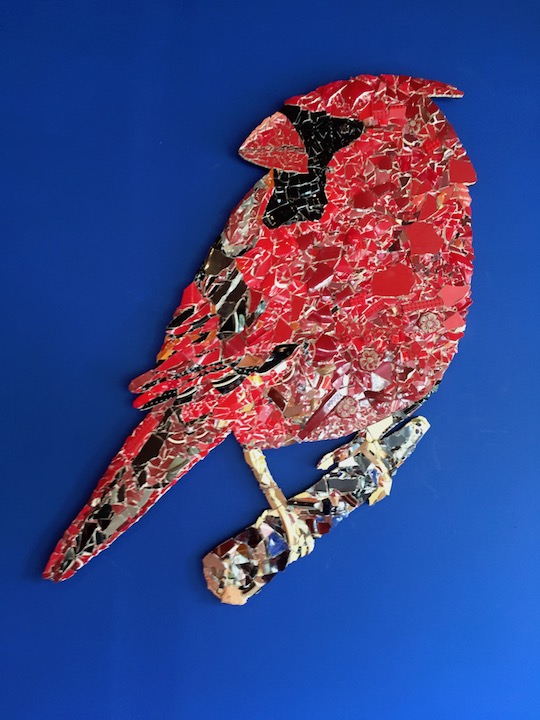
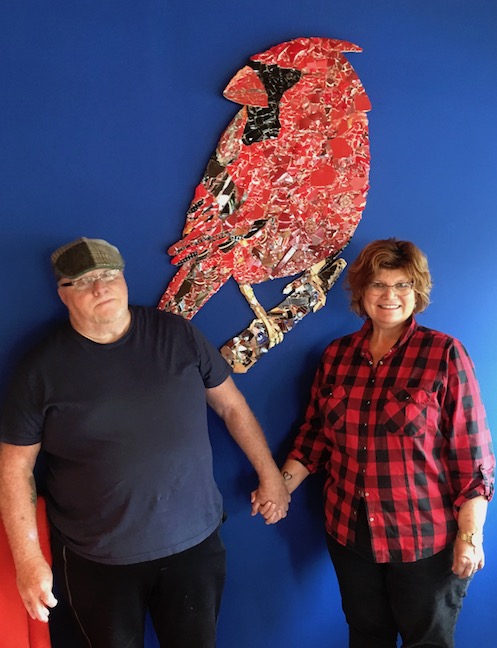
The McCracken Cardinal, our latest mosaic project, lives on a deep blue wall in a wonderfully eclectic and creative bungalow in Brampton Ontario. It benefits from lots of daylight – will all the textures in this mosaic, it’s appearance will change as the light changes throughout the day.
IMG_9732.jpg

This cardinal is one of our “everything but the kitchen sink” mosaics, improvised using everything from broken crockery to smalti tiles to erector set pieces.

IMG_9735.jpg

comment 0

Nature Walk – Rouge Hills

I almost didn’t make today’s nature walk with Miles Hearn up at Rouge Hills Park, because I was about a kilometer behind the tanker truck fire that shut down all eastbound lanes of the 401. This was in the Bayview/Leslie area. When it finally opened up (good thing I left plenty early) I had about 15 minutes to make it to Rouge Hills, knowing the nature walks normally start right at 10:00. I may have exceeded the speed limit just a little bit as I adjusted the flaps on the Honda Fit and went into warp drive, arriving right on time.

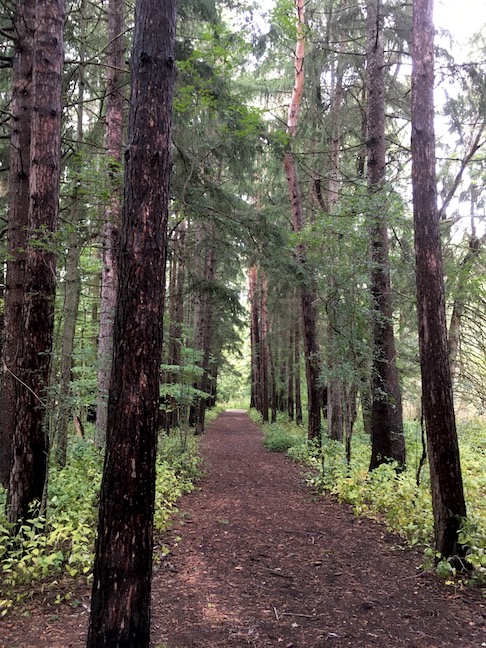
I love this spot. There are several trails and they’re all wonderful, going through a variety of landscape.
rouge1.jpg

rouge2.jpg

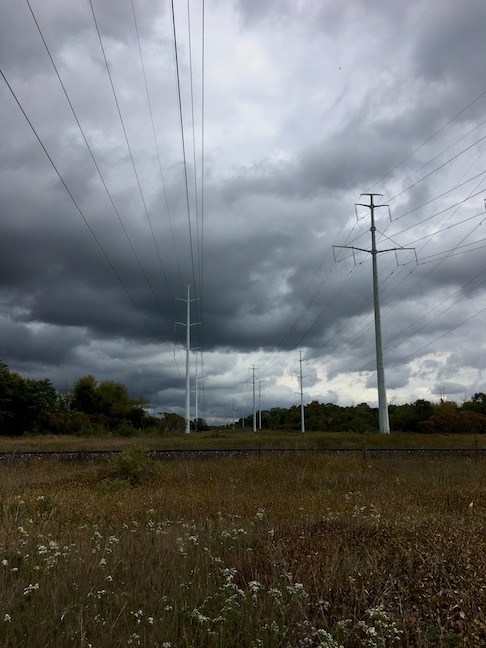
It sure looked like it was going to rain for a while there, but that passed. The cloudy conditions were excellent for looking at the forest colours though.

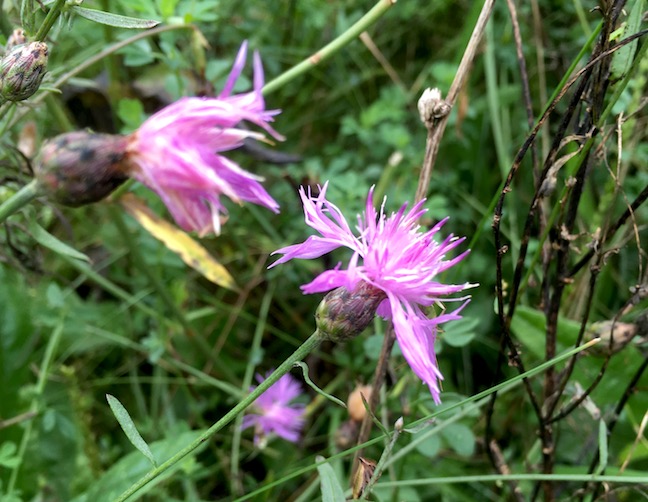
One of the most common plants we saw today was knapweed. I wonder if it was named after some distant relative. Although that would be most interesting to find out, I’m not anywhere near curious enough to send data as personal and far-reaching as DNA to some corporation to get a so-called expert opinion.
knapweed.jpg

Knapweed

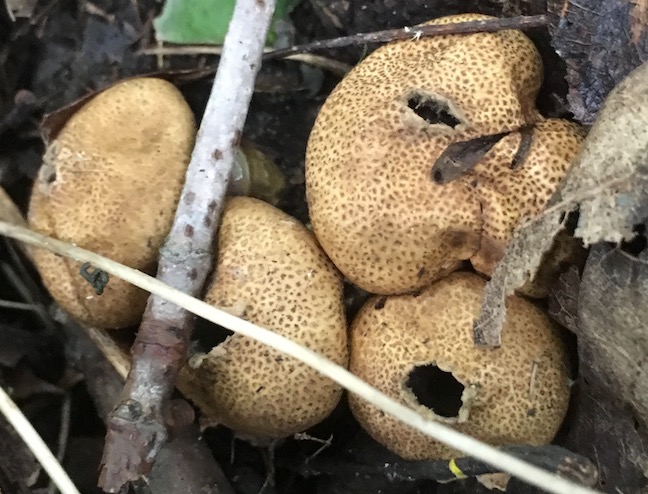
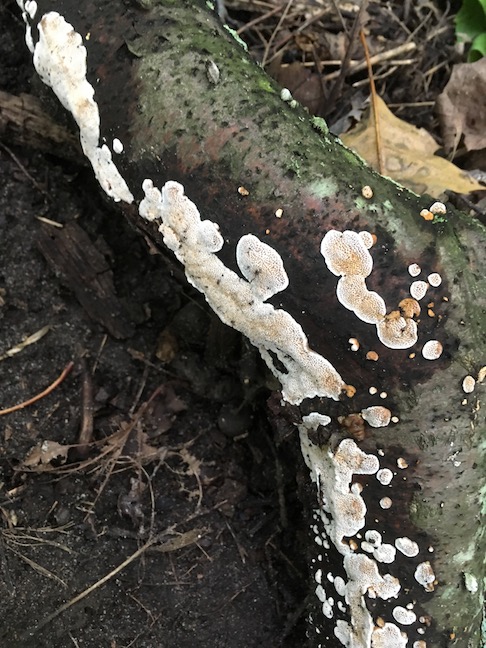
I was surprised at how few mushrooms we saw in the woods today. There were some slippery jacks, one example of velvet-footed pax, some resupinates (that look more or less like paint on wood), some turkey tails and a few spent pear-shaped puffballs.
resupinate.jpg

some kind of resupinate

puffball.jpg

spent pear-shaped puffballs (which were growing on wood)

Here are two plants which look kind of similar, bellwort and false solomon seal.


The false solomon seal have berries at this time of year, above the leaves. The leaves on the bellwort look similar but you can see in the picture the stem weaves through the leaves in a unique way. I recall seeing bellwort earlier in bloom and at that time, the plant looked quite different to me. One of the interesting things about going on these nature walks from early spring right through the fall is having the chance to see plants at different points in their cycles.

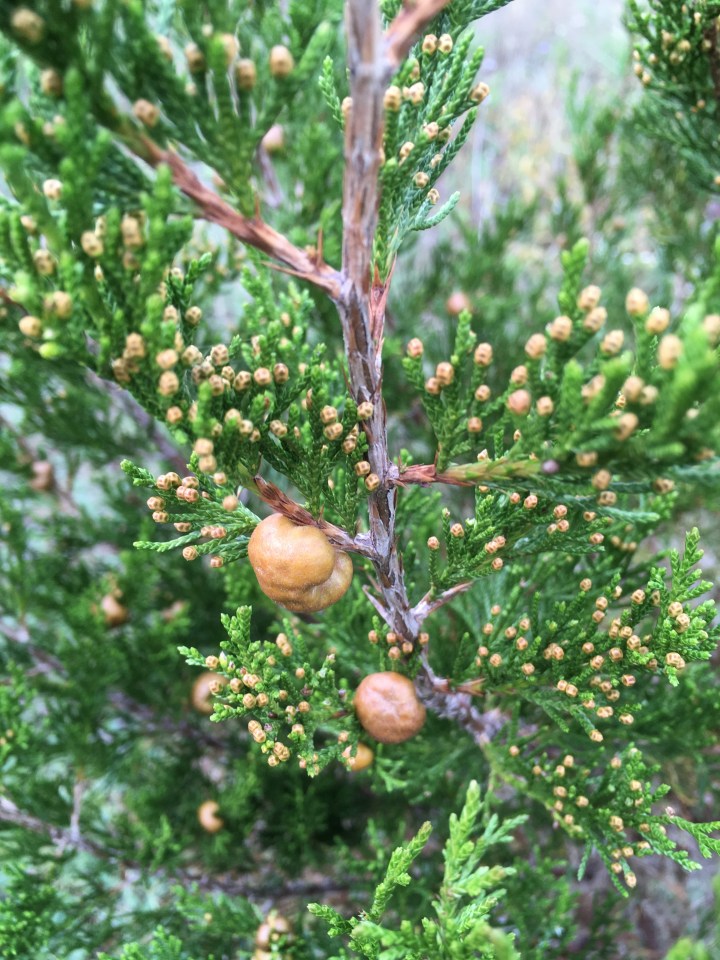
I had never noticed cones on red cedar before, and had Miles not pointed them out I would not have noticed them today, but they are quite unique.

red cedar cones.jpg

red cedar cones

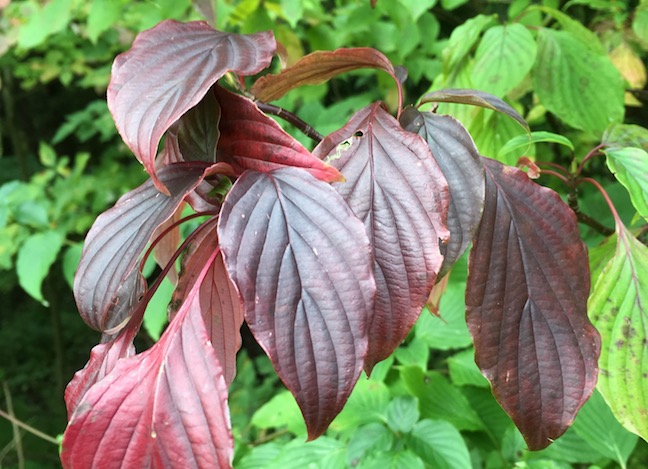
I learned another interesting fact today – the veins on the leaves of dogwoods never reach the edges of the leaves. You can see that on the picture of an alternate-leaved dogwood below. alternate-leaved dogwood.jpg
Once again the stars of the walk were the great variety of asters in bloom at this time. We saw two common asters, the heath aster and the New England aster as well as a hybrid of the two, known as the amethyst aster.

Other asters Miles identified today included the heart-leaved aster, the large-leaved aster, as well as the rayless aster, which has no rays or petals.

Miles pointed out that the rayless aster likes salt and so it can often be found on the sides of roads.

Next week we go to Lambton Woods along the Humber River, another lovely spot – this one just a short drive from home.

Note that Miles Hearn publishes a nature walk report on every walk he conducts over at his website, which also includes many excellent articles. It’s a fantastic resource.



comment 0

Simeonie Keenainak performing Kajjaanaqtuq

I’ve been sharing some Canadian fiddle music here recently. Tonight I’d like to spread some button accordion love. Here’s Simeonie Keenainak performing Kajjaanaqtuq. What a lovely piece. I hope you enjoy it as much as I do.

comment 1

Featherweight – in support of Camp Ooch

Camp Oochigeas is a privately funded, volunteer-based organization that provides kids with and affected by childhood cancer unique opportunities for growth through challenging, fun, enriching and magical experiences.

This includes a camp in Muskoka as well as activities at their space at College and Bathurst in Toronto. I toured their Toronto facility today and it is really wonderful.

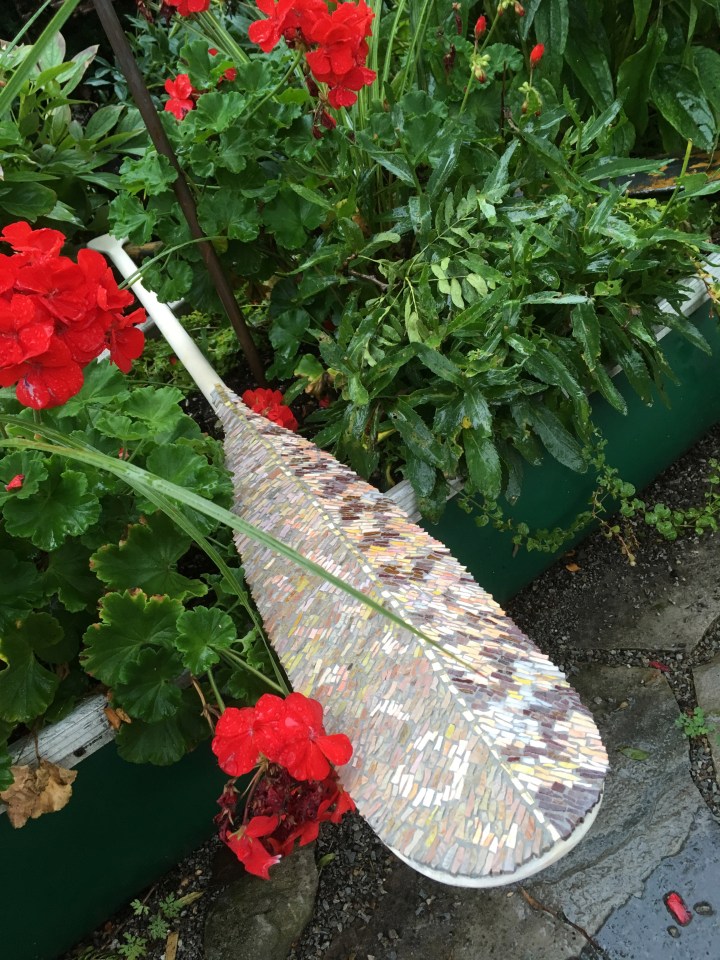
We’re very pleased to support the Camp Ooch Paddle Project by creating the mosaic work, Featherweight. The paddle project has been happening since 2010. It was set up to raise awareness and funds by showcasing one-of-a-kind paddles designed by artists and celebrities. A selection of paddles will be auctioned at the Imagine the Magic Gala while others will be sold online through the Online #PaddleProject Auction.

IMG_9679.jpg

Featherweight – made with Smalti glass tiles

comment 0

Banjo moods and tunings

The banjo is a remarkable instrument in so many ways. Lots of people I know, who are more into pop music, associate it with one thing only and that’s Scruggs style bluegrass playing but there is a lot more to it than that. It’s old time clawhammer playing which attracted me to the instrument. Even within clawhammer there are many approaches or attacks from super-rhythmic to melodic, and old time players use lots of tools to get at different moods.

I came across an excellent little video by Cathy Fink in which she talks about some old time approaches, tunings and moods. If you’re ever wondering what I see in the instrument, give this video your attention and you’ll start to get an idea why I’m so drawn to it.