




For those craving some button accordion action, here’s a remarkable player named Éric Gagné. Fantastic!


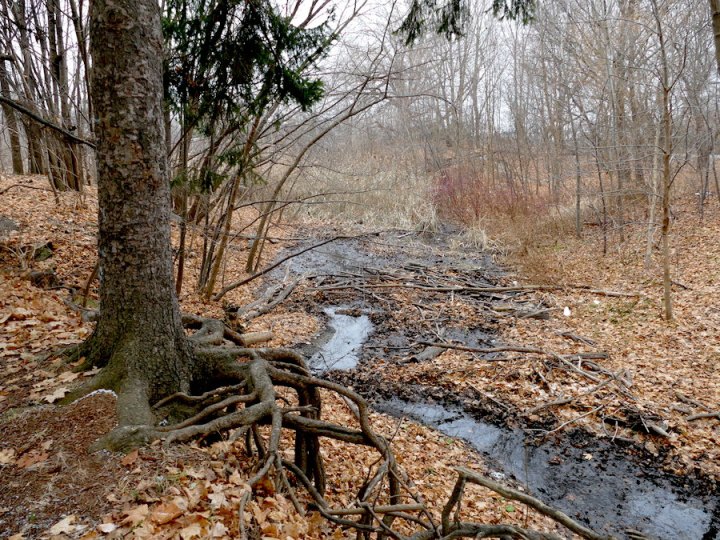










After 3 seasons of photographing plants and wildlife with a little point and shoot camera, I’ve upgraded a wee bit to a Panasonic Lumix FZ1000, a bridge camera that gives me zoom up to 400mm. I wandered out to the Sam Smith Park this morning to test it out.
There is a mind-bending array of menu items on this camera, some of which leave me scratching my head, but the basic functions are pretty straight-forward.
Towards the end of my walk I saw a fellow with a camera with no zoom. He pointed out a small hawk, perhaps a Cooper’s hawk, not far from where we were standing. At this point I had put my camera back into its bag and was heading back. By the time I got my camera out, the hawk left its perch and swooped down into some meadow for a buffet lunch. I’m hoping next time I’m in there, I see this hawk again and manage to snap a photo.
Click on any photo in the gallery to scroll through larger images.
Meredith Axelrod with Jerron Paxton and Frank Fairfield do a great job on this old tune.
Ginseng Blues was first recorded (as far as I know) by the Kentucky Ramblers in 1930. Both their version and Meredith Axelrod’s feature yodeling, and we all need more yodeling in our lives, right?
I don’t have any kind of plan as to the books I read. I come to them or they come to me in all kinds of different ways. I like it that way. I read Yeshiva Girl by Rachel Mankowitz because I’ve followed Rachel’s blog, The Cricket Pages for quite some time.

Her blog came to my attention because I noticed somebody named Rachel Mankowitz was persistently liking posts here at 27th Street. This was immediately noticeable to me because this little blog receives very few likes indeed, and has a limited supply of return visitors (if all the dog pictures don’t scare them away, the banjo music surely does). I had to ask myself, who was this person who kept coming back?
When I read on her blog that Rachel had a book about to be published, I wanted to read it right away. I think that is a testament to the quality of her blog, which is at once personal, funny and disarming (go read it – you’ll like it too). I ordered up a copy of Yeshiva Girl on Amazon, looking forward to its arrival in the post.
Here’s what the author says about her first novel:
Yeshiva Girl is about a Jewish girl on Long Island named Izzy (short for Isabel). Her father has been accused of inappropriate sexual behavior with one of his students, which he denies, but Izzy implicitly believes that it’s true. Izzy’s father decides to send her to an Orthodox yeshiva for tenth grade, out of the blue, as if she’s the one who needs to be fixed. Izzy, in pain, smart, funny, and looking for people she can trust, finds that religious people are much more complicated than she had expected. Some, like her father, may use religion as a place to hide, but others search for and find comfort, and community, and even enlightenment.
My first thought was, how am I going to relate to this novel? It’s written in the voice of a 15 year old girl, Isabel. What do I know about 15 year old girls? Almost nothing, that’s what. Izzy’s father, who has upped the ante on his religiosity, has sent his daughter to a yeshiva, an Orthodox Jewish School. I know even less about Orthodox Judaism than I do about 15 year old girls. Fortunately, one of the joys of fiction is it opens the door to all kinds of different worlds, extends our experience and tests our empathy.
I needn’t have worried if I would or could relate to this novel. I was pulled in from the first few pages. Ms. Mankowitz has done a fine job developing her main character. Izzy is bright and funny and complex – and she’s hurting, trying to survive an untenable family situation and at the same time cope with a new school with a highly religious focus and find new friends she could trust and depend on. The novel is well paced, a page-turner, and I found myself cheering Isabel on, chapter to chapter.
Yeshiva Girl is a terrific book. Highly recommended.






I love cooking in cast iron pans. I’ve had one around for my entire adult life and these days I suppose I have too many: two 9-inchers (one which lives in the camping box), the big 12-incher, and the extra-deep 9-incher with a lid which doubles as yet another pan.
I found my first cast iron pan in a box of assorted junk in my parents’ garage, where it sat for years when I was growing up. Mom had an enameled cast iron soup pot but no un-coated cast iron pans in the kitchen. When I moved out on my own to live in a little storefront painting studio on Ossington Avenue here in Toronto, I needed a pan and remembered the one in the garage, unloved and in need of rescue.

It was dirty and rusty but with nothing to lose, and not much budget to buy housewares, I tried to clean it up. I soaked it in hot soapy water and scrubbed off the rust with steel wool. After drying it off with paper towels, I rubbed in vegetable oil, which I cooked into the pan in a hot oven. I did this a couple more times until the surface of the pan took on a thoroughly seasoned finish. That was maybe 35 years ago and I still use that pan today.
Some people think cast iron pans need lots of regular care, but the little bit of care they do require is quick and easy. Dry your pan well after washing, and now and then re-season it with that happy combination of a little vegetable oil and some heat. Easy-peasy. In a normal indoor environment, it won’t rust, and the more you use it the better it gets.
For a few years, I lived in a painting studio in what was once an old casket factory, divided up and rented out to artists and musicians. The fact is that none of us were supposed to live there, but most of the tenants did just that. Every now and then the Department of Buildings and Inspections decided it was time to go in for a look and they would make an appointment with the building management. The superintendent of the place would send around a notice, saying The City would be looking for stoves and beds and he was confident they wouldn’t find any. As a result, I had a need for portability, so my cooking station consisted of a two-burner hotplate and a toaster oven. Perfect for the cast iron cook.
By necessity, in those days, I did a lot of one-pan cooking. Here’s the way I went about it. Brown a couple chicken thighs well, then take them out and set them aside. Toss some onions in the pan and cook them until they start to caramelize, then add a few mushrooms, a potato, maybe a chopped up carrot or whatever else is the fridge. Don’t forget salt and pepper and whatever herbs you like. Herbs de Provence works well and is wonderfully aromatic. Return the chicken to the pan. Splash in some of the beer you’ve been drinking along with a little water and let the whole business simmer away. By the time the chicken is ready, the liquid will have cooked down to a sauce, and the whole concoction will be yummy.
Sometimes I would use a pork blade steak or some tough cut of beef instead of chicken, and add more liquid and increase the cooking time. Other days I’d skip the potatoes and use my second burner to cook some rice. By changing up the dry herbs or by adding plenty of fresh herbs in season, or using different combinations of vegetables, the possibilities were endless.
The cast iron pan is what gives skillet cornbread its unique character. I use half cornmeal and half self-rising flour (or all purpose flour + baking powder), milk or buttermilk, salt, melted butter or vegetable oil, and a couple eggs to make a batter. I don’t use an electric mixer for this. A wooden spoon works just fine. Just mix the stuff together enough to make a batter, no fuss,no muss. One thing you absolutely need is a very hot pan. You could add a little oil to the pan or a combination of oil and butter or you can go deliciously crazy and cook up some chopped up bacon in the pan then put it in a hot oven for a few minutes to heat up the entire pan. Then add the batter and bake it up. The resulting cornbread will be a bit crispy on the bottom and will separate perfectly from the pan. Oh, and it is unspeakably delicious.
My deep pan, the one with the lid, is the only cast iron pan I bought new from a store. The best place to get them is garage sales or even at antique markets. There is usually a glut of old cast iron around, and they are often available for a song. I bought the deep pan new, though, for bread baking – although I use it for many things. I make no-knead sourdough and for a long time, I baked it in an enameled Dutch oven. The idea of the Dutch oven within an oven is to keep in the steam. After a half hour baking with the lid on, I remove the lid and bake for another 15 minutes. However, the high temperature I use for baking bread (500 F) eventually took its toll on my Dutch oven and chunks of enamel were popping off. Now I use my deep cast iron pan for baking bread, and no, the loaf does not stick to the pan.
Let me dispel some myths. Cast iron skeptics will tell you with a smirk, oh you can’t cook eggs in a pan like that. In fact, as long as your pan is well seasoned you can. There are two conditions to meet to do this successfully. The first is to heat up the pan well before cooking. This takes a few minutes and I know in today’s insta-world, taking the time to do this is unbearable for some people. The other condition is you need to cook your eggs using a little bit more fat than you would in “non-stick”pan.
A second myth is you can’t cook tomatoes in cast iron. Some people say the acid in the tomatoes will react with the pan, adding iron to your food and giving it a metallic taste. The truth is that once your pan is well-seasoned, you can cook tomatoes in it without any issues or effect on taste.
The third myth is that you can’t wash cast iron pans with soap. I’ve heard this one since I was a child. I’m not sure how people who perpetuate this myth think these pans can be cleaned with no soap. I use dish soap and water, and if necessary I soak my pan in hot soapy water for a while before washing. If you have to really scrub your pan, re-season when you’re done. In all cases, dry your cast iron pan really well.
There is something enduring about cast iron. I like that it’s old technology. Cooking with cast iron encourages you to take your time, and I like that too. OK, I’ll confess I’m also a guy who can’t imagine why anyone would use a gas bbq when charcoal is available, and it’s true we have never had a microwave in the house. We don’t own a crock pot or a fancy pressure cooker either. I’ll take my old cast iron any day.
 27th Street