
It’s late and I’m not sleepy. Surfing the YouTube, listening to Ramblin’ Jack. You might as well listen some with me. Can I pour you a wee dram?
comment 0
It’s late and I’m not sleepy. Surfing the YouTube, listening to Ramblin’ Jack. You might as well listen some with me. Can I pour you a wee dram?
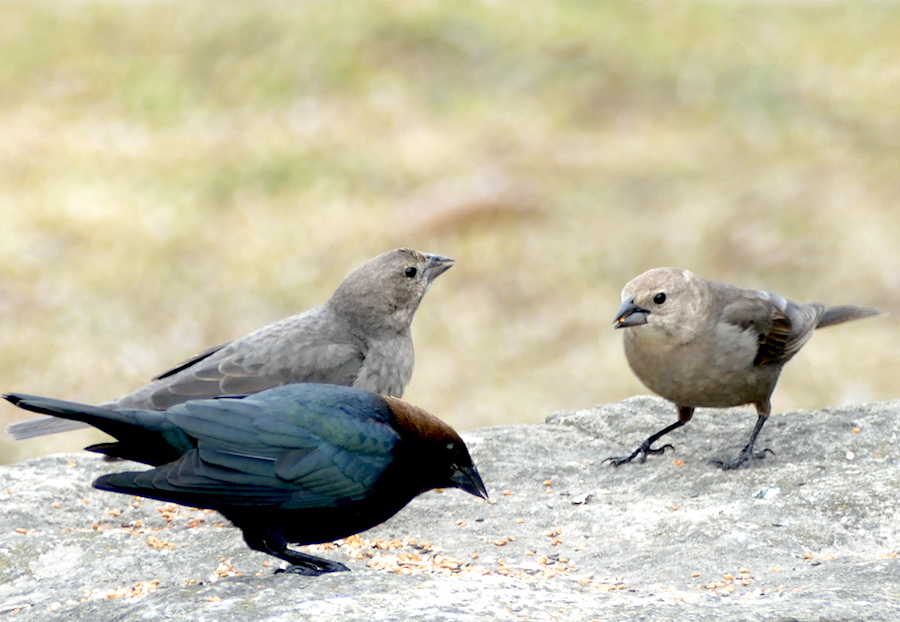
Today’s nature walk with Miles Hearn took place at Humber Bay East. This is the park just south from Parklawn, on the west side of Toronto. The entire park exists on landfill which has only been there since 1984. It’s a wonderful place to look at birds. The pair of parks are located on either side of Mimico Creek. The mouth of the Humber is a short way further east.



There were still quite a few winter ducks around, including Goldeneyes, Buffleheads, Long-tail Ducks, Red-breasted and Common Mergansers.


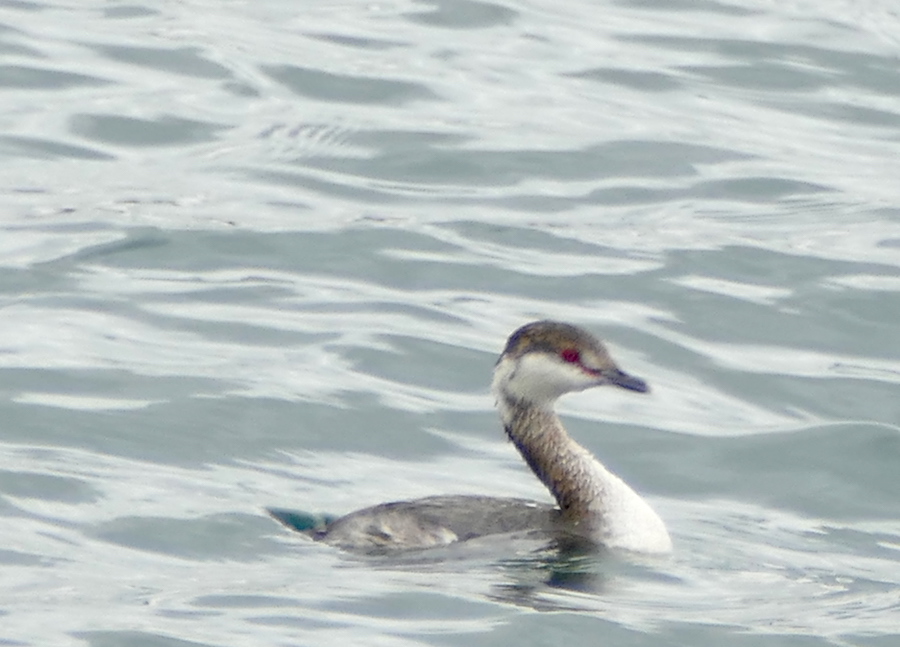
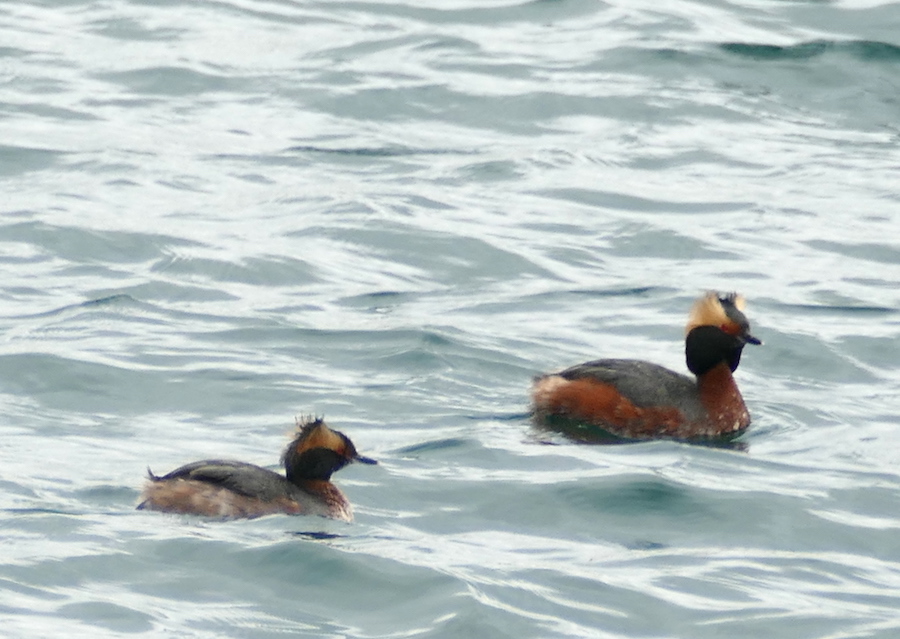
There were plenty of Red-necked Grebes around, and of note we saw some Horned Grebes in both winter plumage and summer plumage.
Mute swans are a common sight in our waterfront parks, but usually they’re in the water rather than on land. Today we had a swan step out of the water and waddle over to us in an unsuccessful effort to score a snack. They have remarkable feet which look as if they are made from rubber.

There were quite a few Golden-crowned Kinglets flitting around today, but I didn’t get any good photos, as these birds just don’t like to stand still and pose. The same goes for Winter Wrens. We saw a few of them today. These are tiny birds which you typically see right on the ground. Each time I saw one it was gone by the time I raised my camera.


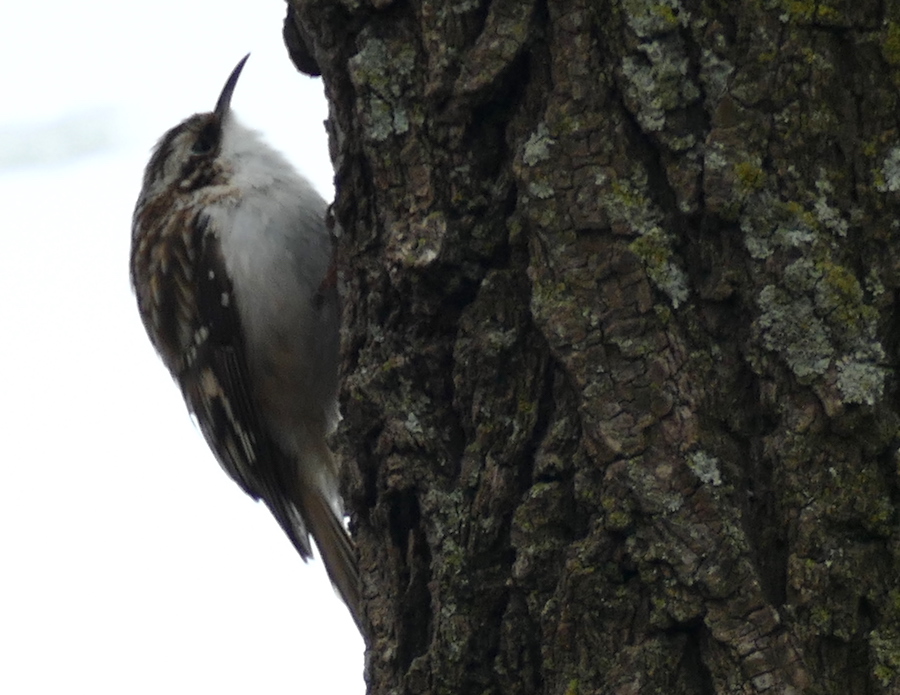
We saw quite a number of Brown Creepers today. These little birds can usually be seen climbing around trees, often near the base. They have distinctive curved beaks.
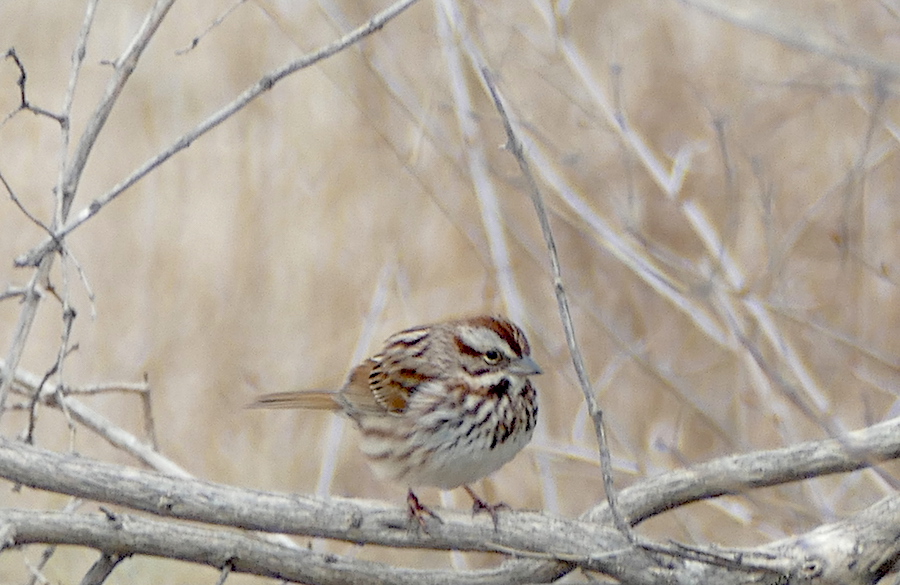
We also saw – and heard – plenty of song sparrows. These birds say, “maid, maid, put the kettle on.”
I brought my camera with me for a walk in Sam Smith Park today. Not surprisingly, as this park is very popular among birders, there were several people out today with cameras and binoculars.
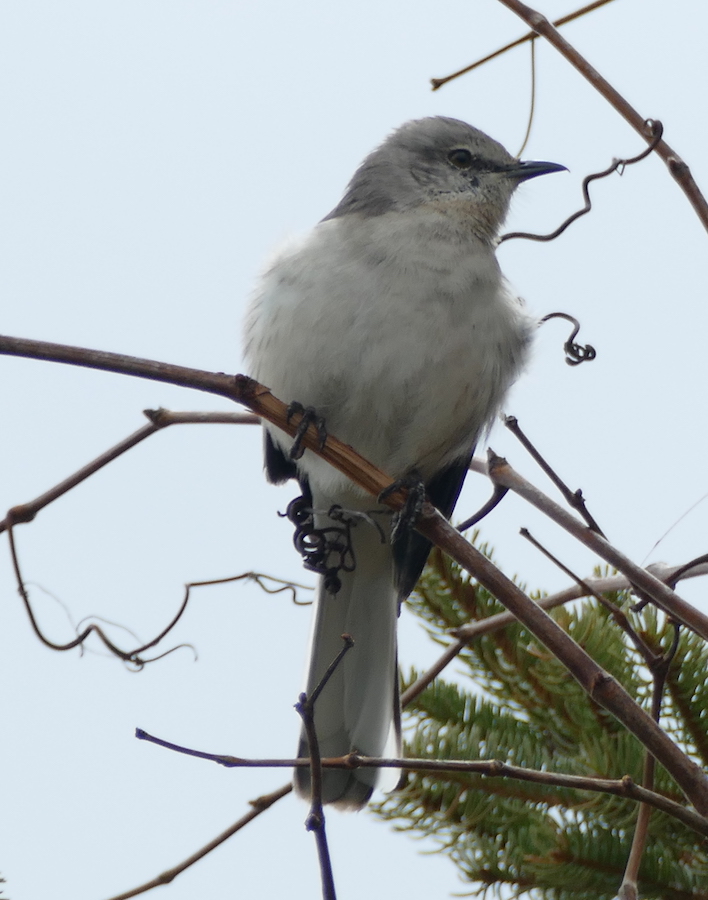
As soon as I reached the bridge by the yacht club, I heard a Northern mockingbird, and quickly located it, and as I was snapping a photo I heard red-necked grebes laughing at me ahead.

The Double-crested cormorants have also returned to the yacht club basin.

From the bridge by the yacht club, looking north, I saw a Belted-kingfisher in a tree. It was quite far away and tucked in among some branches, but I snapped a good enough picture for identification.

There were plenty of red-winged blackbirds about, and grackles as well. And robins everywhere, as well as lots of cardinals, both male and female. I photographed a couple robins in flight.


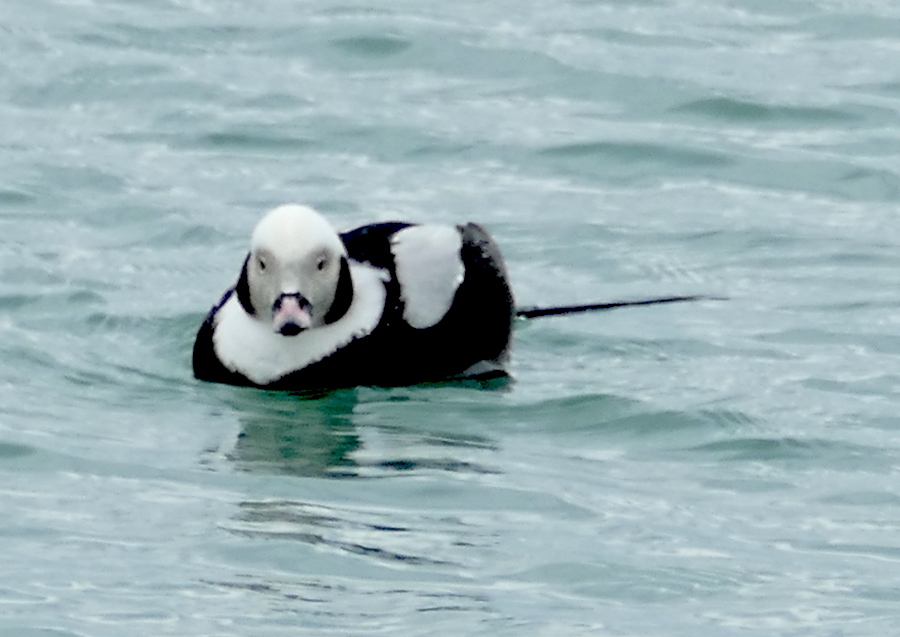
There were still some winter ducks around, including long-tail ducks.
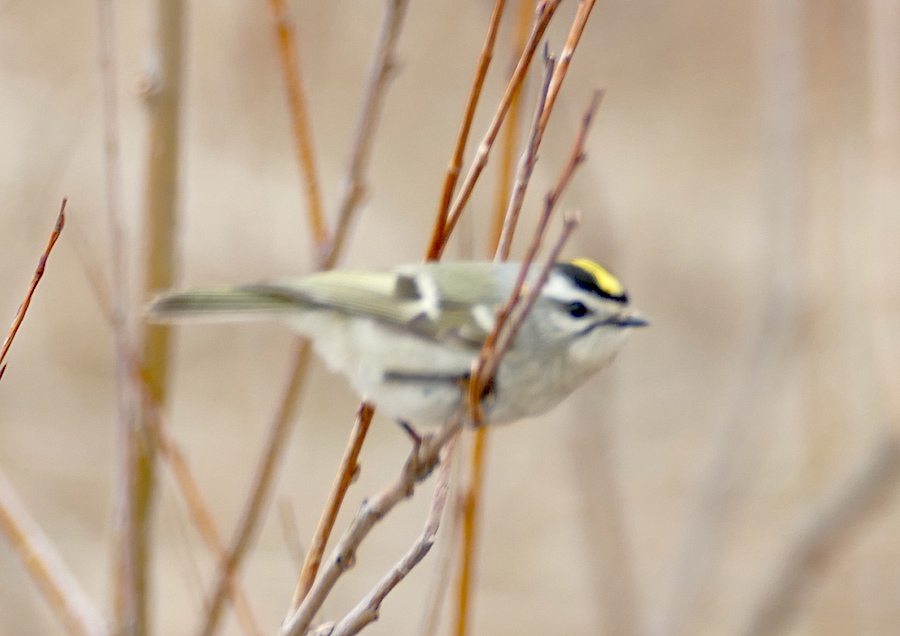
There were lots of golden-crowned kinglets in the trees. These little birds can be difficult to photograph as they just don’t sit still for long.

Here’s the late great “El Parche” – Esteban Steve Jordan, turning a goofy zydeco tune upside down.
Regular readers to 27th Street know I’ve been working with Jacob Yerex on a graphic novel project based on my little book, Squeeze Box Man – The Lazy Allen Stories. We’re very excited because Issue #1 is complete and issues will be available in early May.

As Jacob has been bringing my characters to life visually, this process has inspired additional stories, so readers can expect to see some stories they are familiar with from the original book as well as plenty of new content.
I’ve created a page here on 27th Street for this project. Please pop over for a visit – I’ve added some sneak peeks into Issue #1. When the issue is ready for release it will be available through this page and at select comic book shops in the GTA.
NOTICE: Squeeze Box Man contains adult content including swearing, tobacco, alcohol and drug use and scenes expressing sexuality.
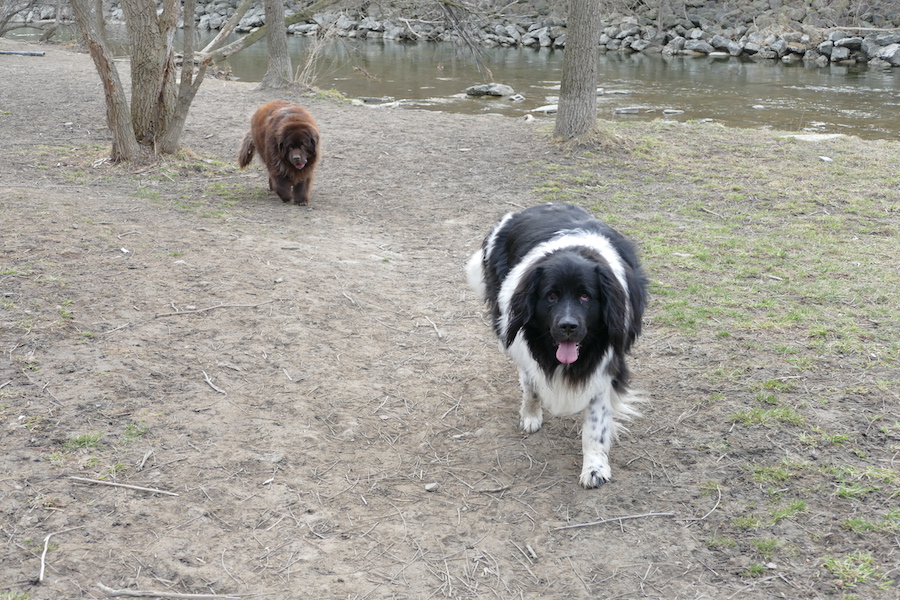
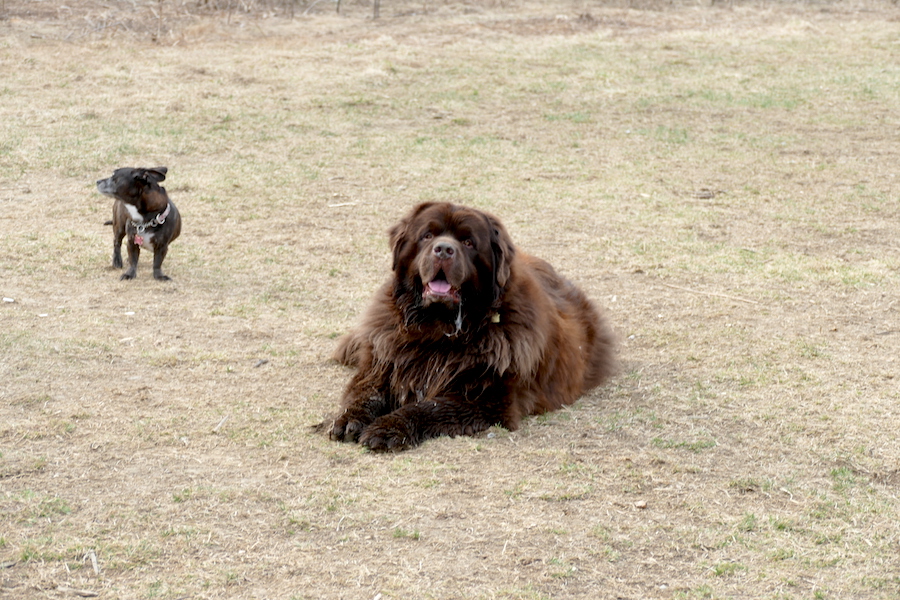
The Partners love visiting the Etobicoke Valley leash-free area. It’s a treasure, especially when compared to the nearest leash-free park to us, the muddy little fenced in square of field behind the filtration plant down the street.
First of all, it’s big. The area runs along Etobicoke Creek from the foot of Southcreek road (Dundas and 427). Dogs and their humans can walk through the field or through the woodland paths. There are many places for the dogs to enjoy the water.
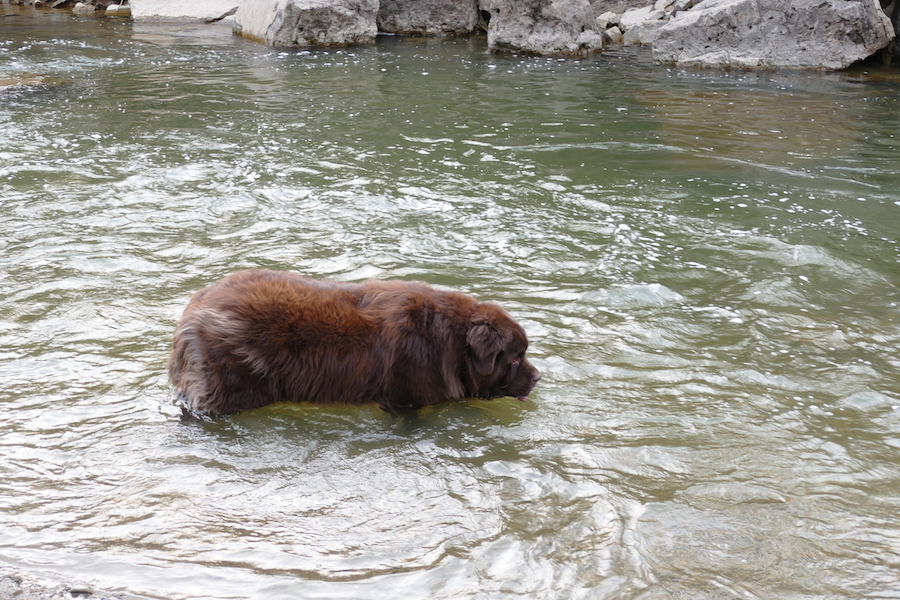
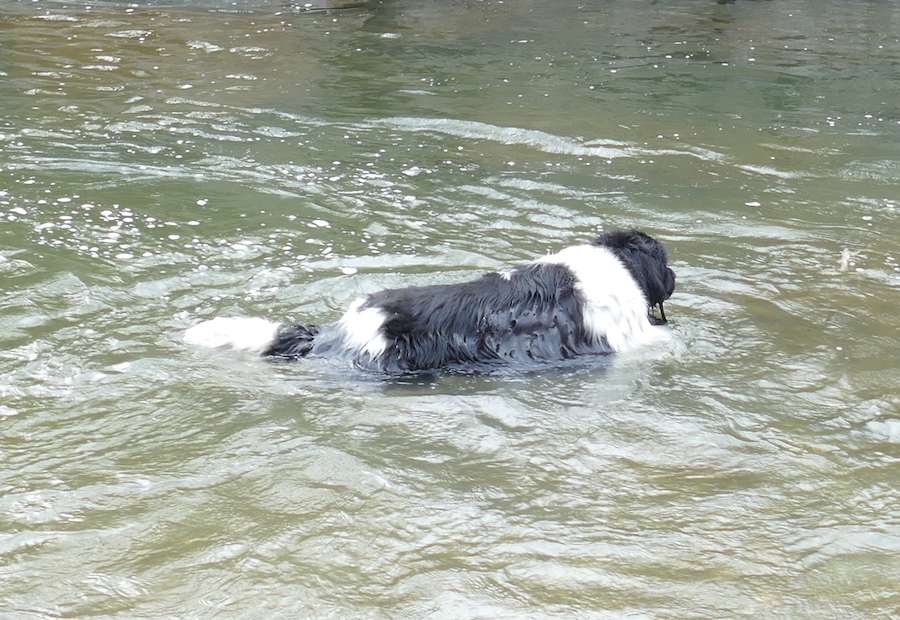
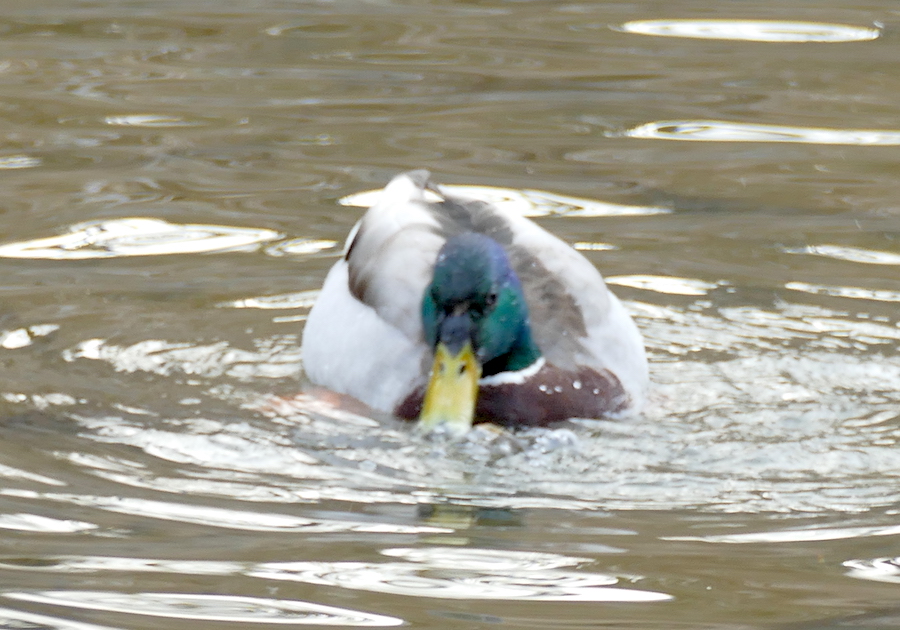
Sometimes there are ducks around the creek but this morning we only saw a single male mallard.
We were out pretty early so there weren’t a huge number of dogs in the park, but enough that The Partners had a chance to goof around and make some friends.
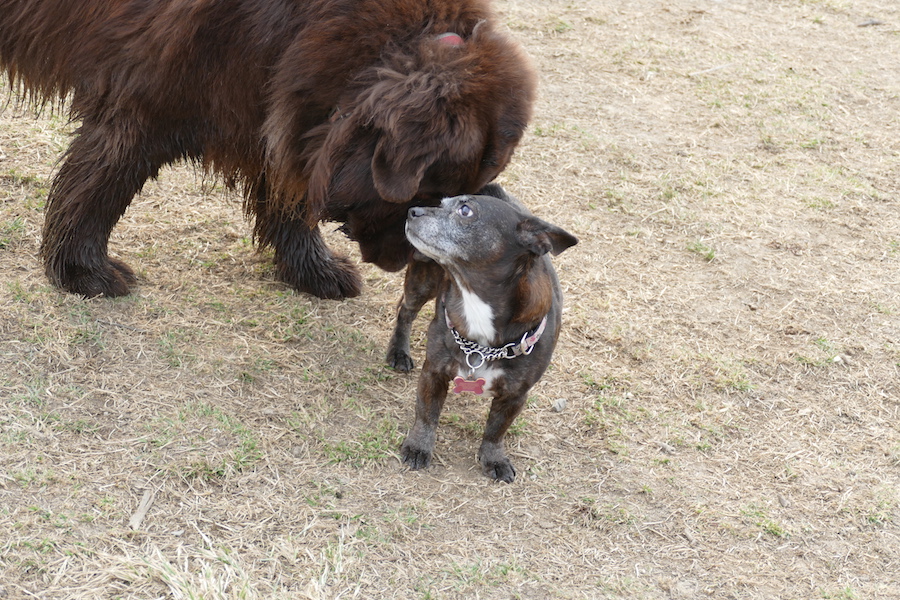
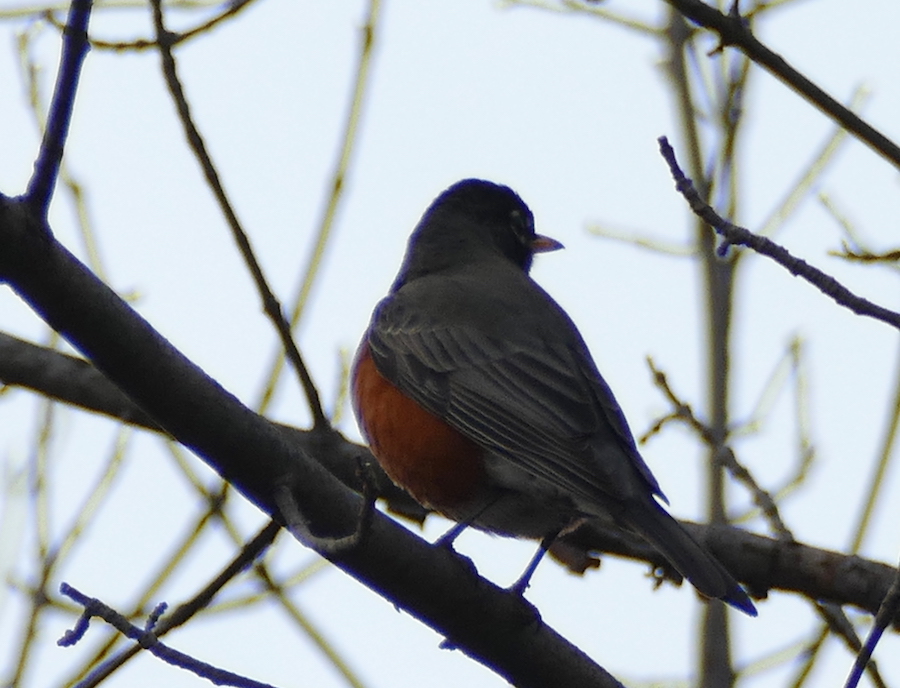
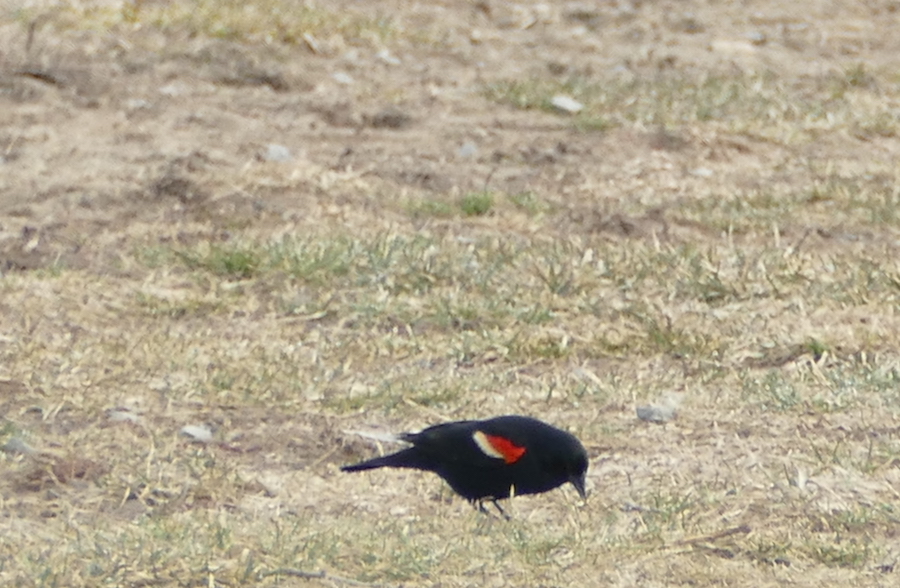
There were quite a few birds in the park this morning. They were a bit hard to photograph though, with dogs around – the birds keep their distance.
Some dogs can run and play all day and never get tired out. Not so with the Newfs. Ruby and George are both passed out at home now. Ruby is snoring.
Tuffy P writing tonight.. this is an image of my grandmother, Mary Jane when she was 17. It was taken in Toronto in the former Eaton’s department store on Yonge Street. Here’s the story of how I came to know this photo’s story 103 years after it was taken…
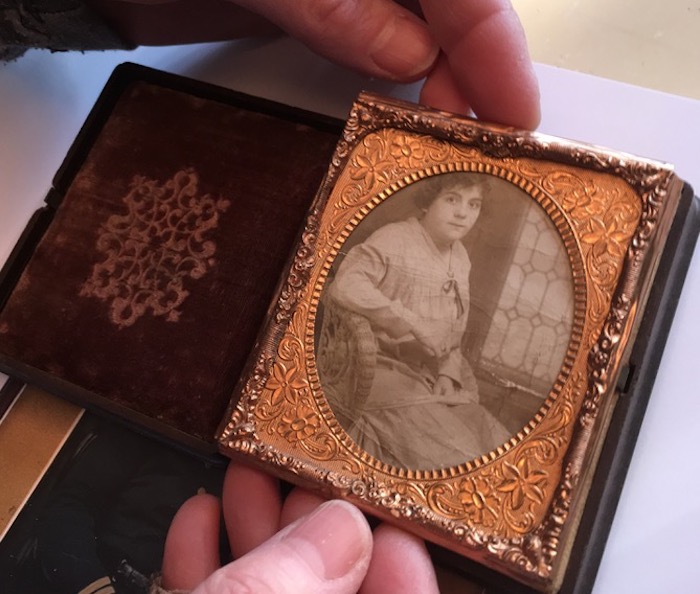
When my Dad passed, this photo of his mom, made it to our home. He had it in his bedroom in the latter years of his life. It’s in a special case. A daguerreotype case.
This past Thursday, Salah had a special tour planned at the Ryereson Image Centre in Toronto. The Howard and Carole Tanenbaum Photography Collection “True To The Eyes” was on. The show is wonderful. The catalogue is currently moving around the house with me. I am pouring through the images, and stories of how these plates came to be part of the Tanenbaum collection. As luck would have it, Carole Tanenbaum joined us at the start of the tour as we were looking at the daguerreotypes from their collection. I happened to say we had a daguerreotype at home, of my grandmother. Carole suggested that when I get home, to slip her name on a piece of paper behind the photo.
This morning, I went upstairs to our tree house, where this photo has been, and realized – it’s not a daguerreotype at all. Still remembering Carole’s suggestion to slide her name behind the photo, I carefully popped the copper foil from the case.
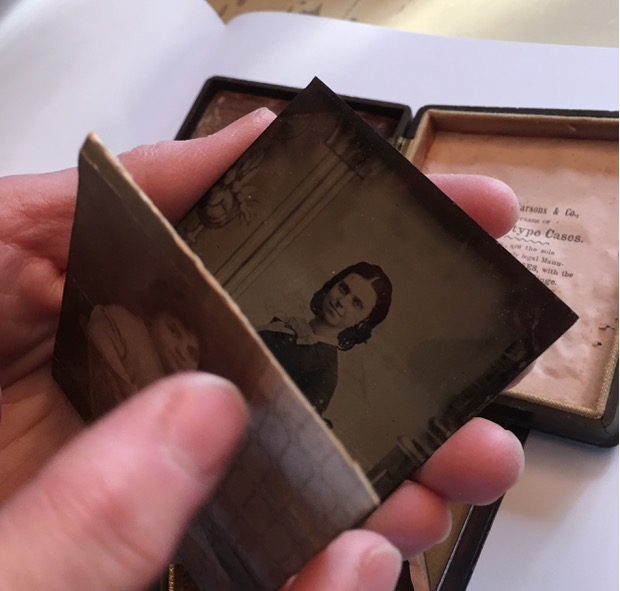
And there, beneath the photo, I discovered the daguerreotype you see above, a photo of my Great Grandmother – Eliza McTernan Keys – taken likely in the 1880’s.
And behind my Grandmother’s photo was the story of her photo written over 100 years ago…

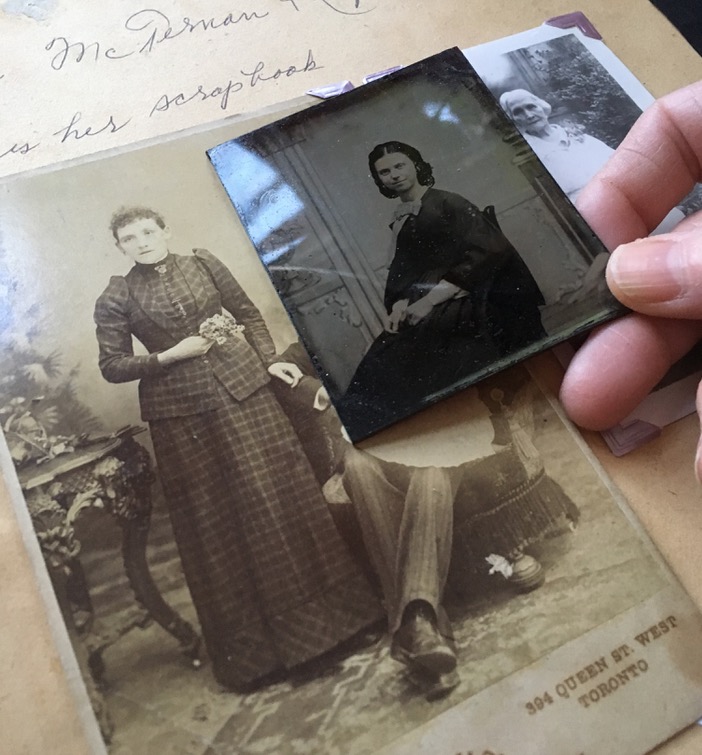
None of this would have even happened had it not been for Carole’s suggestion – to slip her name on a piece of paper behind the photo last Thursday… thank you Carole!
Time travelling 139 years in Toronto with my ancestors. The power of photos is everlasting. Treasure your family photos – they will continue to convey their stories for others long after we are gone.

Last year, we had so many bees in our garden. I really enjoyed watching them go from flower to flower. At some point in the fall, Tuffy P suggested a mosaic involving a flower and a bee for the front of our house would be interesting.
She drew it in 3 sections – the bee, the flower, and the stem and leaves, and I cut out the pieces out on the deck with a jigsaw. Her idea was to suspend the bee above the flower and then have the flower in front of the stem and leaves. This kind of layered mosaic is a first for us.

Usually we work together on the mosaics, but this one is Tuffy P’s handiwork all the way. Beyond cutting the wood, my only part in this was hanging it.

I think she did a fabulous job! If you like this and would like to see more, check out our mosaics page. We do all kinds of custom mosaics for home and garden.

Miles Hearn’s spring nature walks started this week. I’m going on the Wednesday walks and today our group met up at Marie Curtis Park, just down the road from here. It looked like it was going to be a nice day, but that changed quickly. At various times durng the morning, we experienced cold blustery winds, a bit of rain and some snow. By the time the walk was finished, it was sunny again, but still chilly and windy.
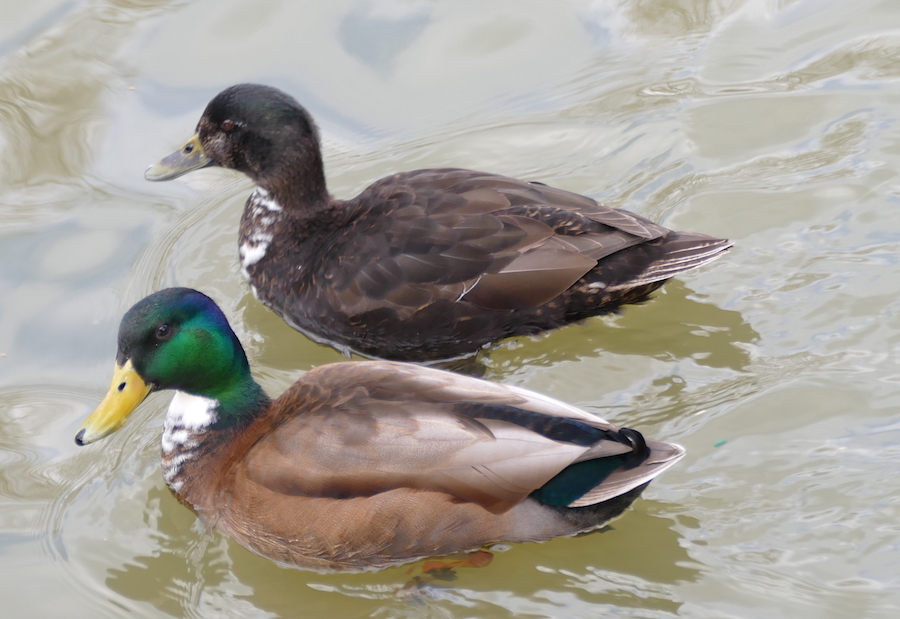
There were a few ducks around, mostly mallards, but also a couple golden eyes and a wood duck. The ducks in the photo are hybrid mallard/black ducks, often called bib ducks.

There were 6 turkey vultures circling the park. Not sure what goodies they were after.

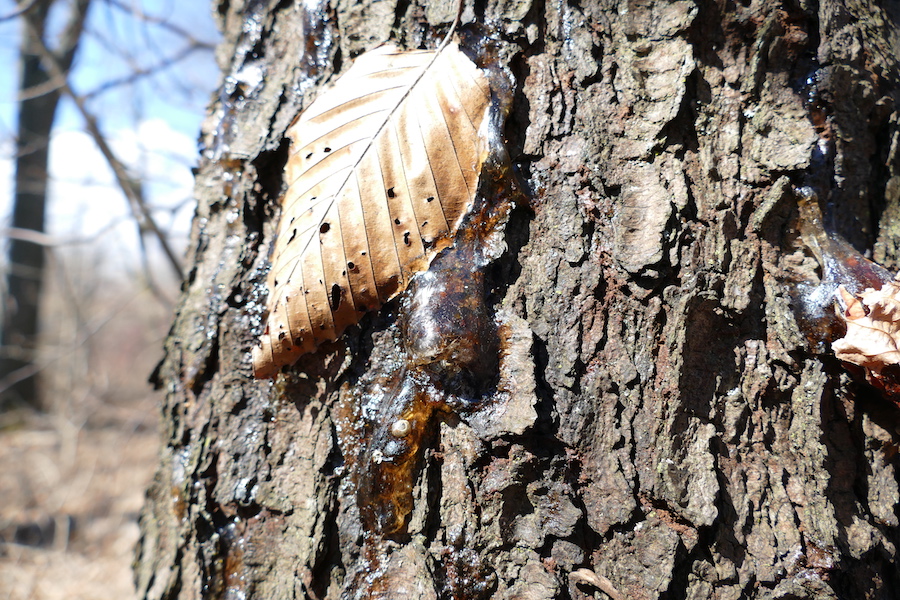
Early spring is an interesting time to look at trees, using the bark and the buds as well as the shape and stature of the trees to identify them. Above, Miles is showing the distinctive bark of the hop hornbeam (sometimes called ironwood). Below you can see a far different looking bark. It’s black cherry, whose bark Miles compares to burnt cornflakes. This particular black cherry has a lot of dripping sap happening.
There are quite a few butternut in Marie Curtis Park. The bark looks like it’s been taped up with masking tape.

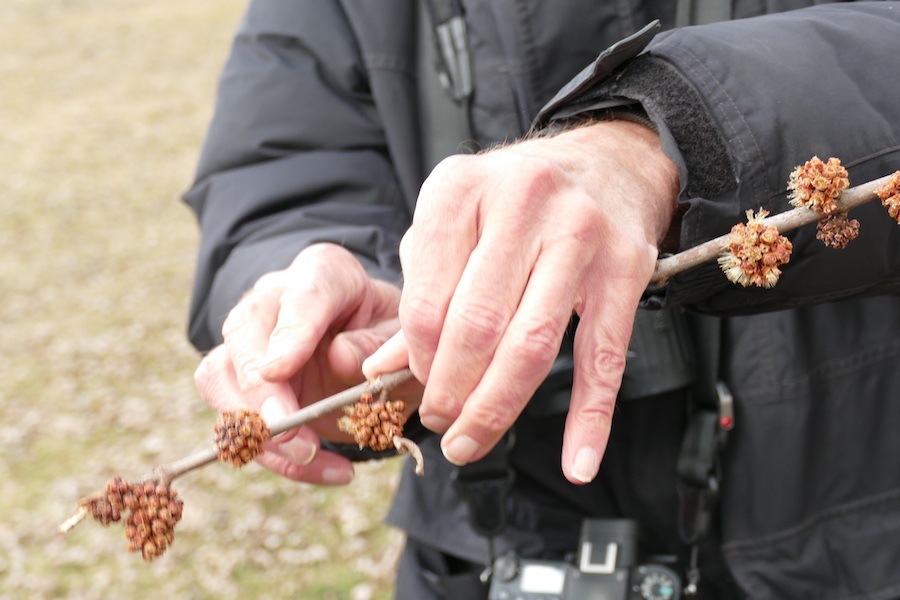
Above, Miles is showing us silver maple buds.
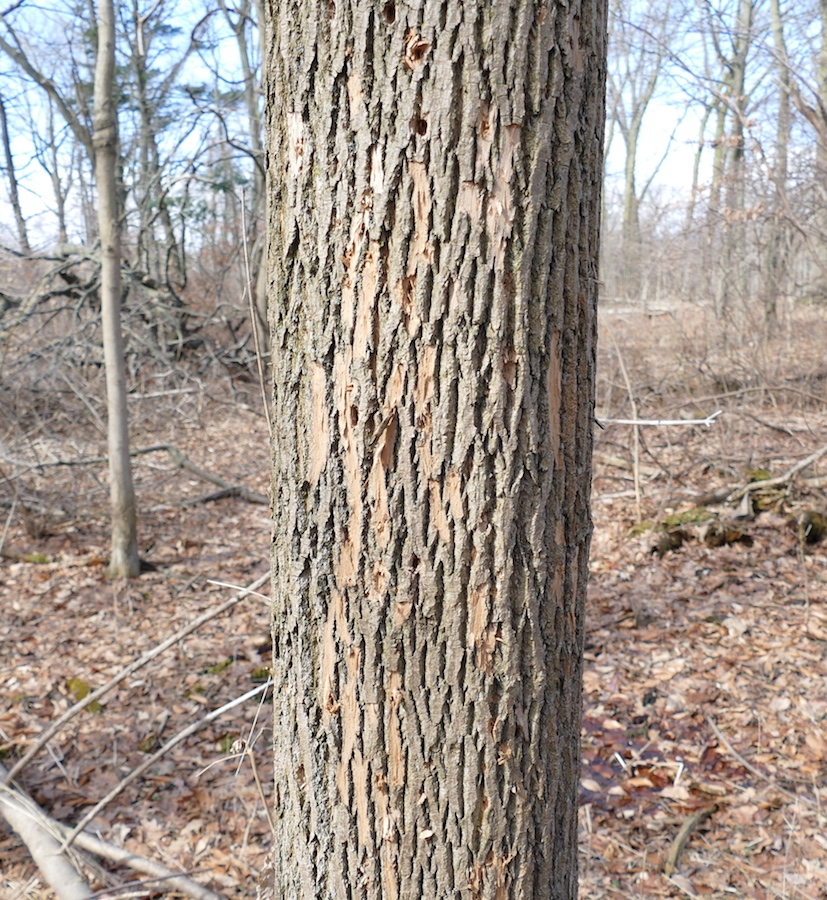
Here in Ontario, we have a problem with an invasive Asian insect called Emerald Ash Borer. Below you can see an ash tree which has been killed by this insect.

When I think of trembling aspen, I think of how they look in mid-summer. I wasn’t expecting these fluffly flower buds, above.
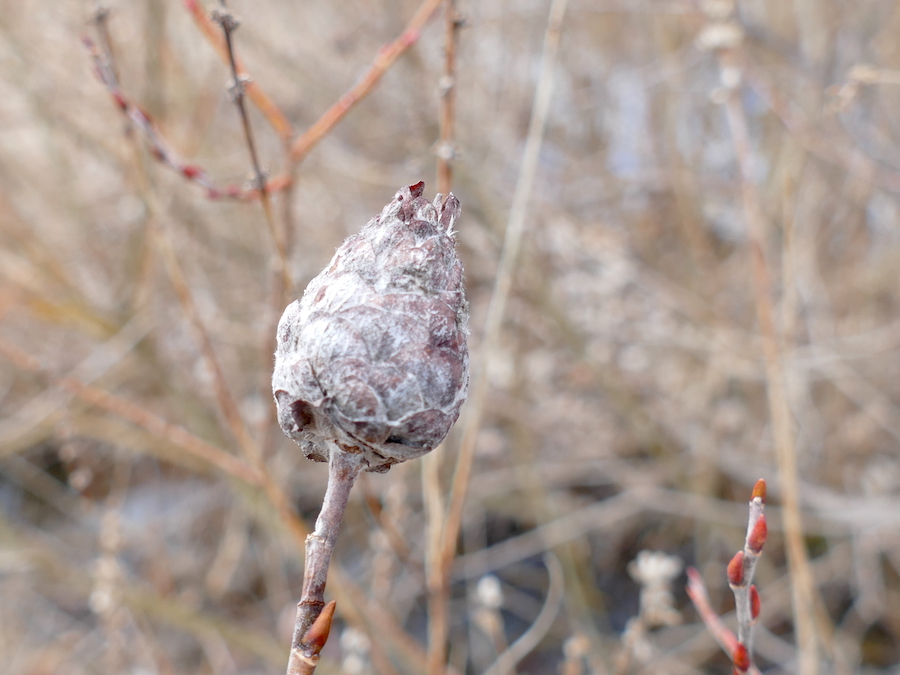
On many of the Missouri willows in the park, you can see pine cone willow galls (above).

One way of identifying choke cherry, even before they have leaves, is by the distinctive black knot fungus, which seems to be present on all the choke cherry shrubs we saw today.
sThere weren’t too many green plant up yet, but we did see some stinging nettle…

…and some Dame’s rocket

We saw a good flock of starlings in some trees in the park. There must have been 50 of them.

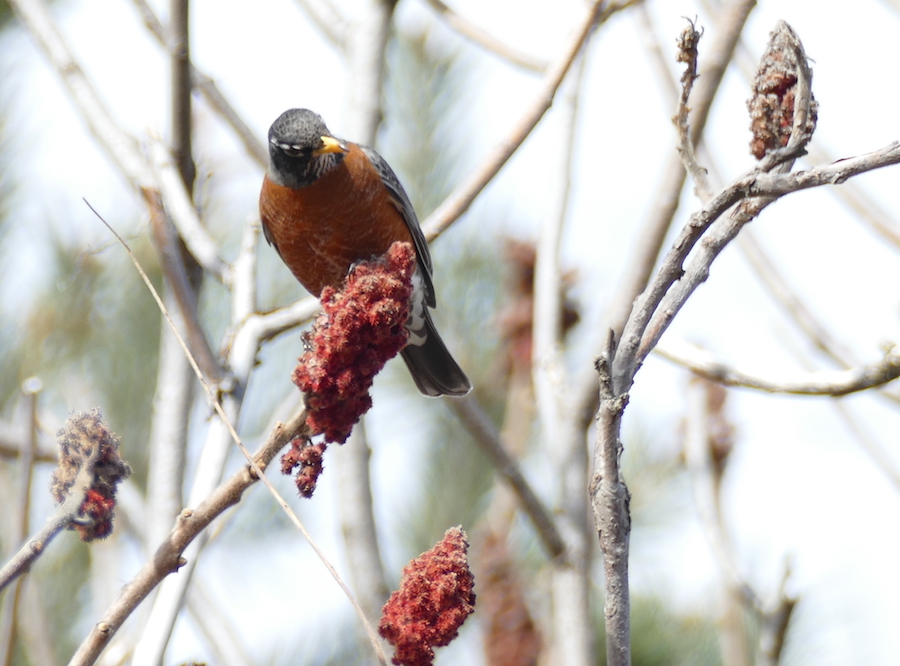
And here’s an American robin, enjoying a staghorn sumach.
Right at the end of the walk, we saw an unusual bird for Etobicoke Creek, which Miles identified as a juvinile red-throated loon.

 27th Street