I’ve been mostly a front porch banjo player. Sure, I’ve been to some banjo camps and jammed a lot at a couple festivals, but until recently I haven’t been playing music with others on a regular basis. That is changing.
For the past few months, I’ve been playing old time music with Ted Myerscough on guitar. We’ve worked up a couple dozen tunes and have had a great time doing so. Recently Ted set up a session with a fiddler, Isabel Fryszberg. Not only can Isabel fiddle up a storm, she’s also a guitarist, songwriter and singer, and a painter too. This morning I’ve been listening to her excellent recording, Hearts and Arrows. Here she is with her band, The Uncommons, performing Cry Cry Darling.
Ted and I have had two sessions now with Isabel. She can fiddle most of the tunes we’ve been playing, she picks up others remarkably quickly, and she’s introduced us to some other excellent tunes I’ve never tried to play before (I’m already working on those).
I was having a great time playing music with a guitarist. The sessions we’ve had with Isabel have been even more fun as we have the 3 instruments working together to create the groove. I hope we have many more opportunities to play tunes together.
For those visitors to 27th Street who do not know, I have a little book of stories out and available at Amazon, called Squeeze Box Man. There are 16 stories as told by one Lazarus Allen Czerwinski, Lazy for short. He tells stories about the old days when he fronted a polka band called Lazy and the Rockets; stories about his days making ends meet working in a bottling plant in the Long Branch neighbourhood of Toronto; and stories about his adventures with his old friend Staashu, starting up a polka punk band in Toronto in the early 80s.
I haven’t done much promotion on this book, but when I received an email notice that a whopping $5.64 (US dollars woohoo) in royalties had been dropped into my account, I thought maybe it was time to do a little post here at 27th Street and ask visitors to consider purchasing a copy. It’s available in both paperback and Kindle formats. If you read these stories and enjoy them, a little review on Amazon or Goodreads would be much appreciated.
When I completed these stories, I thought that was it for Lazy and his adventures, but it turned out that isn’t the case. My friend Jacob suggested they would work really well in comic book or graphic novel format, and we’ve been meeting to plan out just how to make that happen. We’re working on existing stories and character studies at this time, but we’ve also talked about introducing new adventures in the future. I’m really excited about this project.
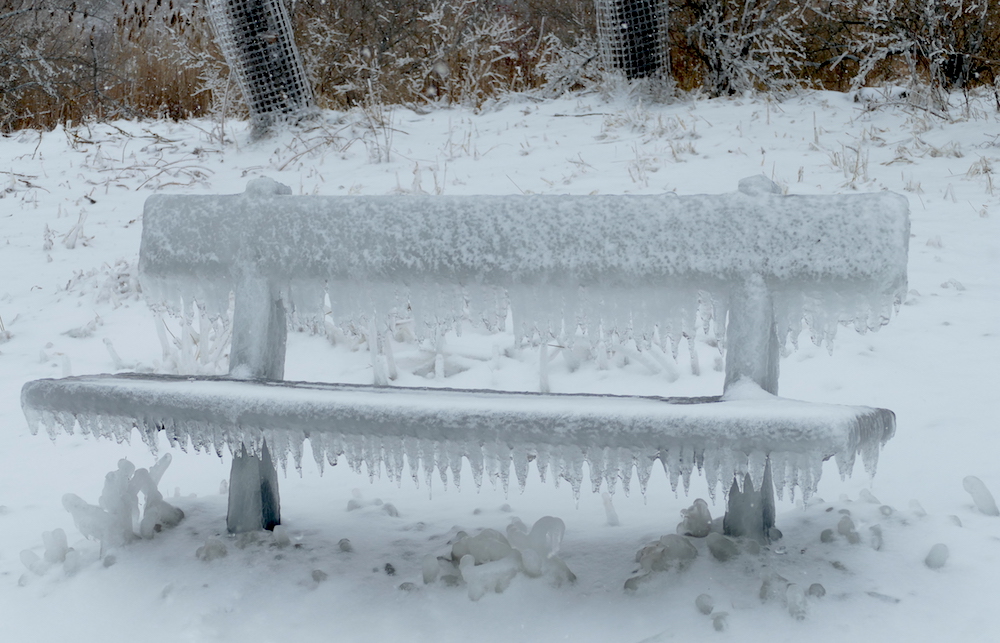
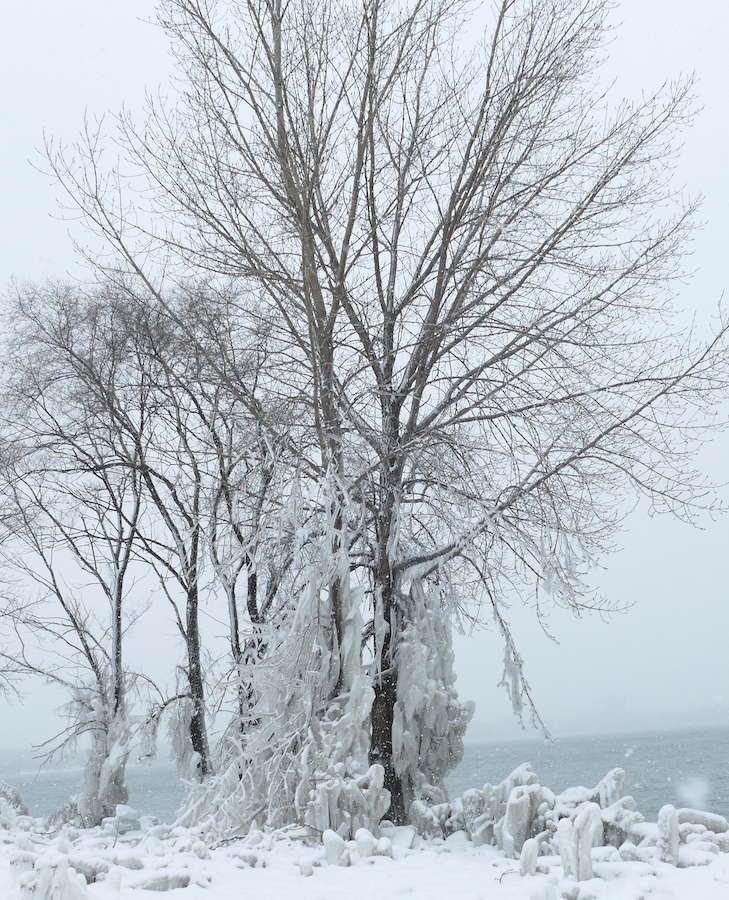
Today’s winter nature walk with Miles Hearn took place at Humber Bay, one of my fave locations. Temperatures were moderate, wind wasn’t bad, and it was simply beautiful out there.
pancake ice
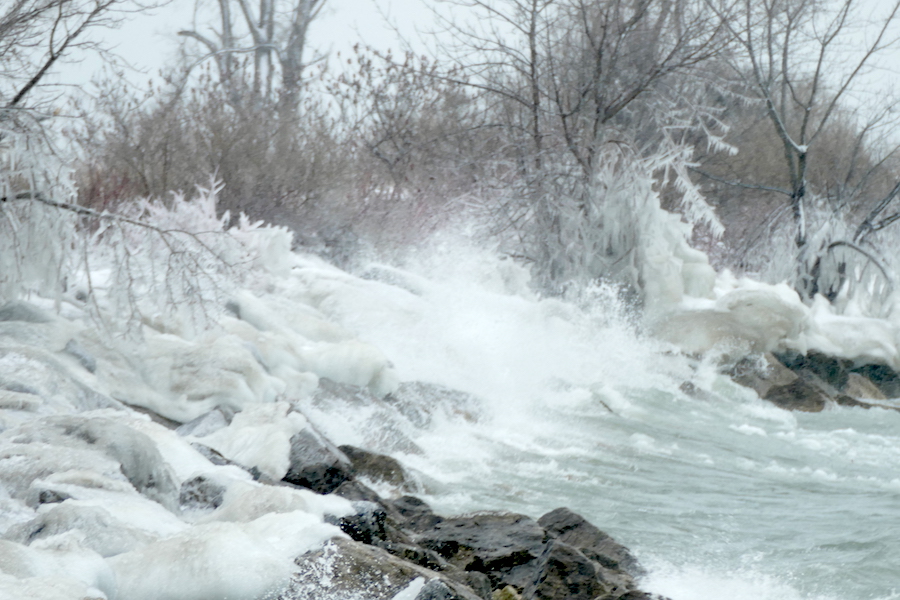
The ice formations were fantastic.
Staghorn Sumachs
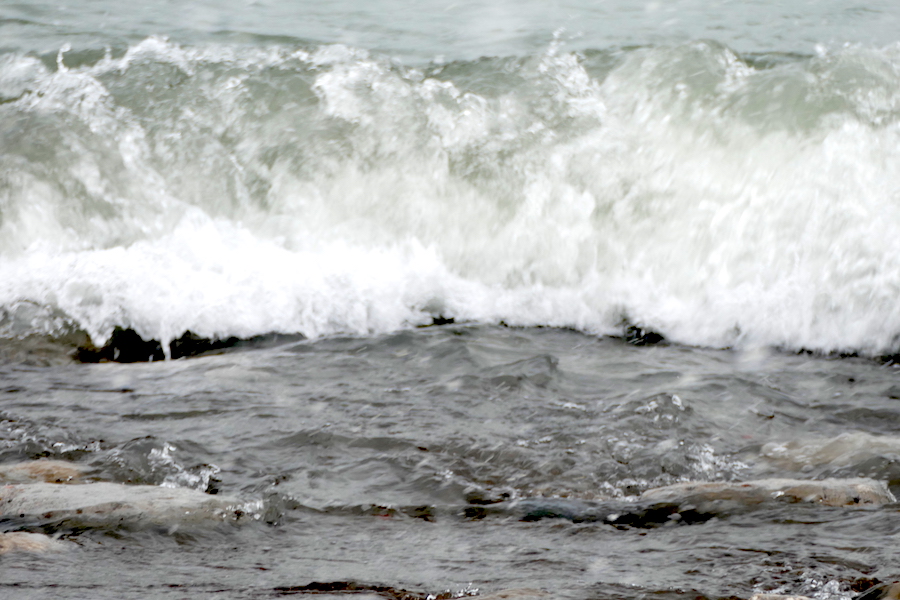
I snapped a number of pictures of winter ducks, some cardinals and a few other birds, but for today’s post I’m going to skip those and focus on Lake Ontario flexing her muscles.
These walks are facilitated as part of the Toronto District School Board’s Learn4Life programs. Registration has just opened for the spring walks. They are called: Birdwatching, Flora and Fauna. Each walk takes place somewhere in the GTA and there are 9 of them scheduled for the spring session, which starts in early April and goes until the end of May. I believe Miles will be doing 6 walks each week. These fill up quickly, so if you are interested, I encourage you to register soon.
We were living in a very Portuguese neighbourhood of Toronto. From time to time I would hear folk tunes wafting out of someone’s garage. Over near the flea market there was a guy who played on his front porch for passersby. He had a triple row diatonic button accordion tuned so wet with so much tremelo it almost sounded out of tune.
I loved that music. It was community music rather than mass market music, and that was really special. I thought, geez I wonder if I could learn to play those tunes on one of those boxes. There are only thirty-some buttons on a triple row accordion. How hard could it be? At 40 years old I decided it was time to learn to play some music. I had no interest in playing any of the pop instruments. I wanted to play button accordion. Well, why not?
When I was in my 20s and thought about folk music, I thought of Doc Watson and Utah Phillips and Ramblin’ Jack. This button accordion music was a different kettle of fish. It was pretty rare to hear someone who wasn’t Portuguese play a corridinho or a vira. I didn’t give that a second thought. I liked it and I wanted to play it.
My mom was born in Poland, but growing up we never got involved in folkloric activities from that culture. I didn’t have the language either. Mom spoke Polish, usually to her sisters, though it was full of holes she filled with enough English words us kids could sometimes figure out what they were talking about. Dad didn’t speak Polish and I don’t even know if our grandparents on his side did either. I know my dad’s parents came to Canada, not from Poland, but from Chicago.
Even today, which I think of Polish music, I don’t think of music made in Poland, but rather, Polish-American polka music created in bands like Scrubby and the Dynatones in Buffalo New York. Sure, much of it is sung in Polish, but it’s full of influences from American musical traditions.
When I was a little kid, Mom made me take piano accordion lessons. I didn’t like the instrument at the time and I didn’t want to play music and I dropped the whole thing just as quickly as I could.
Little kid Eugene with the accordion he didn’t want to play
Of course in the fullness of time, I regretted not sticking with music as a kid. I don’t mean just accordion but music in general. How was I to know that in my middle age playing music would become something very dear to me?
When I started learning button accordion, I started with Portuguese tunes but learned tunes from other cultures as well, including some tunes from Newfoundland. I found myself attracted to these simple dance tunes, wherever they were from. It seemed that regardless of the culture, this vernacular music was based around two-steps (or polkas or paso dobles or Marches) and waltzes (and obereks and jigs and viras) and reels (corridinhos in Portuguese folk music).
Later, when I fell hard for clawhammer banjo I mostly stopped playing my accordions, but found home in old time music, also built around simple dance tunes. Now and then I pick up an accordion and rue the fact that I can hardly remember most of the tunes I used to play. My chops are all rusty too. I know I can reclaim those chops pretty quickly with a little effort, to access wherever I have that material stored in my little brain. I should do that, I tell myself. Then I pick up a banjo and play for an hour or two, or I pick up my fiddle and struggle with learning that wonderful instrument.
Here’s one of the Portuguese tunes I used to play, called O Passarinho or Little Bird.
I dropped Tuffy P off at the Go Station this morning just before the snowstorm hit. A big hint this is going to be quite a storm system: the local talk radio station has sold ads on their snow updates.
The fisherman whirligig out front is fishin’ much faster than its maker ever intended. Looking out my window here by the computer, the snow has started coming down hard, blowing around the street. I got the morning blues.
I envy painters who can consider a block of work, plan it out and execute it as some kind of linear process. A friend once showed me a drawing he had done, a preparatory sketch for a large painting, on which he indicated all the detail he could as to how he imagined the painting, including notes on texture and specific colours. It seemed to me the nut for him was in that magic gap between the drawing and the painting.
I can’t remember ever drawing in preparation for painting. Often I draw on my paintings or sometimes I’ll draw in order to try to work out a problem with a painting or group of paintings. Sometimes doing that leads me in directions I hadn’t anticipated.
The thing is there is still a huge element of mystery in painting for me, and I guess that’s in a large part why I keep at it. That mystery is tremendously compelling for me. When I exhibit paintings, and look at them out of the studio, I can often remember very specific moments working on one painting or another but at the same time I also often wonder how I got there. How did I make up that image? Why is that way exactly?
Some painters maintain a continuity through years of work, in some cases through a career, exploring, refining, examining, reinventing. I admire that, in part because I can’t do it. I’ve always found myself going back to the beginning over and over again, to really basic questions like, how can I make some kind of image that will stick. I can’t just draw it up and transfer it to my painting surface. Even when I go into a new set of paintings armed a starting point or a specific direction I’ve been chewing on, most of the time I need to shed that baggage before I can get down to the real business at hand.
When things are going very well, each time I settle into a bout of work, I feel as if I’ve narrowed the gap between painting and thinking, and at those times I can improvise fluidly. Other times there is just paint and canvas, colour and form and ideas and wishful thinking. Then I feel as if making a painting is next to impossible.
I bailed on the Wednesday nature walk to Scarborough Bluffs, concerned for safety driving with the ice pellets and freezing rain – but decided to join the Friday group today at Lambton Woods on the Humber River instead. It was a cold and windy morning, and with the thaw and freeze up over the past couple days, it was very icy indeed.
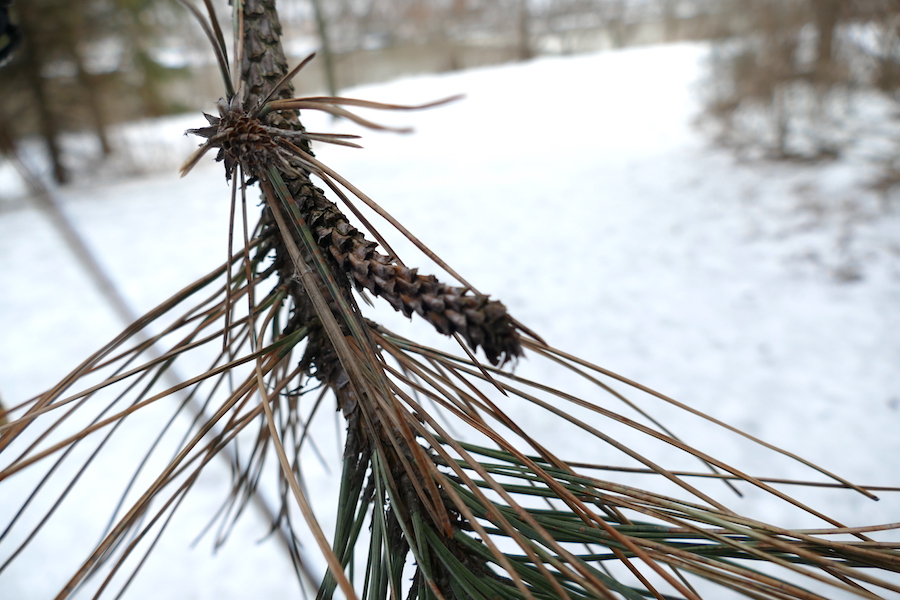
Austrian Pine
Some of the group had grippers on their boots and had no issue with the ice. On the other hand, I was sliding all over the place, and at one point somebody held onto me to keep me from sliding away down a hill. I decided I would not go home today without purchasing a set of grippers, so I stopped at Canadian Tire on the way home and bought a pair.
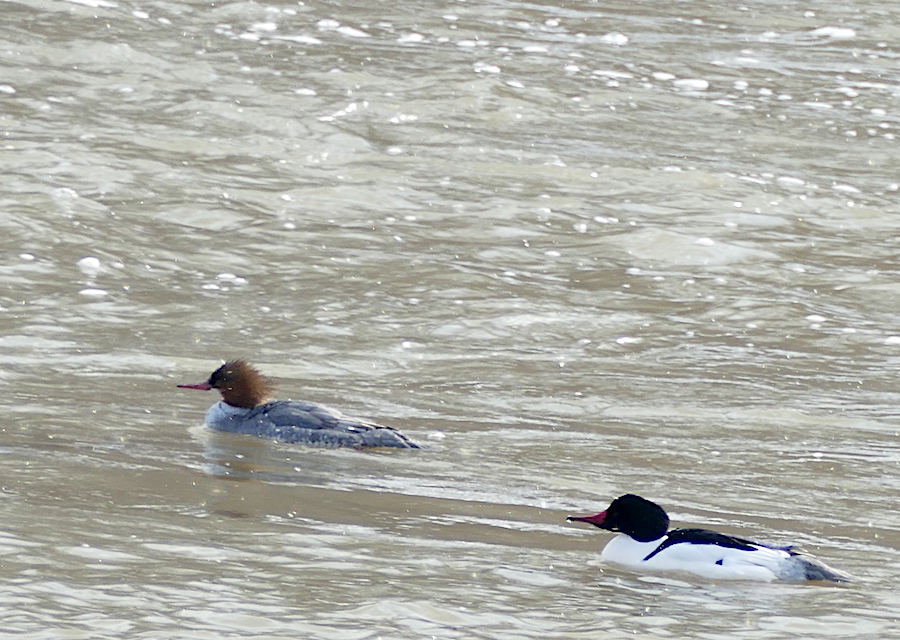
Common Mergansers
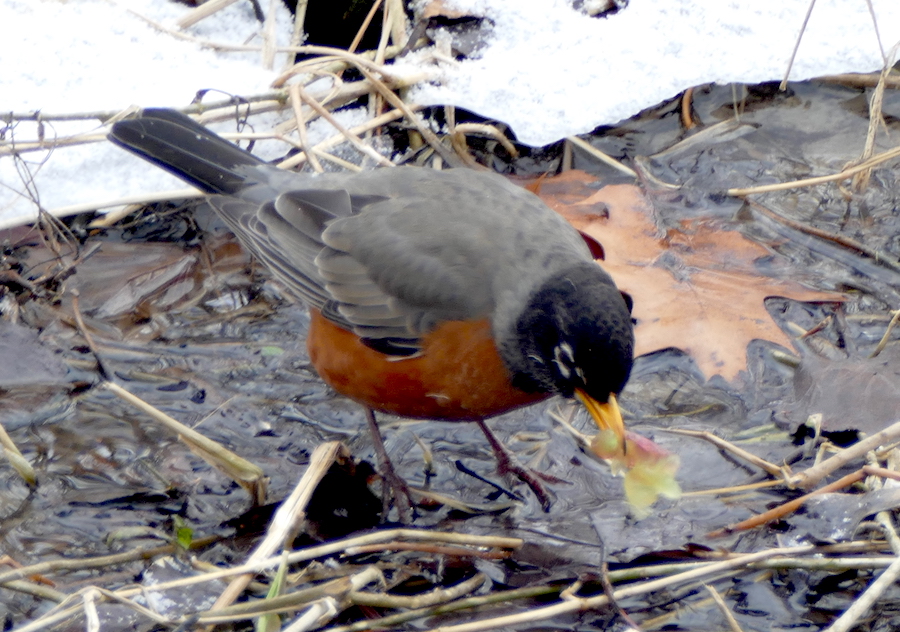
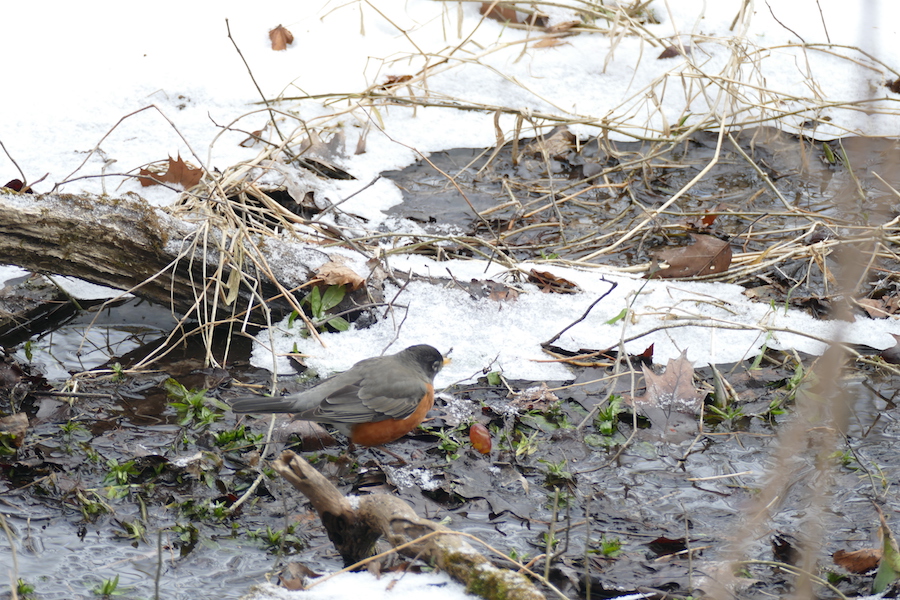
I used to think that all the robins took off for the south each winter, but I’ve learned this winter that many stick around where they have a reliable food source.
American Robin
There were several robins around today around an area of open water. What was really remarkable though, was not so much the robins but the skunk cabbage growing in February. I knew this plant came up very early and is known to actually melt snow around it as it emerges, but this is just February 8.
Robin with Skunk Cabbage
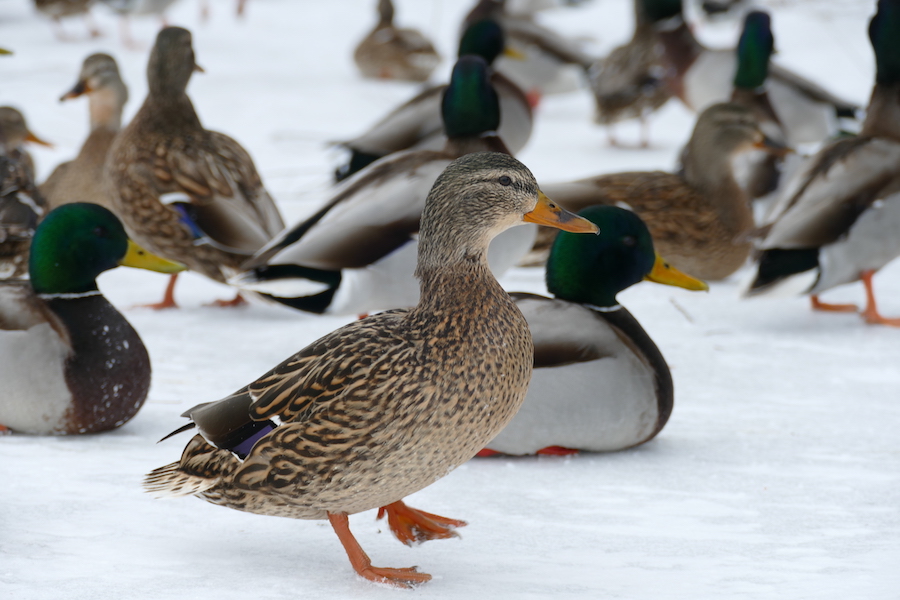
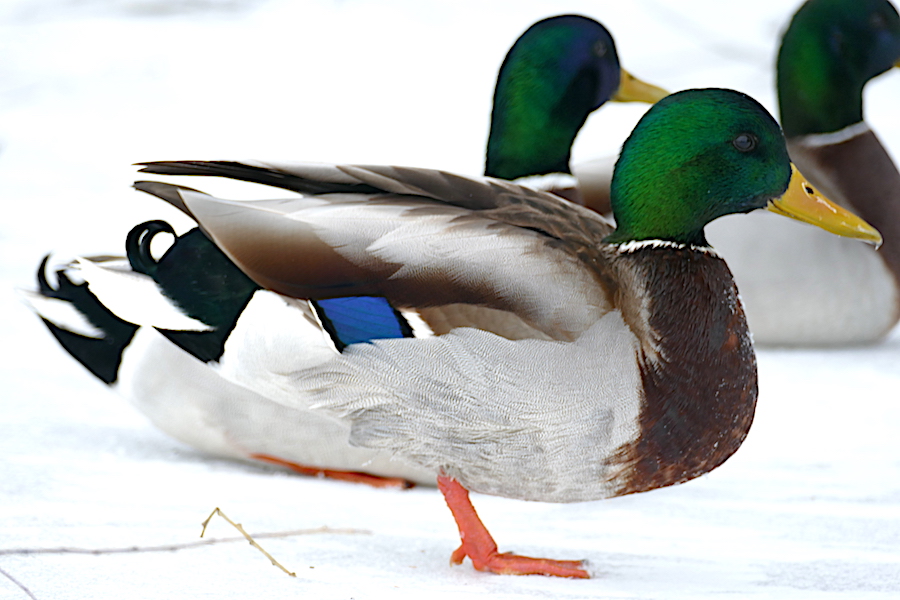
There is a duck pond near the parking area that still has a bit of open water and it is loaded with mallards. These mallards are used to some social assistance and when humans come near, they march towards us, looking for handouts.
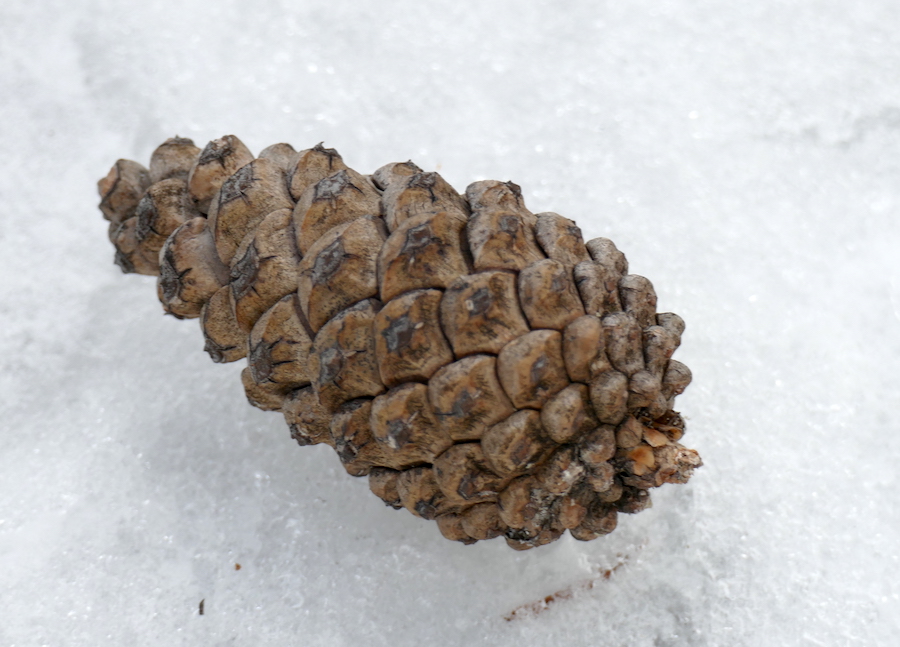
Female Mallard with friendsMale MallardsScotch Pine Cone
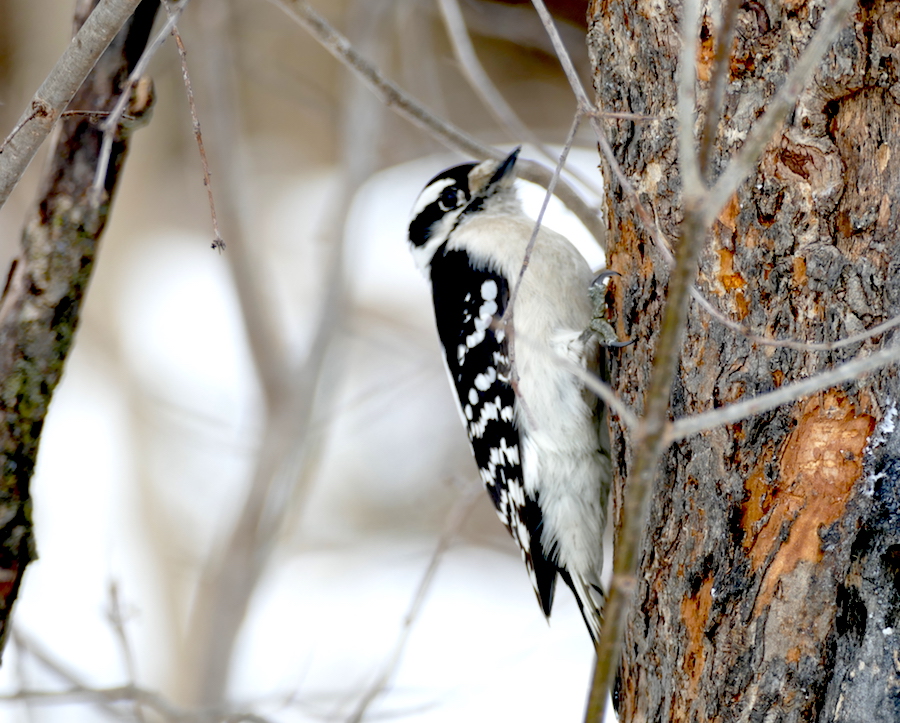
There were plenty of woodpeckers out today, mostly downys but some hairys too. Here’s a downy we saw.











 27th Street