comment 0

Butterflies and Bees

DSC05447.jpg

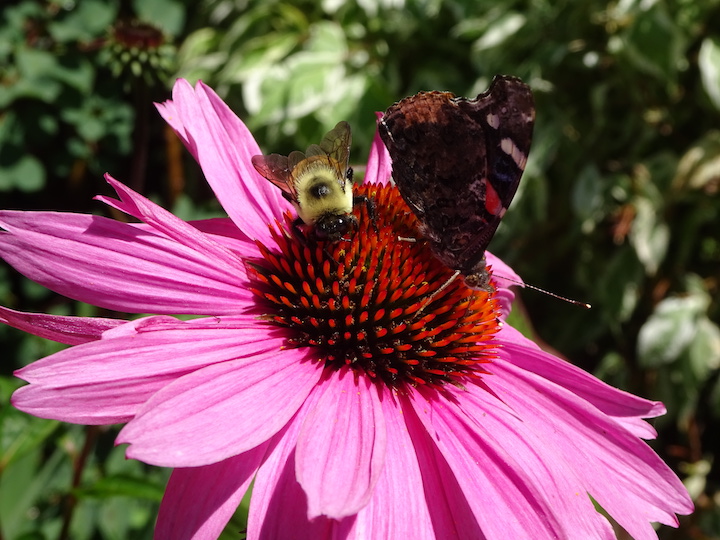
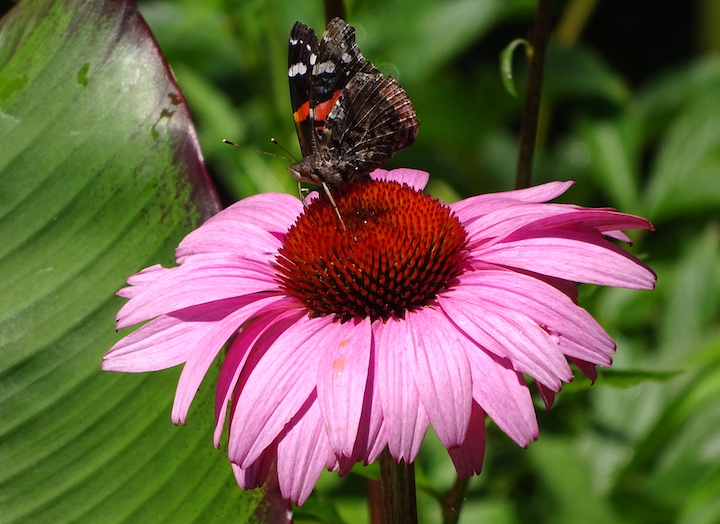
This lovely butterfly stayed put on this echinacea flower long enough for me to run inside and grab a camera. I don’t know too much about butterflies, but consulting our handy Butterflyies of North America guide, this looks like a Red Admiral. Can anyone out there confirm this guess?

While I was snapping pictures, the butterfly was joined on the same flower by a bee. Now that’s the shared economy at work.

DSC05457.jpg

comment 0

The Source

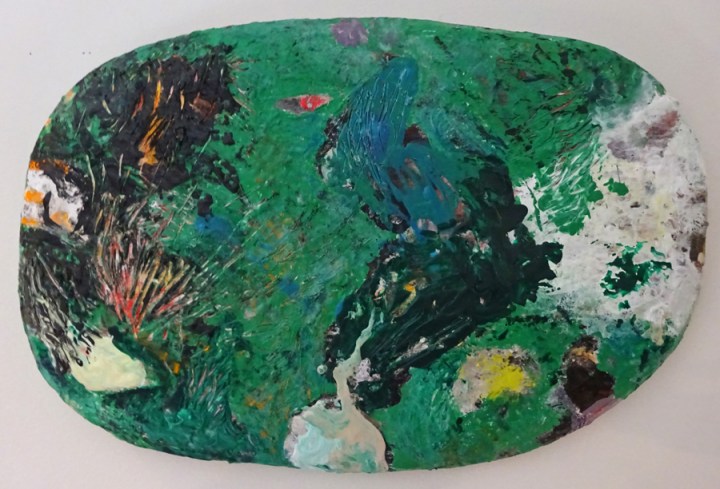
Over the years I’ve made several paintings called The Source, including a small group of tondos I made a few years ago. It’s a theme which has captured my imagination since, as a high school student, I first saw a photo of Courbet’s famous painting of the same title.

This painting was exhibited at my 2016 exhibition at Yumart. It’s encaustic on wood and it’s about 18 inches wide.

The Source_.jpg

comment 0

Pickle me this

IMG_8910.jpg

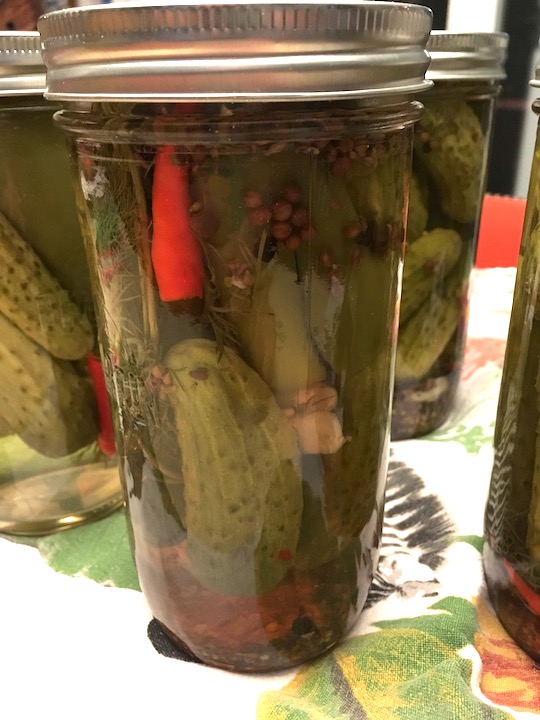
Over the past few months, I’ve developed a bit of a taste for dill pickles, and I had this idea way in the back of my ever-so-tiny brain that I might want to make a batch of super-hot, garlic infused dills. Where did I get such an idea? I just don’t know. Yesterday we visited friends in Paris, Ontario and stopped at an excellent market on the way home. When I walked in the first thing I saw were baskets of perfect pickling cucumbers, and before thinking something sensible, like: you don’t know anything about making pickles, fool – I bought a basket. I’ve never made pickles before. Fortunately, there are instructions for doing everything on the interwebs. Unfortunately, there are a lot of conflicting instructions, way too many recipes and there is a good deal of bad advice available. Did I let this dissuade me? No way.

There are two basic streams in dill pickle-making. One way is the old-school deli pickle, often known as kosher pickles, in which a brine is used to ferment the pickles with no vinegar added. The brine keeps the bad bacteria away and encourages the good bacteria, which metabolizes the sugar in the vegetable, producing lactic acid as a byproduct, making the pickles sour. These pickles are not “canned”. Instead they are kept cool after the fermentation process.

Sorry if I upset any traditionalists but I didn’t make my pickles that way. Instead I chose door number two and went with pickles made with vinegar and “canned”.  In this process it is the acetic acid in vinegar that imparts the sour flavour to the pickle. I will take my lumps without attempting to explain why I chose this approach. I don’t even have a good reason for going one way rather than the other. Besides, it would be like explaining to a traditionalist fly fisherman that you just bought a boron composite fly rod instead of bamboo and you planned to fish with streamers instead of dry flies. It can’t end well.

I used a variety of pickling spices, lots of fresh garlic (from the garden), some fresh ginger, fresh dill and dill seeds, plenty of jalapenos, as well as a bunch of Thai chilies. My plan was to make fiery pickles. As well as the cucumbers, I also added chunks of zucchini from the garden, just because I could.

I made 7 jars of pickles. The plan is to wait at least a couple weeks before cracking one open and sampling. Hopefully, they’ll taste pretty good. I don’t plan on making any more pickles this year. Maybe I’ll do it again at some point in the future. If our tomato crop turns out to be as big as it looks like it’s going to be, I may make some tomato sauce or freeze some tomatoes later in the season. One of my neighbours told me about how she makes garlic/pesto ice cubes, and since we have lots of basil this year, I may try that too.

 

comment 0

Bear sightings

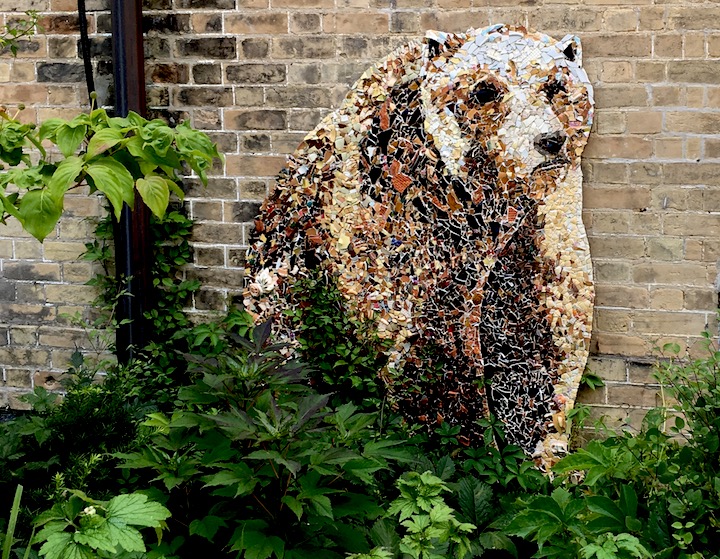
I received an email from my brother in which he mentioned that bear sightings in Ontario are up quite a bit this year, suggesting they are becoming common enough that many people don’t bother to call them in anymore.

What timing. We were in Paris Ontario yesterday visiting friends and sure enough we saw a bear.

IMG_8900.jpg

comment 0

Salt River

Here’s a tune called Salt River. I don’t think I had heard this one until I watched Hilarie Burhans teaching it on one of her excellent YouTube videos, and I picked it up from there. I enjoy playing this one. I recorded this video with my iphone. I’m playing my Nechville Atlas banjo in G tuning, using a capo and a handy railroad spike to get up to A.

comment 0

A note in our post box today….

IMG_8863.jpg

How sweet is that? Thank you so much for the kind words, L & C!

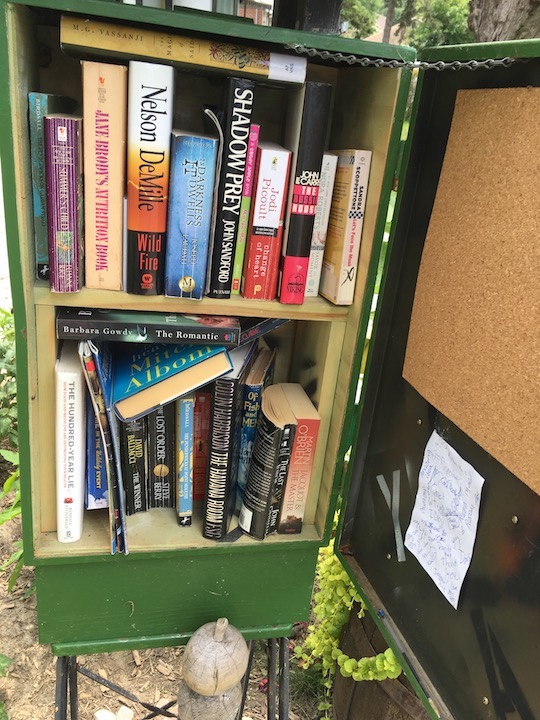
This reminds me there are plenty of excellent titles available in the Twenty Seventh Street Book Box. IMG_8864.jpg

These books are FREE. You can take them home to read, or give them away if you like. If you want, feel free to replace them with other books you think the community will enjoy. The book box is located in front of our home at 15 Twenty Seventh St and it’s there for you! Recently we received a donation of a couple bags of good books, which we’ll be adding as there is room.

comment 0

Angeline the Baker

I made a little video performing Angeline the Baker for the Tune of the Month on a Facebook group I contribute to, called Clawhammer Rules. Angeline the Baker is an old time tune derived from a Stephen Foster song called Angelina Baker. I learned this tune early on in my clawhammer playing when I was teaching myself to play on an oil can banjo I cobbled together myself. I learned it from somebody’s hand-written banjo tab I found on the internet, but I know at this point I play it quite a bit differently than I did back then.

For those interested, I’m playing my Dogwood banjo in double-C tuning.

comment 0

Nature walk with Miles Hearn – Rouge Park

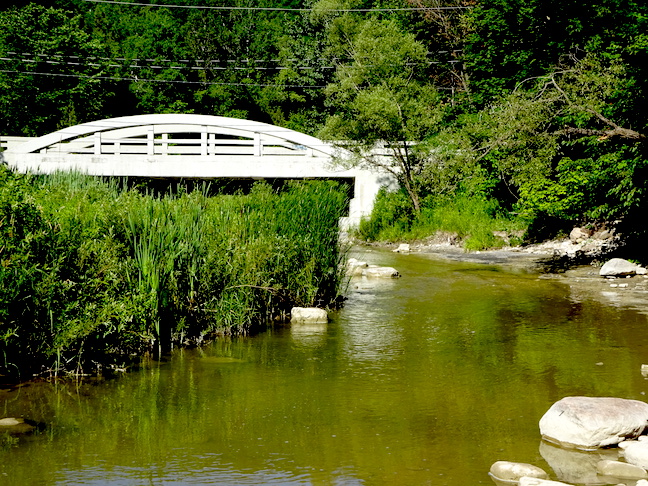
Little Rouge.jpg

Little Rouge Creek

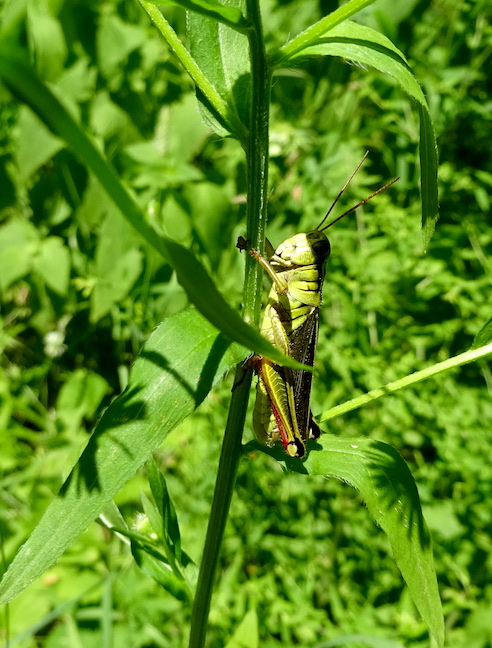
grasshopper.jpg

Today’s nature walk with Miles Hearn took place in Rouge National Urban Park, a fantastic place loaded with interesting trails as well as the Rouge and Little Rouge rivers.

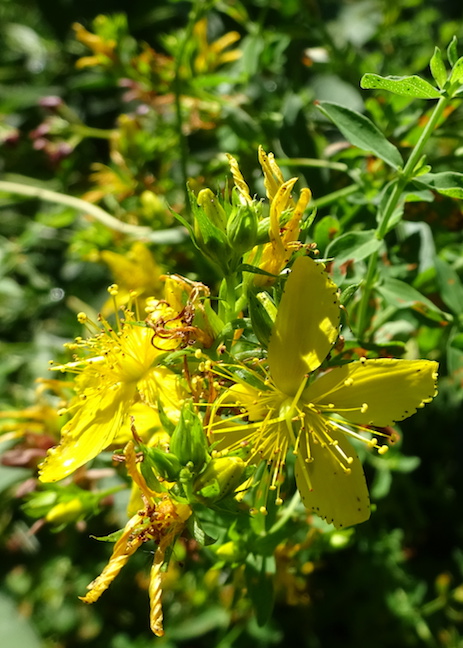
St. John's wort.jpg

St. John’s Wort

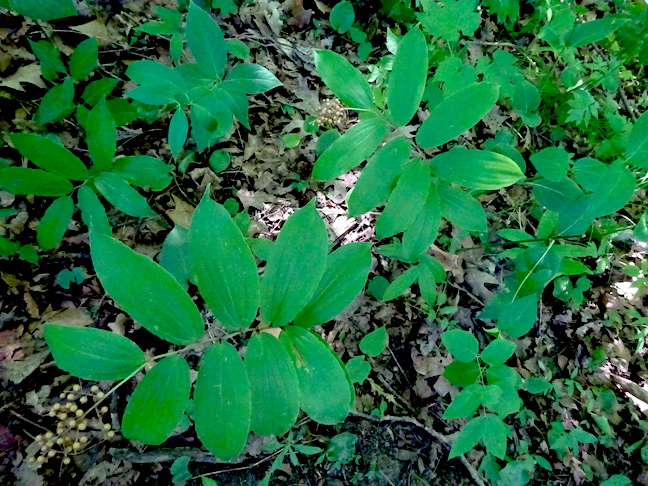
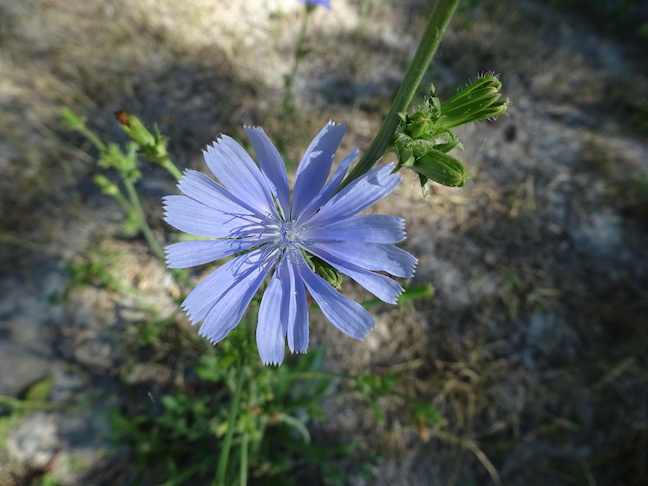
I started going on Miles Hearn’s nature walks in early spring and we’ve seen numerous plants as they first emerge in the spring and as they develop and bloom or fruit in summer. I find it challenging to remember all the plants, especially as they look different in different seasons, but there are a number of them I’m now recognizing, such as St. John’s Wort, Maple-leaved viburnum, False spikenard (or False solomon seal), various grasses, a number of trees, rattlesnake root, blood root, chicory and numerous others.

False spikenard or false solomon seal

False spikenard

chicory.jpg

Chicory

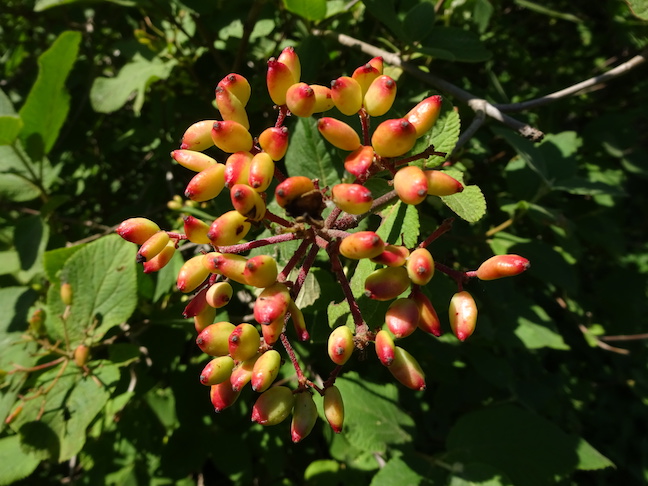
Others I recall Miles talking about before, but I failed to recognize on sight. One of these is a species of Vibernum known as Wayfaring tree. Perhaps it is called that because it is often found on roadsides. Today, it was very distinctive with colourful berries, but next spring, will I recognize it? I’m not sure.

wayfaring tree.jpg

Wayfaring Tree

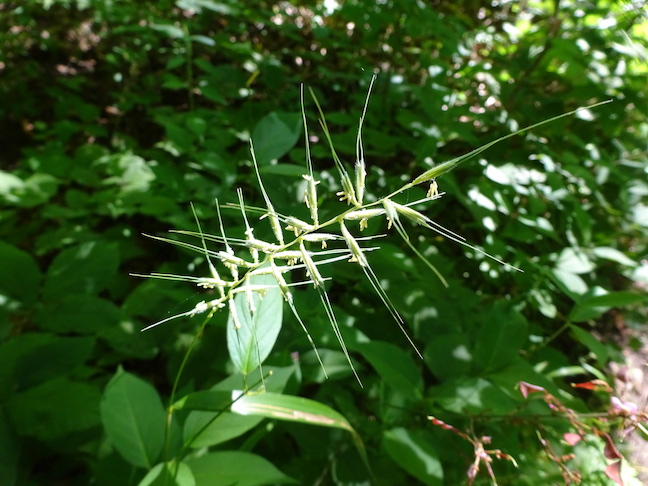
There were a few highlights today for me. One was bottle brush grass. I’ve never noticed this one before.

bottle brush grass.jpg

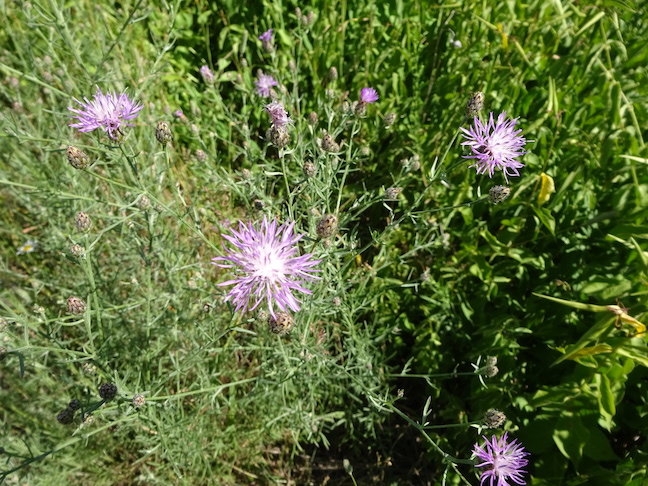
Another was Knapweed – hey a weed named after my family!

knapweed.jpg

Knapweed

Here’s some of the other plants Miles noted on the walk. Each of these is captioned.