comments 2

Limberlost Reserve

I spent much of Thursday at the Limberlost Forest and Wildlife Reserve. What an interesting place. It contains 12,000 acres of privately owned forest including a network of very high quality trails, a number of lakes, wetlands and a variety of forest types. Limberlost offers accommodations and as well they are open to the public most days from 9:00 to 5:00.

When you arrive at Limberlost, you face an imposing iron gate with a nice sign announcing the reserve. There is a little sign with the open to the public hours (closed Wednesdays), and a button to press for assistance. I stopped and pressed the button.

Hello.

Hi. Um, can I come in.

Of course. Just drive up to the gate and it will open (I think I was supposed to know that).

OK.

I drove up and the gate opened. I continued to the next sign which said Office. I knew from reading the website that I was supposed to stop in there, so I told the dogs to be good in the car and went in. There, a friendly lady asked me what she could do for me. I told her I studied mushrooms and Limberlost had forests so I thought I ought to visit.

She had me sign a waiver that basically reminds me that safety is important and I’m responsible for anything that happens to me on their property. Then she gave me a pass I had to display in the car, and another one to wear around my neck.

Keep the pass visible in the car and no one will bother you. She suggested a few places I shouldn’t go, since I wasn’t driving a 4X4 and another place where some work was going on. Beyond that, I had the place to myself.

Back in the car, I headed to Buck Lake Landing. On the way I was passed by a fellow in a Limberlost Security truck who slowed down to check out my pass.

Good morning. I see your pass. Just checking. Have a good day.

Wow. I kind of felt like I had walked into a James Bond film and Dr. No was working on something nefarious deep below the property. That feeling disappeared quickly though, and Limberlost is a fantastic place, and I’m grateful to have had the opportunity to enjoy it.

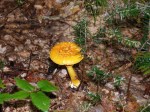
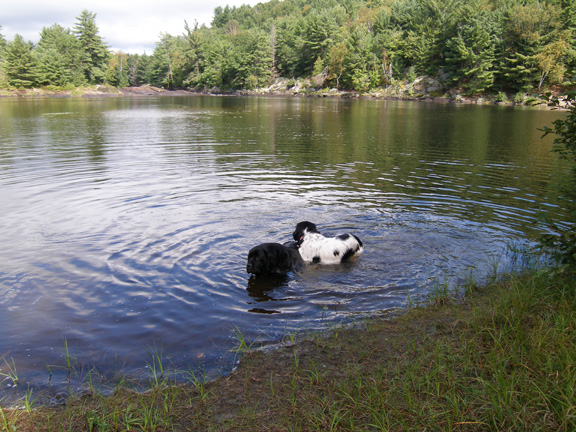
At Buck Lake the dogs jumped in for a swim and another and another and another, as we started down the trail. There were a lot of mushrooms around, and right away I found a number of perfect specimens of Lactarius thyinos, an orange-coloured mushroom that happens to also be a tasty edible.
When you break a piece of this mushroom, it exudes a bright darker orange juice or milk (Lactarius are also called the milk cap mushrooms because of this quality). This mushroom does not stain green and it has a nice fresh smell. I started putting together a dinner menu in my head.

We explored around part of the Buck Lake trail then returned to the landing for a bite to eat and a break. What a lovely spot. The picture below shows the landing from the other side of the lake.
There’s even a floating gazebo at the landing. Very nice touch.

We drove up the road to Clear Lake and Turtle Lake, and I decided to take the Turtle Lake trail from the east. This trail goes way around a wetland at the north of the Lake, follows two lovely streams, then continues around the lakeshore at the west of the lake.
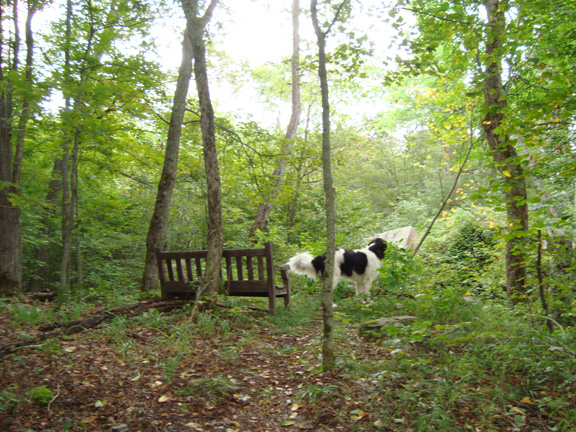
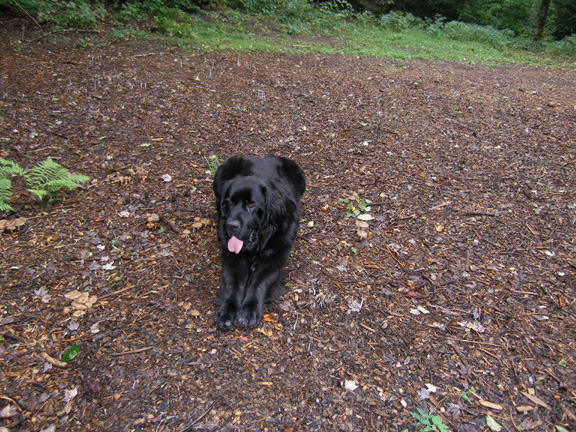
Here’s Memphis at a rest stop at an unusual rock formation in the forest.

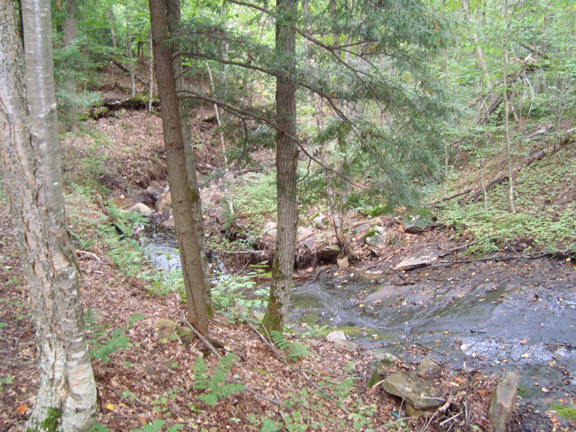
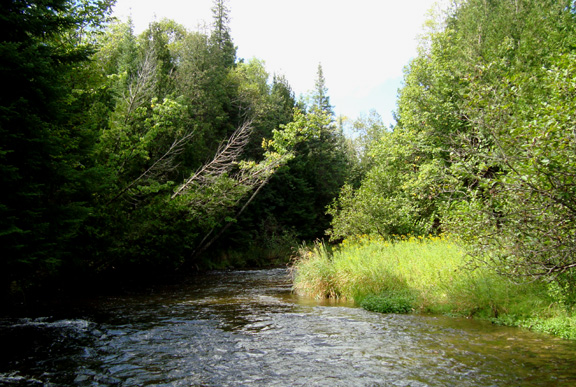
Eventually, we came to the streams, and at this point I started finding more and more mushrooms.


To be continued….

comment 0

Amanitas

Over the past few days, I’ve seen more mushrooms of the genus Amanita than I have since I started paying attention to fungi in our forests. It seemed as if every spot I visited was punctuated by some of these often striking and beautiful mushrooms. I confess that I didn’t do a top rate job of identifying all the amanitas I observed. In some cases, I just noted, “oh, that’s some variety of amanita”. The give-away is the a ring or vulva or in some cases scaly rings around the stock of the mushroom. I’m pretty sure that I observed the following four: Amanita muscaria, the Fly Agaric; Amanita flavoconia, the Yellow Patches; Amanita brunnescens, the Cleft-Footed Amanita; and Amanita virosa, a nasty mushroom lovingly called the Destroying Angel. There were others and yes I ought to have collected them and observed the spore print and compared the vulvas and so on.

Because I usually collect mushrooms to eat, anytime I see a gilled mushroom, I dig under the stipe so that I can see if there is anything like a vulva present. If there is, I know it’s an amanita and I don’t collect it for food. There are some edible amanitas; however, why take even a bit of a chance that you’re having a bad day and misidentify an edible amanita for a Destroying Angel. You can have plenty of regrets in the couple days it takes for this mushroom to destroy vital organs and kill you dead dead dead.

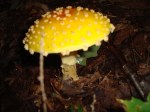
Some of the A. muscaria I observed were very large, with caps in the 8 inch range. That’s a big mushroom. This mushroom is hallucinogenic, and while it may not kill you, it will make you plenty sick. I believe that in our region we only have the yellow and yellow-orange variations of this mushroom, and not the more well-known red jobs with the white splotches.

I observed amanitas not only at each forest I visited. There were some around the cabins I stayed at on Oxtongue Lake. In fact, as I was leaving this morning, I could see an A. muscaria button from the deck of the cabin.

For those who want detailed info on this mushrooms, it’s best to consult a field guide. For our area, I use both Barron’s Mushrooms of Ontario and Eastern Canada and Lincoff’s Audubon Field Guide to Mushrooms. Why use both books? The two books are organized differently, so depending on what information you have on hand one or the other can be easier to use. In general, spore prints are white for amanitas. A spore print is an image created by placing a mushroom on a piece of paper, covering it with a bowl, and allowing the spores to drop onto the paper below. It can be a key identifying factor for some mushrooms. These are gilled mushrooms and the gills are free on amanitas, meaning they don’t connect directly to the stem (stipe) of the the mushroom.

comment 1

Back from the woods

If  you look closely, you’ll see that Ellie Mae is posing beside some mushrooms.

We hiked into Duck Chutes on the Muskoka river. The dogs are loving the swim.

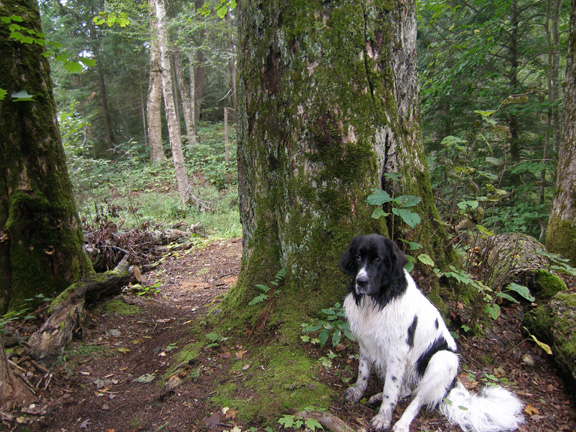
Memphis is posing in front of a huge basswood tree, on a trail around a lake called Turtle.

We got back this afternoon after a few days of hiking and foraging for mushrooms. I’ll tell you all about it in the next couple days….

comments 3

I will be computer-less…

for the next few days. I’m blowing town to wander some forests and forage for mushrooms. I’m looking at this as an educational venture. I want to see how many species I can identify while I’m away. Beyond that, I’ll be having fun, goofing around the woods with my newfie-dogs, Memphis and Ellie Mae. I’m bringing my dehydrator with me, so if there are a lot of tasty edibles fruiting, I’ll dry some and bring others back fresh to enjoy later.

While I’m gone, I invite you to amuse yourselves by exploring some of the blogs featured on my sidebar. I should be posting here again by Friday evening, with pictures and stories from this little adventure onto the Canadian Shield.

comments 2

Tree Work

We have quite few trees here at Anchovy World Headquarters, including a mature locust, several mature spruce, a mature silver maple (on the property line between us and the family next door), two other maples, a tamarack, a cedar, two large apples and a horse chestnut (we also have a number of shrubs and a Japanese Maple, which we planted). When we moved in, there were a number of immediate tree issues to deal with, including a number of large dead limbs on the locust looming over the drive-way and a heavy apple limb pressuring the phone lines, held up by a 2X4. We took care of these issues soon after moving in. Now we’re going to have some more tree work done to look after the over-all health of the trees on the property and our safety. This will include some significant pruning, as well as removal of some dead or dying trees as well as a couple young trees, a maple and a horse chestnut, that were allowed to grow right along-side, actually touching mature spruces.

Our goal is to maintain the beauty of the trees as well as habitat for the birds and other critters, and at the same time reduce the risk of a huge tree toppling into the house or across hydro wires during a wind-storm. So far we’ve been fortunate. Last year a couple big maples in the neighbourhood came down, one of them right across the road. It turned out, a good chunk of the wood had rotted. Fortunately nobody was hurt.

We have a tree bylaw in Toronto, intended to protect our large trees. I think it’s good to have this in place in the urban environment. The following is from the City of Toronto website:

Private Tree By-law
The Private Tree By-law was adopted to preserve significant trees on private property in the City of Toronto, to assist in sustaining the urban forest in the City and to educate individuals with respect to tree protection measures and alternatives to tree injury and destruction. This by-law is formally known as City of Toronto Municipal Code, Chapter 813, Article III, ‘Private Tree Protection,’ and is commonly referred to as the City’s “Private Tree By-law”. This by-law regulates injury or removal of privately owned trees which measure 30 cm in diameter or more as measured at 1.4 m above ground level.

I hate to take down any trees, but I recognize we have to look after the over-all health of the trees as a group. All the trees on our property that are 30 cm+ at 1.4m are in good shape, and only require some pruning. Anything we take down that is good fire-wood will be used in our wood stove in a year. The rest will be chipped, and the chips will be used for the path into the trees in the back-yard.

I’ve done some pruning myself, and this summer I’ve cut back some out of control shrubs quite a bit. A lot of the work we have to do requires the services of someone with a lot more skill than I have to safely bring down limbs that are near wires or the house, so we’ve hired a tree guy who is insured, has a crew of three and his own chipper.


comments 3

At the River

This year I’ve spent way more time in forests than in rivers, but today looked like a perfect day for some fly fishing. Off I went to The River. I just call it that. Everybody who needs to knows which one I mean. Around this time of year, a bug called an Isonychia bicolour (aka white-gloved howdy, aka slate drake, aka leadwing coachman) comes off the water. When I say that I mean the nymphal form of this interesting large mayfly swims into shallow water and tries to emerge onto rocks. Some other mayflies are burrowers or clingers as nymphs but the isonychia swims. It brings large trout into the shallows to feed, and this is the time of year when a fly fisherman is apt to catch a very large brown trout. The bugs usually make an appearance in late afternoon, but on drizzly days, they sometimes come off the water all day, and the trout happily feed on the emergers. That was the plan. I didn’t figure that by the time I got to the river the sun would come out.

The trout were not interested in my flies today, and I didn’t feel like waiting until almost dark so I started walking the path back to the car. On the way out, look what I found:

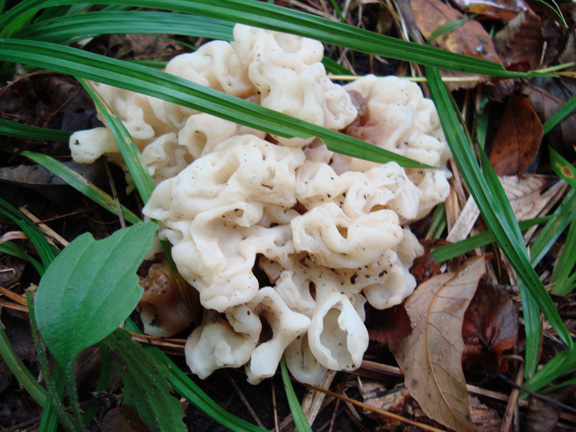
This looks to me like Sparassis radicata, the rooting cauliflower mushroom (a choice edible, if you’re asking). Now I was in a provincial park where the picking of this delicacy is forbidden, and being a law abiding citizen and all, I let it be. Yes, I was tempted.

Then, seconds later, I came upon another interesting sight:


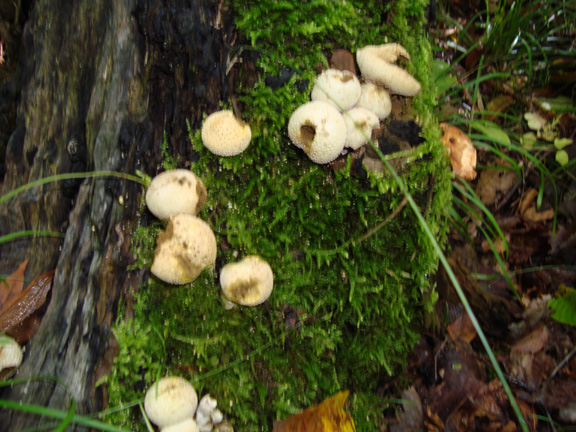
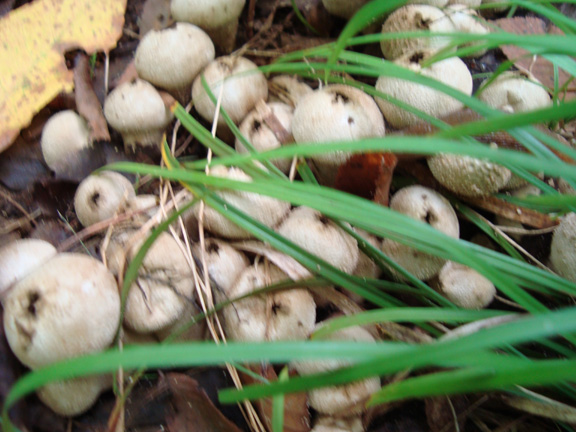
These were past their expiry date so they were difficult to ID, but they appear to be some type of puffball.

comments 2

Enchanted Mushroom Forests

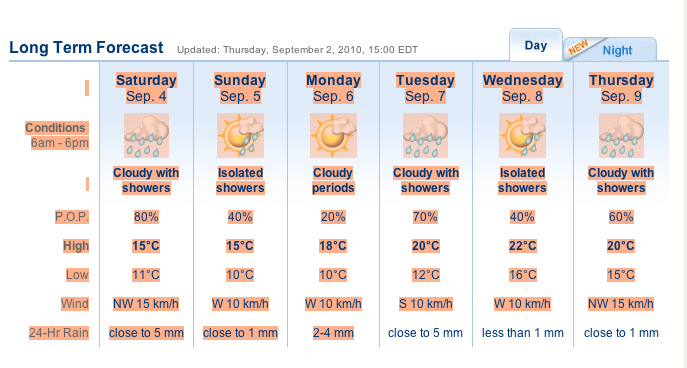
I’m going to visit some enchanted mushroom forests next week, with a goal of identifying as many different species of mushrooms as I can find. Looks like the weather is going to cooperate, with a little rain just about every day. Add to that what falls tomorrow and Saturday and we ought to have some nice damp forests.

comments 4

The Dangers of Mushroom Hunting

I thought mushroom hunting was a gentle activity. Avoid eating the nasty ones and and it’s all about wandering about in the woods (preferably with the dogs), picking mushrooms, and later cooking up wild mushroom dinners at home. Well, Salvelinas sent in a link to this article about mushroom hunting in Italy. It seems 18 people have died in 10 days. That’s just crazy. Think I’m making this up? Here’s another article about the carnage. It seems the biggest problem is sliding off the mountain at night.